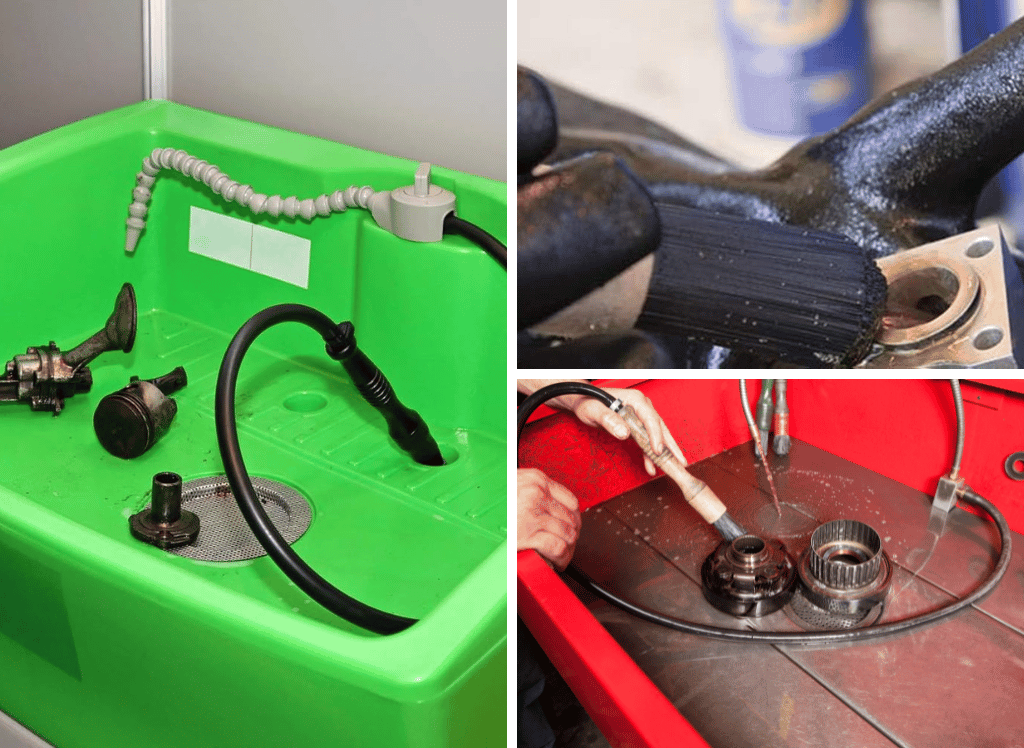
ALC Polymer Wet Blast Cabinet: Features, Setup, and Applications
ALC Polymer Wet Blast Cabinet delivers gentle, precise cleaning for automotive parts, tools, and components without damaging delicate surfaces.
If you need to clean, strip, or finish metal parts without the dust cloud and surface damage that come with dry blasting, the ALC Polymer Wet Blast Cabinet (SKU 43391) deserves your attention. This bench-style cabinet uses a water-and-glass-bead slurry to deliver thorough, dust-free results on parts that matter.
ALC Polymer Wet Blast Cabinet Overview
An ALC polymer wet blast cabinet uses a slurry of water and abrasive media to clean surfaces, making it a smart alternative to traditional dry sandblasting for anyone working with softer metals or intricate components. Wet blasting eliminates airborne dust and enhances visibility during operation, which means you can work indoors without choking your shop.
The cabinet body is made from tough LDPE polymer in a one-piece mold, engineered to resist leaks for years. This piece's construction keeps initial cost low while delivering durability that painted steel cabinets struggle to match.
The work area measures approximately 36 in. x 24 in., which is large enough to handle intake manifolds, brake calipers, aluminum housings, motorcycle wheels, and similar small- to medium-sized parts.
Operation requires a 2–3 hp shop vac connected to the cabinet port. The vacuum draws out vapor to improve visibility and creates a negative-pressure zone inside the cabinet, preventing slurry and moisture from escaping into your workspace. This cabinet is built for restoration shops, small fabrication operations, and serious DIY users who need gentle yet effective cleaning.
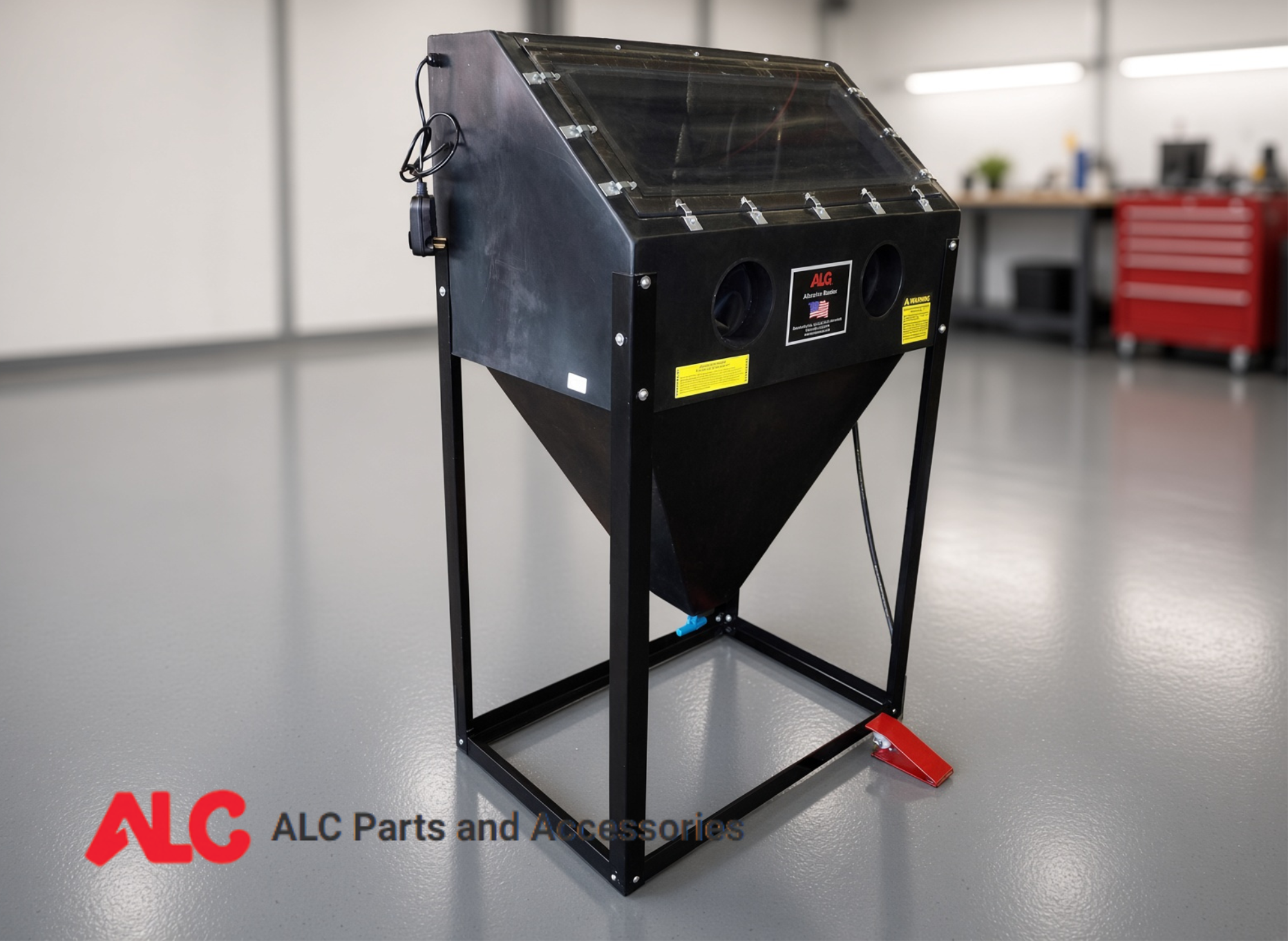
ALC Polymer Wet Blast Cabinets 43391
Abrasive Cabinet, Polymer Wet Blast, Plastic, Black, Each
Construction and Materials: Tough LDPE Polymer Design
Cabinet construction directly impacts how long your equipment lasts and how much time you spend on upkeep. A wet blast environment—constant moisture, abrasive media, vibration—punishes materials that can't handle corrosion.
The one-piece polymer construction of ALC cabinets prevents rust and corrosion entirely, unlike welded steel alternatives that eventually flake and pit around seams. LDPE offers high impact resistance, dampens vibration noise, and tolerates exposure to common shop chemicals without degradation.
The polymer cabinet design reduces maintenance requirements compared to steel cabinets, eliminating the cycle of repainting, sealant repairs, and rust treatment.
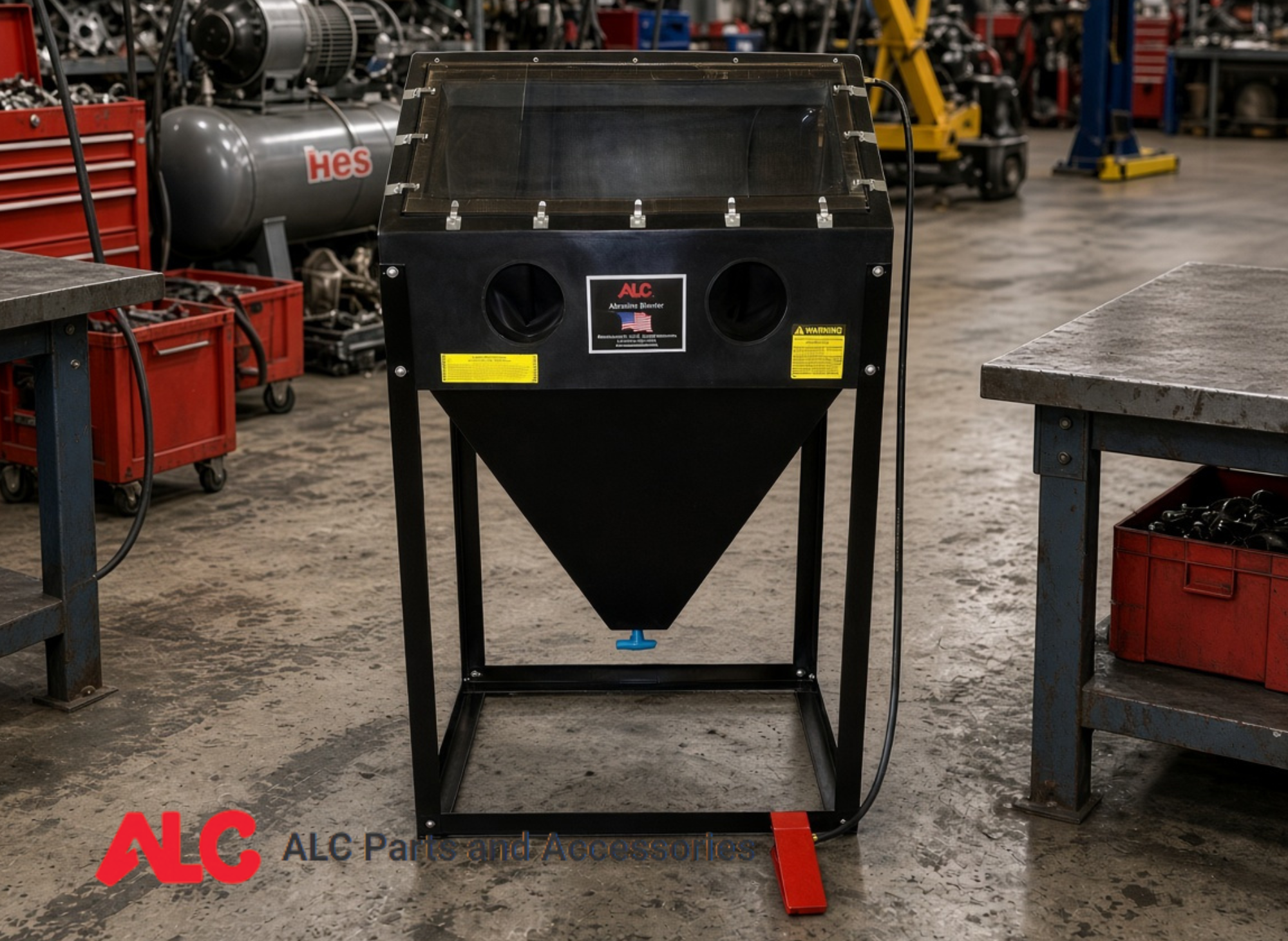
The heavy-duty 14-gauge steel legs (approximately 1.9 mm thick) provide a rigid, stable stance under load. Even with a full sump of slurry and a heavy casting inside, the frame resists flexing and torsion.
This combination, LDPE shell on a steel frame, delivers a rugged industrial feel at a lower introductory cost than fully welded stainless steel wet cabinets. Where painted steel cabinets rust at joints and chip over time, the LDPE shell stays corrosion-free and maintains its appearance with minimal effort.
Key Features and Included Components
Here is a quick rundown of what ships with SKU 43391 and why each feature matters in daily use.
Feature | Benefit |
36 in. x 24 in. work area | Fits manifolds, calipers, small frames, and housings |
Full-size top window/door | Simplifies loading bulky parts without bumping side seals |
Self-adhesive underlay | Protects the viewing window; inexpensive to replace when etched |
Pistol-grip trigger gun | Ergonomic control for longer sessions and intricate parts |
LED light kit | Bright, even illumination through mist; daylight color temperature (~5000–6500 K) |
Water + glass bead media | Dust-free operation; gentle on softer substrates |
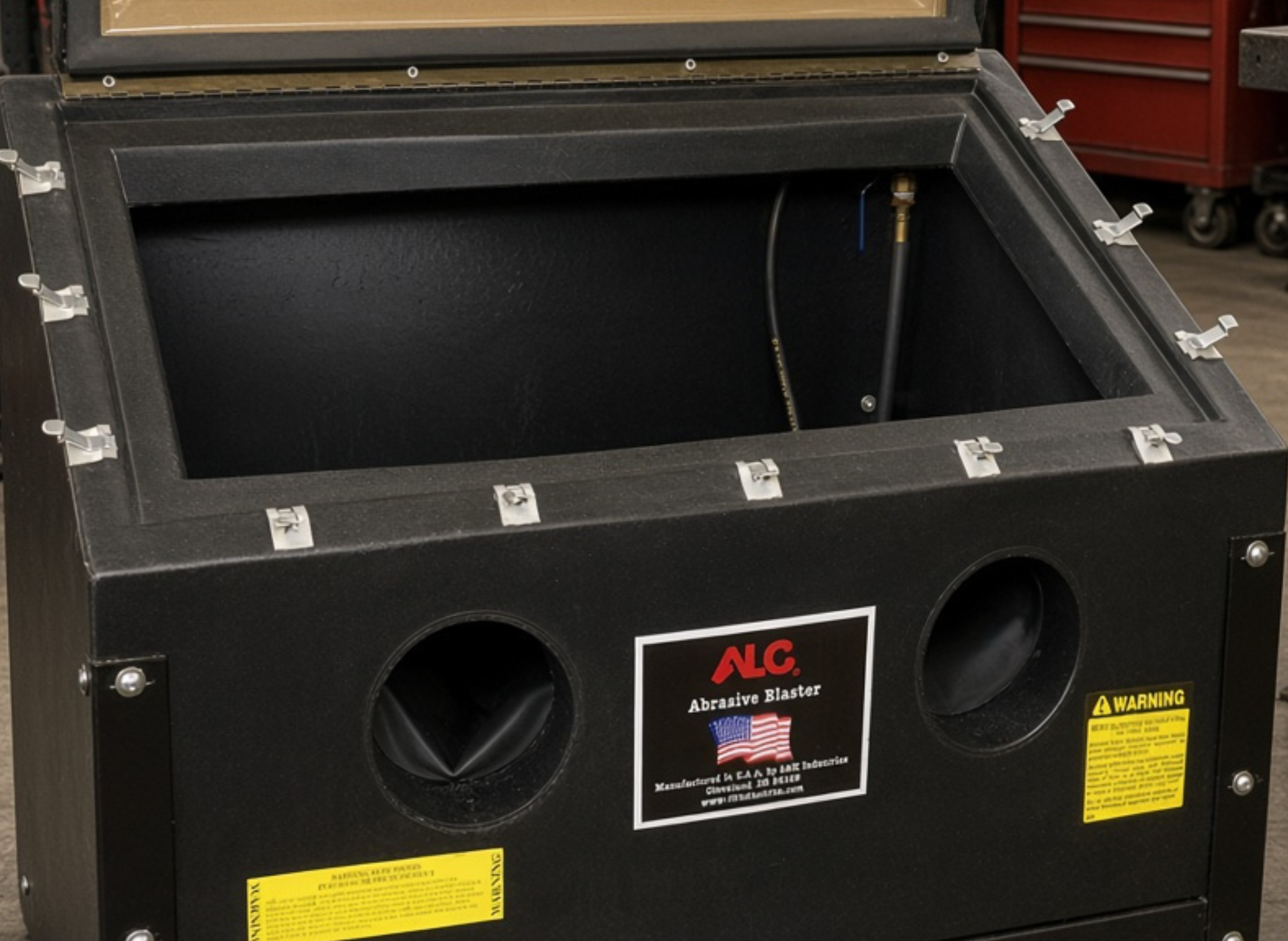
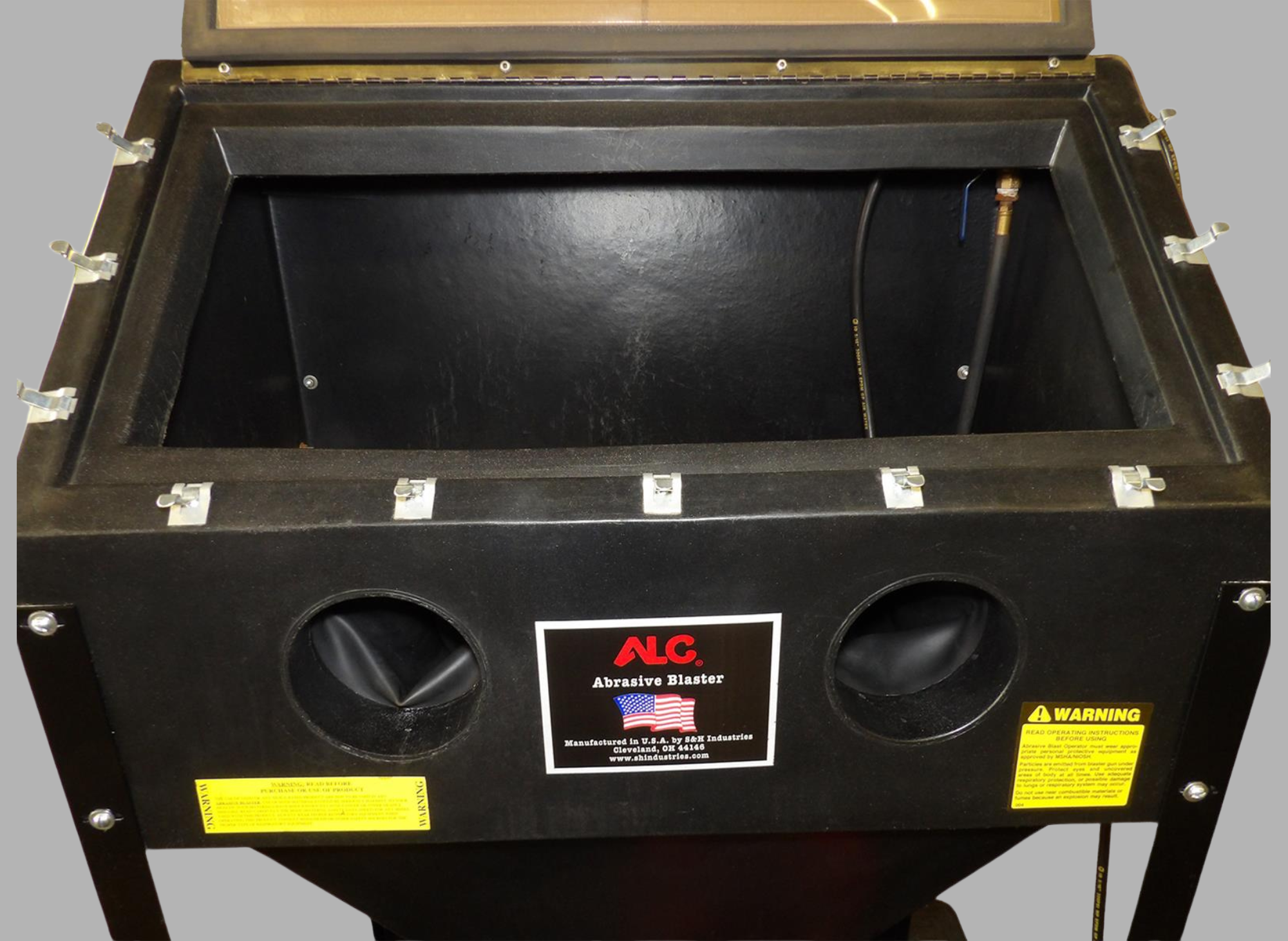
The top-loading door is a practical advantage: you can lower parts straight in rather than threading them through a side opening. The self-adhesive underlay protects the window from media etching-when it frosts over, you peel it off and apply a fresh sheet instead of replacing the entire panel.
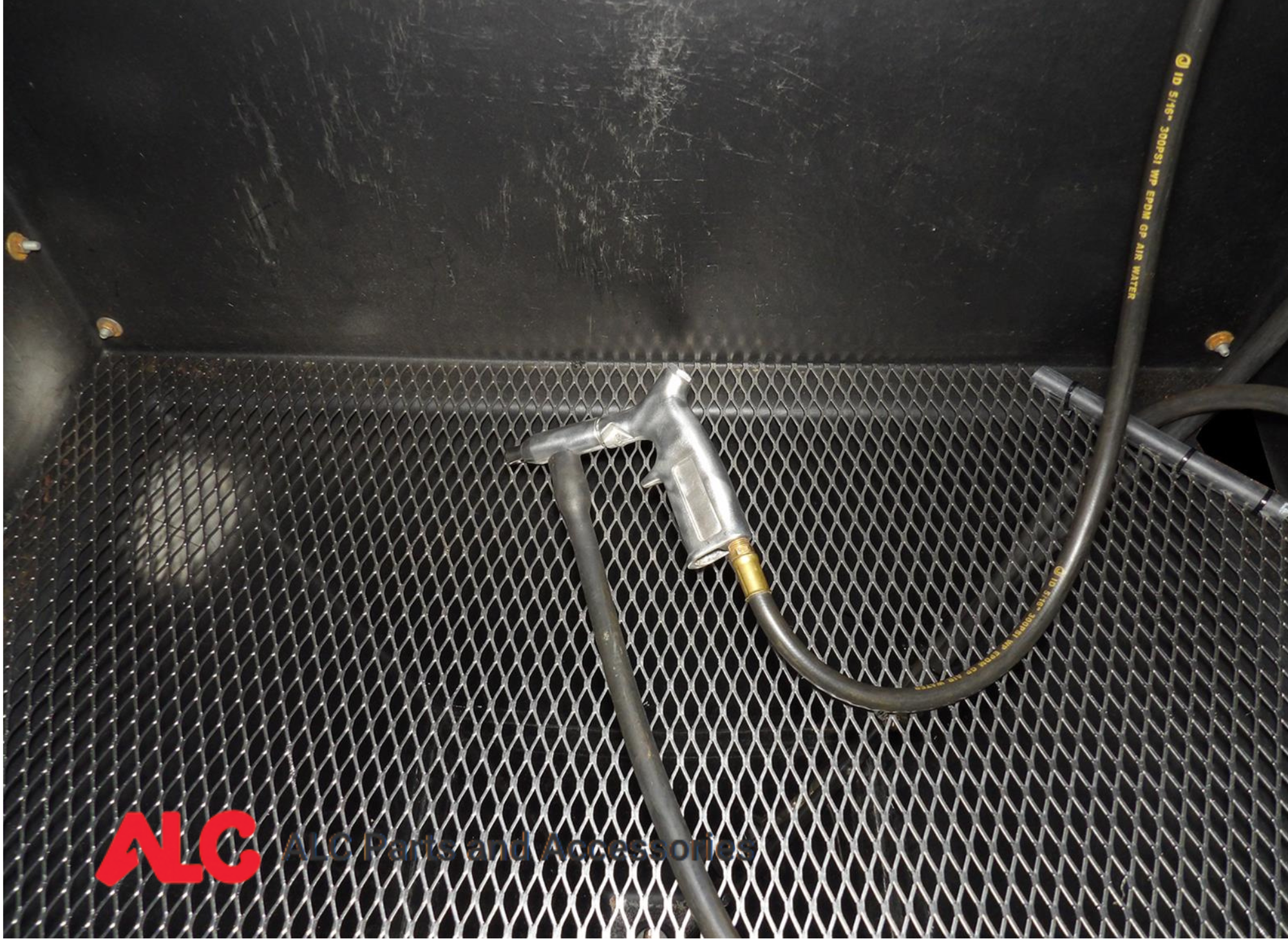
Standard fittings include hose routing for the blast nozzle, a drain provision, glove ports, and a vacuum port sized for a shop vac. The operator works from the front, controlling the pistol-grip gun through integrated glove openings.
How the Wet Blasting Process Works
Wet blasting combines cleaning, degreasing, and surface preparation in a single step. Where dry blasting hammers abrasive particles against a surface at full force, wet blasting envelops each particle in water, cushioning the impact and suppressing dust.
Inside the cabinet, water and glass beads mix in the sump to form a slurry. This slurry is drawn to the blast gun-typically via venturi suction-and propelled at the workpiece. The water in wet blasting cushions the impact, making it gentler on delicate surfaces. Wet blasting technology allows for simultaneous cleaning and finishing operations, improving efficiency compared to multi-step dry processes.
ALC's polymer cabinet minimizes airborne particles and improves operator safety during use. Because the water controls heat buildup, polymer wet blasting cabinets can achieve finer, more uniform finishes due to decreased heat buildup. This matters when you're working with aluminum or brass, where excess heat can warp thin sections or change metallurgy.
The shop vac plays a dual role in this process: it clears vapor so you can see what you're doing, and it keeps the interior under slight negative pressure so moisture stays contained. The LDPE interior handles repeated exposure to water and glass beads without rusting or flaking-a problem that plagues steel-lined cabinets within their first year or two.
Recommended Applications and Compatible Materials
This cabinet excels at precise cleaning and finishing-not at stripping thick scale or removing heavy rust. Its sweet spot is in parts where surface integrity and dimensional accuracy matter.
Typical use cases include:
- Restoring oxidized aluminum engine parts
- Cleaning brake and suspension components before painting or anodizing
- Removing light coatings and oxidation from cast iron or steel housings
- Preparing parts for paint, plating, or powder coating
- Reaching into small passages, threads, and machined cavities on carburetors and manifolds
Wet blasting can effectively clean aluminum and other soft metals without embedding media, which is a persistent problem with dry abrasive methods. The process is particularly suited for delicate parts that require precision cleaning without damage. Glass bead media carries a Mohs hardness rating of approximately 5.5–6, gentle enough for aluminum alloys, brass, bronze, copper, and mild steel.
For context on alternative media: Type II urea is the most widely used plastic blast abrasive globally. Type II urea has a Mohs hardness of approximately 3.5 and is compliant with MIL-P-85891A specifications, which serve as a certificate of its suitability for military and aerospace applications.
Type II urea is effective for stripping paint from aluminum structures and for removing coatings from aluminum without damage, leaving a surface profile of 0.5–1.0 mil on aluminum. Urea media can be reused 3–6 times under typical conditions. While this cabinet is designed for glass bead media, understanding available media types helps you choose the right abrasive for each job.
Glass bead wet blasting preserves dimensions and surface integrity, producing profiles roughly 10–15% shallower than equivalent dry blasting, making it suitable for components with tight tolerances.
Setup, Operation, and Safety
Think of this section as a concise overview—always consult the official manual for SKU 43391 for detailed assembly and operation instructions.
Basic setup steps:
- Position the cabinet on a level surface. Bolt or secure the 14-gauge steel legs to prevent shifting under load.
- Connect the LED light kit to a GFCI-protected power source.
- Fill the sump with water and add glass bead media. A practical starting ratio is roughly 1 part media to 10 parts water by weight—adjust based on flow and nozzle performance.
- Route the shop vac hose to the cabinet port with airtight connections. Exhaust should be directed away from the work area to avoid reintroducing moisture.
Operating steps:
- Load parts through the top door. Close and latch securely.
- Switch on the vacuum and LED light.
- Use the pistol-grip trigger gun at a standoff distance of 6–12 inches, maintaining constant motion across the surface.
The closed-loop nature of wet blast systems facilitates containment and compliance with safety standards. Wear sealed eye protection, waterproof gloves, and hearing protection. Keep floors dry—slurry on concrete is a slip hazard, so use mats or containment trays. Pause periodically to let the mist clear if visibility drops, and store PPE where it stays dry and accessible.
Maintenance, Longevity, and Cost Considerations
Proper maintenance is what turns a good purchase into a long-term shop asset. The tough LDPE polymer shell and steel frame are built for years of service, but only if you keep up with routine care.
- Drain and refresh slurry periodically. Spent glass beads break into sharp fragments that reduce finish quality and risk embedding.
- Replace the self-adhesive underlay on the viewing window when it becomes frosted. Inspect the window seal for gaps that could allow leaks.
- The LDPE shell resists rust and most common shop chemicals, so you won't need to repaint or treat corrosion-just wipe it down.
- Wet blasting systems can extend the life of abrasive media by reducing frictional heat and impact damage, meaning your glass beads last longer than in dry setups.
Inspect the 14-gauge steel legs and fasteners every few months. Tighten hardware and touch up any paint chips to prevent corrosion at joints. Check hoses and nozzles for wear—glass beads erode these components over time.
The long-term cost advantage is straightforward: reusable media, minimal cabinet repairs, and no outsourcing fees for small cleaning jobs. With correct maintenance and a properly sized shop vac, an ALC polymer wet blast cabinet can serve reliably for many years in a busy workshop.
Thank you for reading!
Your friend,
Todd
This site contains affiliate links, and we may earn a commission at no extra cost to you. All recommended products are thoroughly vetted.
#ALC #WetBlasting #BlastCabinet #AutomotiveTools #GarageShop #MetalCleaning #Restoration #AutoRestoration #Workshop #Tools
🛠️🚗✨🔧💦🏁🧰⚙️🔥🚘
 Todd Bandel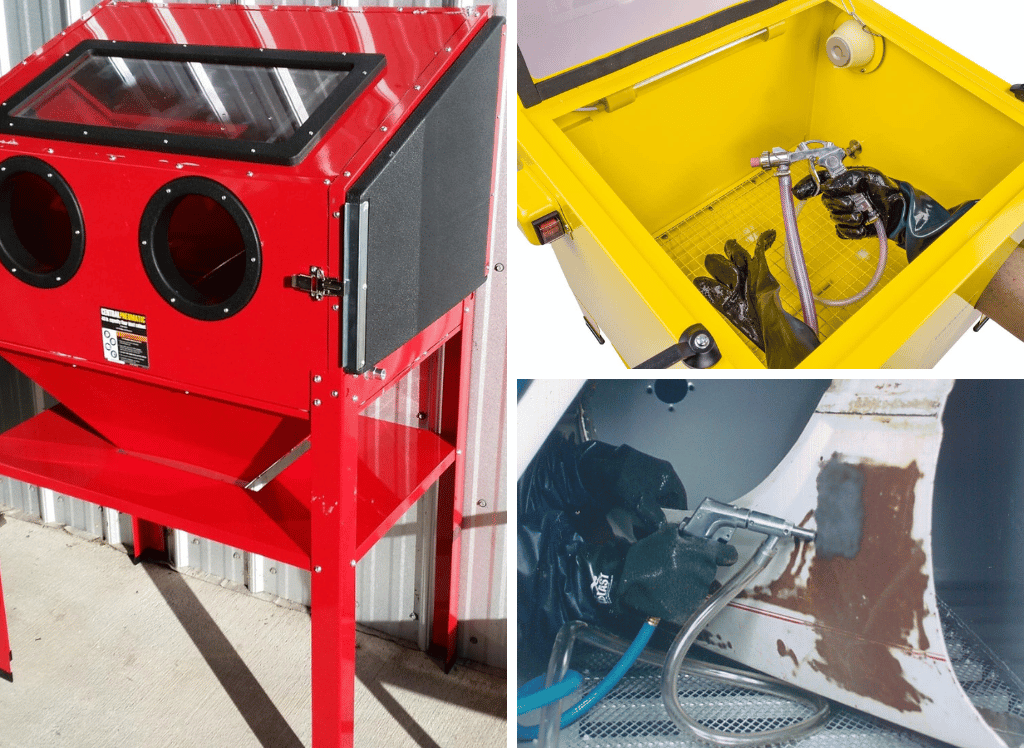
 Todd Bandel
 Todd Bandel
 Todd Bandel
 Todd Bandel