Mastering the Rod Bolt Stretch Gauge for Engine Builds
A Rod bolt stretch gauge ensures precise clamping force, prevents engine failure, and outperforms a standard torque wrench during assembly.

This site contains affiliate links, and we may earn a commission at no extra cost to you. All recommended products are thoroughly vetted.
A rod bolt stretch gauge measures the exact physical elongation of a connecting rod bolt as it is tightened. This method is superior to using a torque wrench because it eliminates friction variables, ensuring the bolt achieves the exact required stretch and clamping load to prevent catastrophic engine failure.
Engine building demands exact precision, yet many mechanics struggle with securing the most critical fasteners. Connecting rod bolts endure massive amounts of stress during operation. Every time the piston changes direction, the rod bolts must hold the connecting rod assembly together against extreme forces. If these bolts fail, the result is usually catastrophic engine damage.
For a long time, builders relied solely on a torque wrench to set these fasteners. However, practical experience shows that measuring rotational friction is not a truly accurate way to measure the actual clamping load on a bolt. Threads can bind, and varying amounts of lube can drastically change the final clamping force, even if the specified torque is reached.
This is where the rod bolt stretch gauge comes into play. By measuring the physical elongation of the fastener, this tool gives you absolute certainty that the required stretch meets the manufacturer's exact specifications. This guide will walk you through why this tool is essential, the different types available, and how to use one to protect your hard work.
Why Is Measuring Rod Bolt Stretch Superior to Using a Torque Wrench?
The fundamental problem with a torque wrench is that it measures the friction required to turn the bolt head, not the actual clamping force. Friction is highly unpredictable. Factors like the type of lube used, the condition of the threads, and the finish of the material all play a significant role.
When you tighten a bolt, you are essentially stretching it like a very stiff spring. This stretch creates the load or pull that holds the connecting rod cap securely to the rod. If you rely on torque alone, you might hit the specified torque early due to high friction, leaving the bolt dangerously loose. Alternatively, extra slick lube could cause you to over-tighten the fastener, pushing it past its yield point and permanently damaging the bolt.
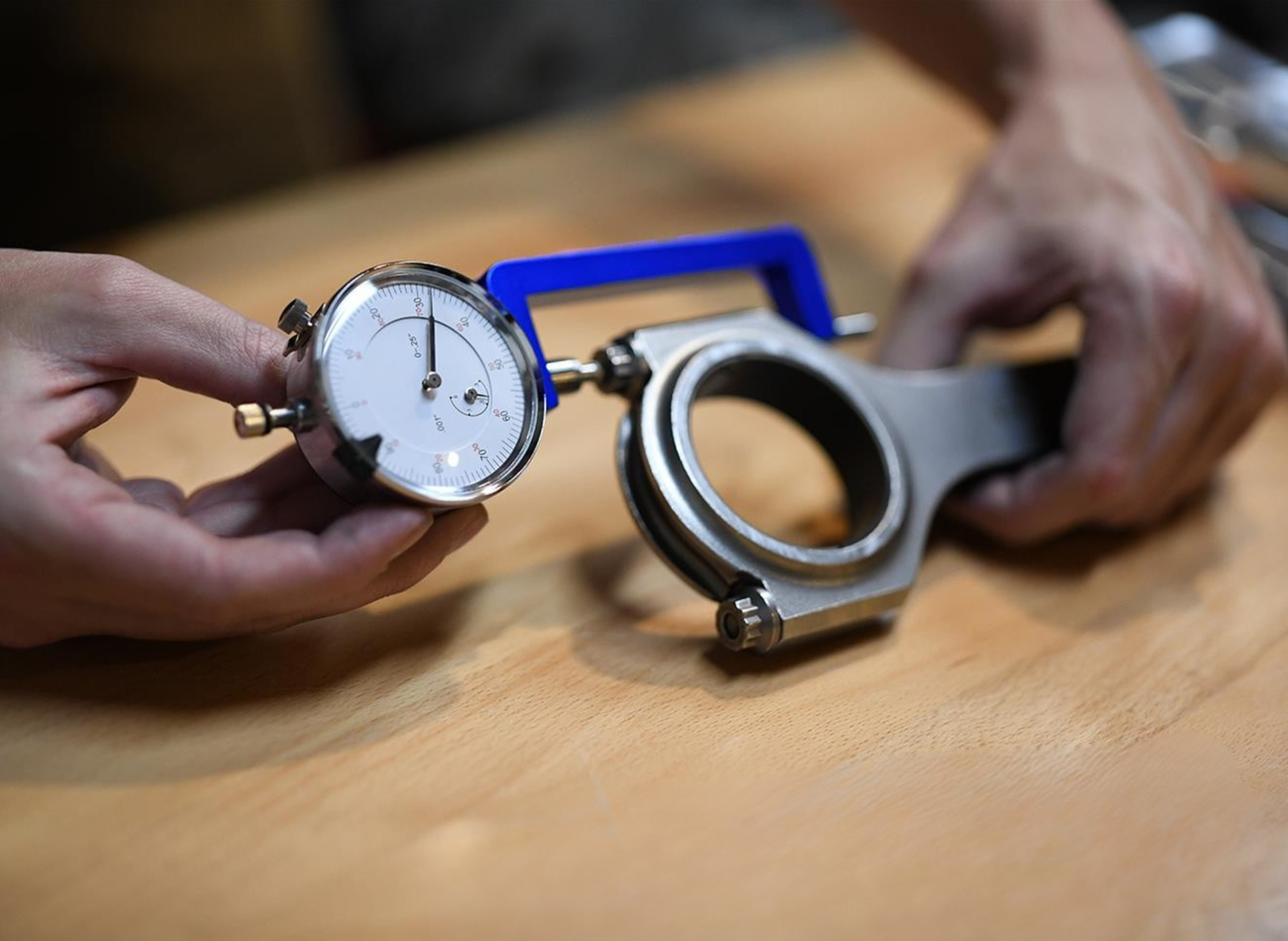
Measuring the actual rod bolt stretch completely bypasses the friction variable. A rod bolt stretch gauge directly measures the elongation of the fastener. When the gauge shows you have reached the required stretch, you know the exact clamping load is correct, giving you the confidence that your engine will hold together under extreme RPMs.
What Exactly Is a Rod Bolt Stretch Gauge, and How Does It Function?
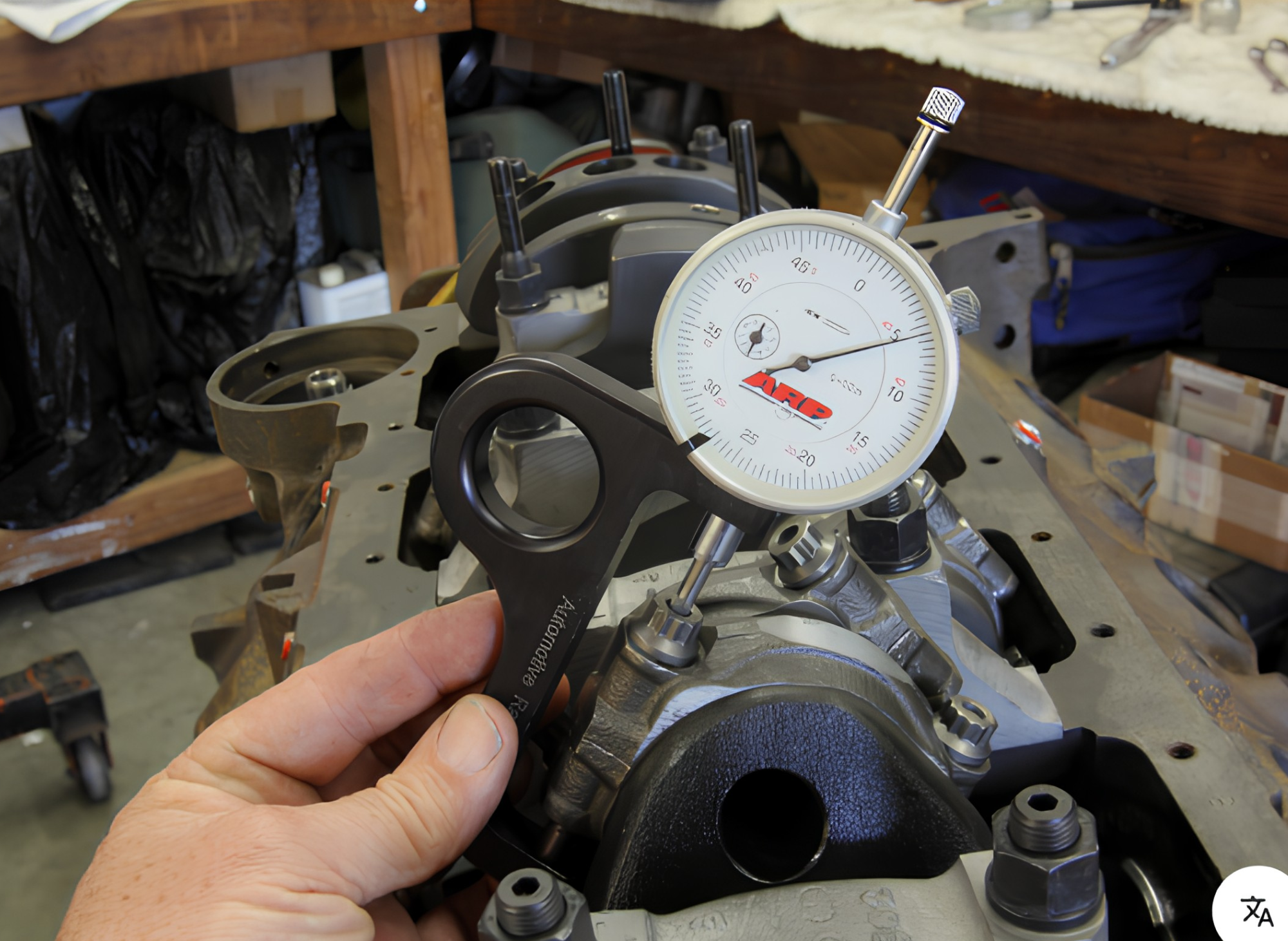
A rod bolt stretch gauge is a specialized precision measuring instrument designed to read the exact length of a rod bolt before, during, and after tightening.
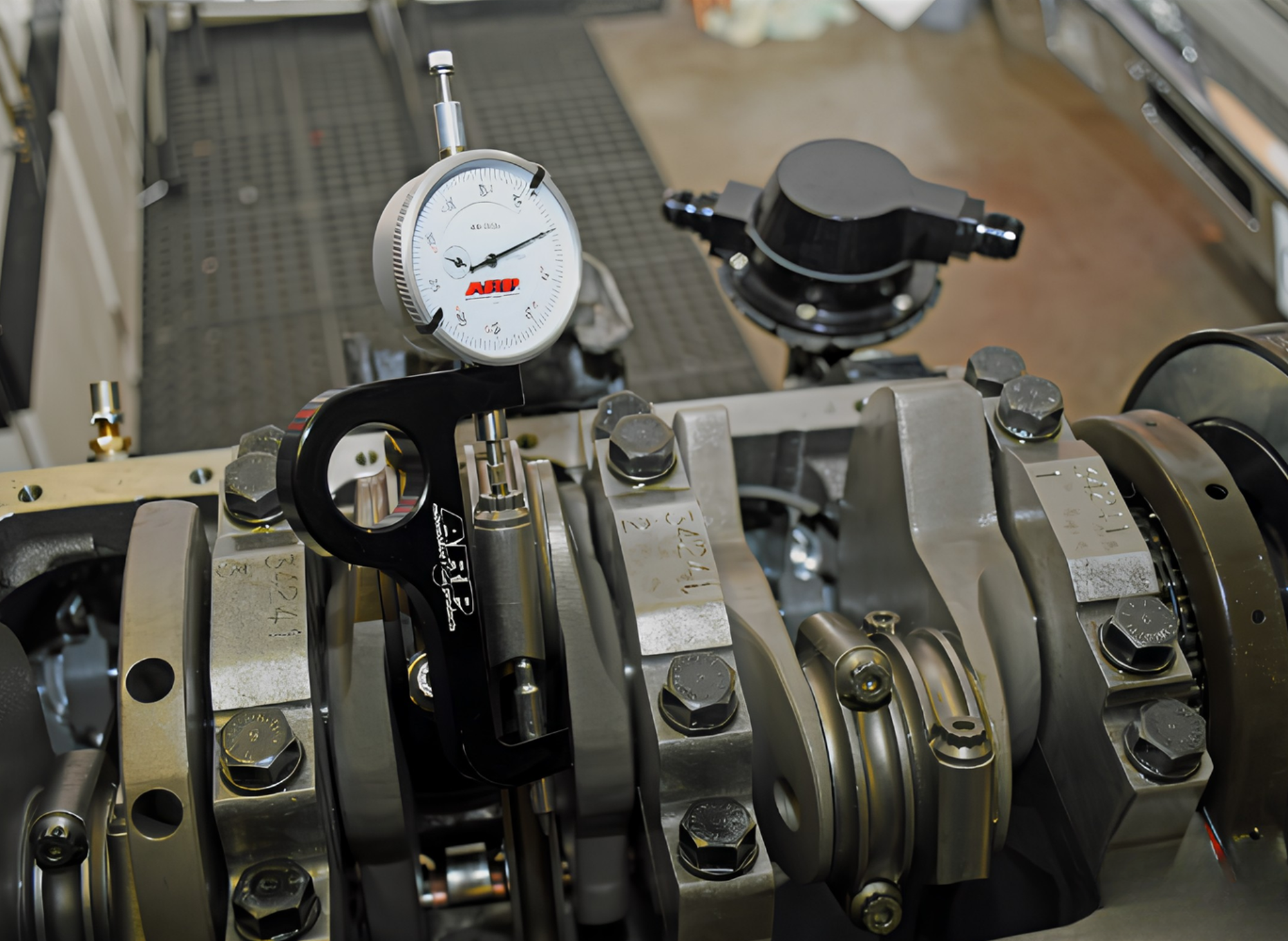
The tool typically consists of a sturdy frame, an adjustable anvil, and a highly accurate dial indicator. The gauge is designed to hold onto the ends of the fastener securely. To make this possible, most performance rod bolts have a small dimple or center point machined into both the bolt head and the threaded end.
The stretch gauge utilizes spherical points on both the stationary anvil and the dial indicator's measuring arm. These points seat perfectly into the dimples on the bolt. As you tighten the nut or the bolt, the fastener physically lengthens. The dial indicator tracks this minute change in length, often down to ten-thousandths of an inch, allowing you to achieve incredibly accurate results.
What Are the Different Types of Rod Bolt Stretch Gauges Available?
The market offers several excellent tools tailored to different budgets and precision requirements. They vary by material (such as aluminum or steel), dial indicator ranges, and dial increments. Here is a breakdown of popular models to help you make an informed choice.
ARP Rod Bolt Stretch Gauges
ARP (Automotive Racing Products) is highly respected in the fastener industry. They offer two primary gauges:
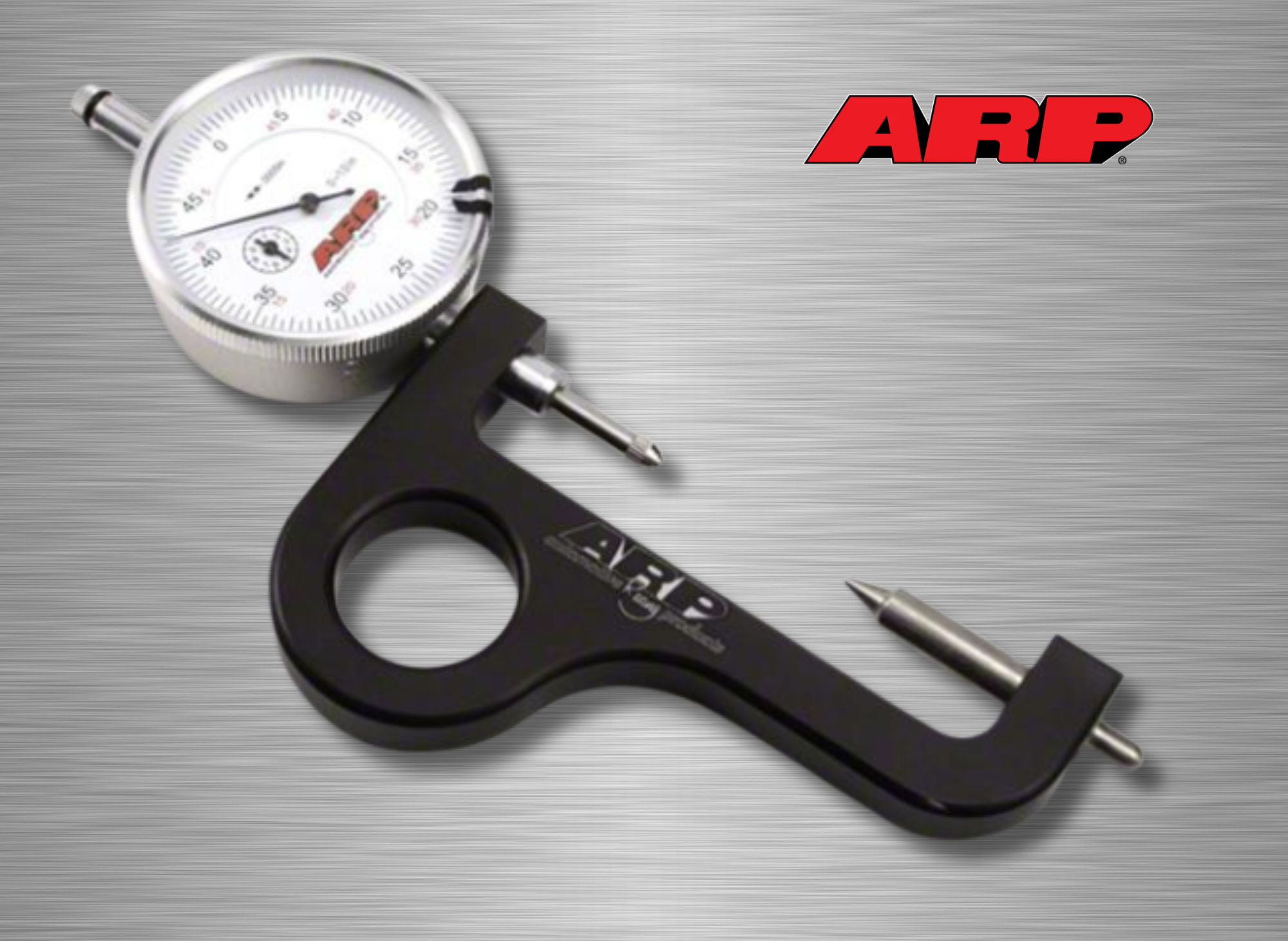
ARP Rod Bolt Stretch Gauges 100-9942
Rod Bolt Stretch Gauge, Dial Indicator, Kit
- ARP-100-9942: This model is crafted from black anodized aluminum. It features a dial indicator with a 0-1.00 in. range and highly precise 0.0005 in. increments. It comes with a plastic storage case and usually retails around $181.99.
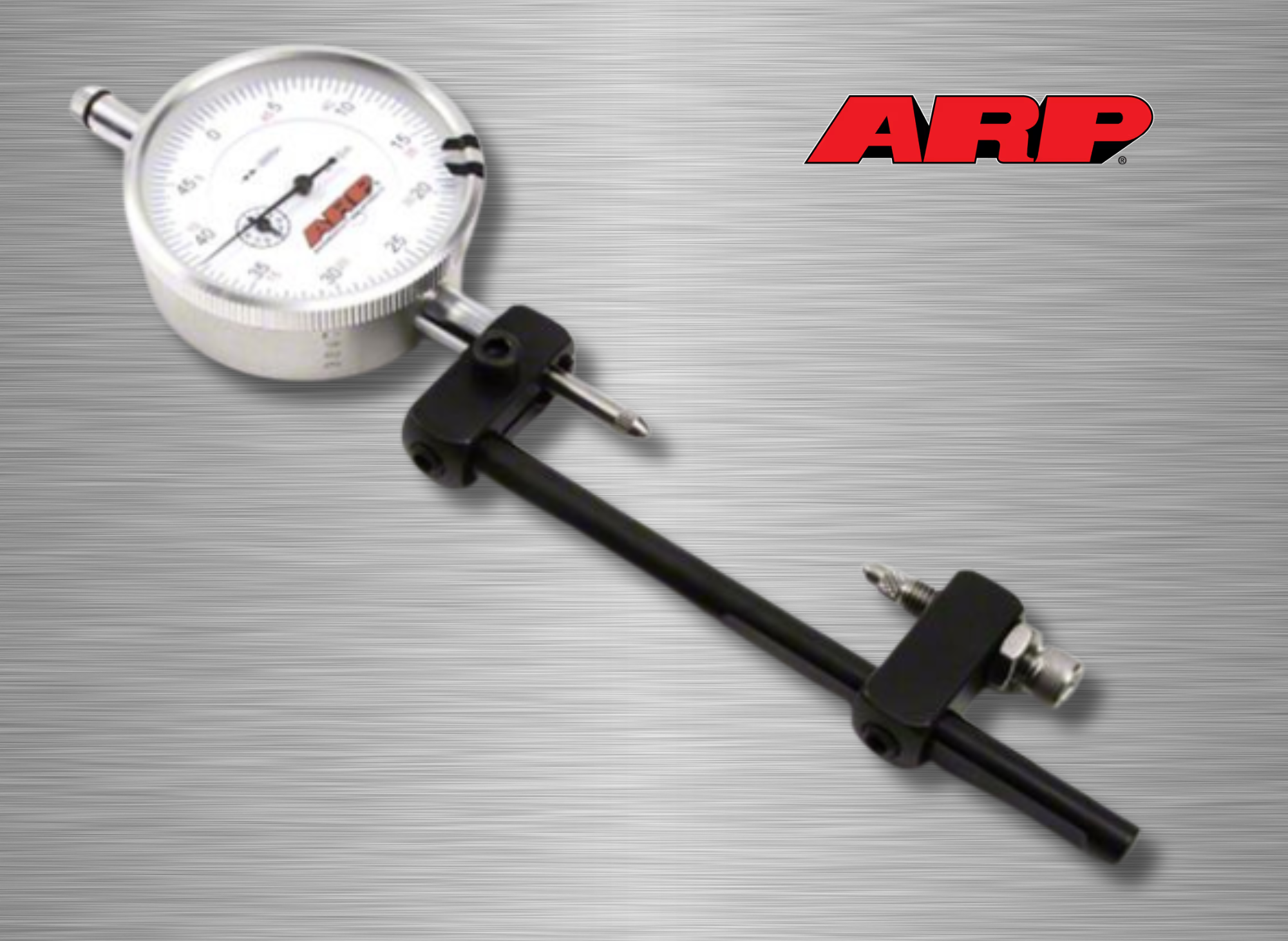
ARP Rod Bolt Stretch Gauges 100-9941
Rod Bolt Stretch Gauge, Steel, Dial Indicator, .0005 in. Increments, Adjustable Length, Storage Case, Kit
- ARP-100-9941: Designed for heavy-duty professional use, this gauge is made from billet steel for maximum rigidity. Like its aluminum counterpart, it measures in 0.0005 in. increments and accommodates varying lengths, though it carries a higher price tag of roughly $240.99.
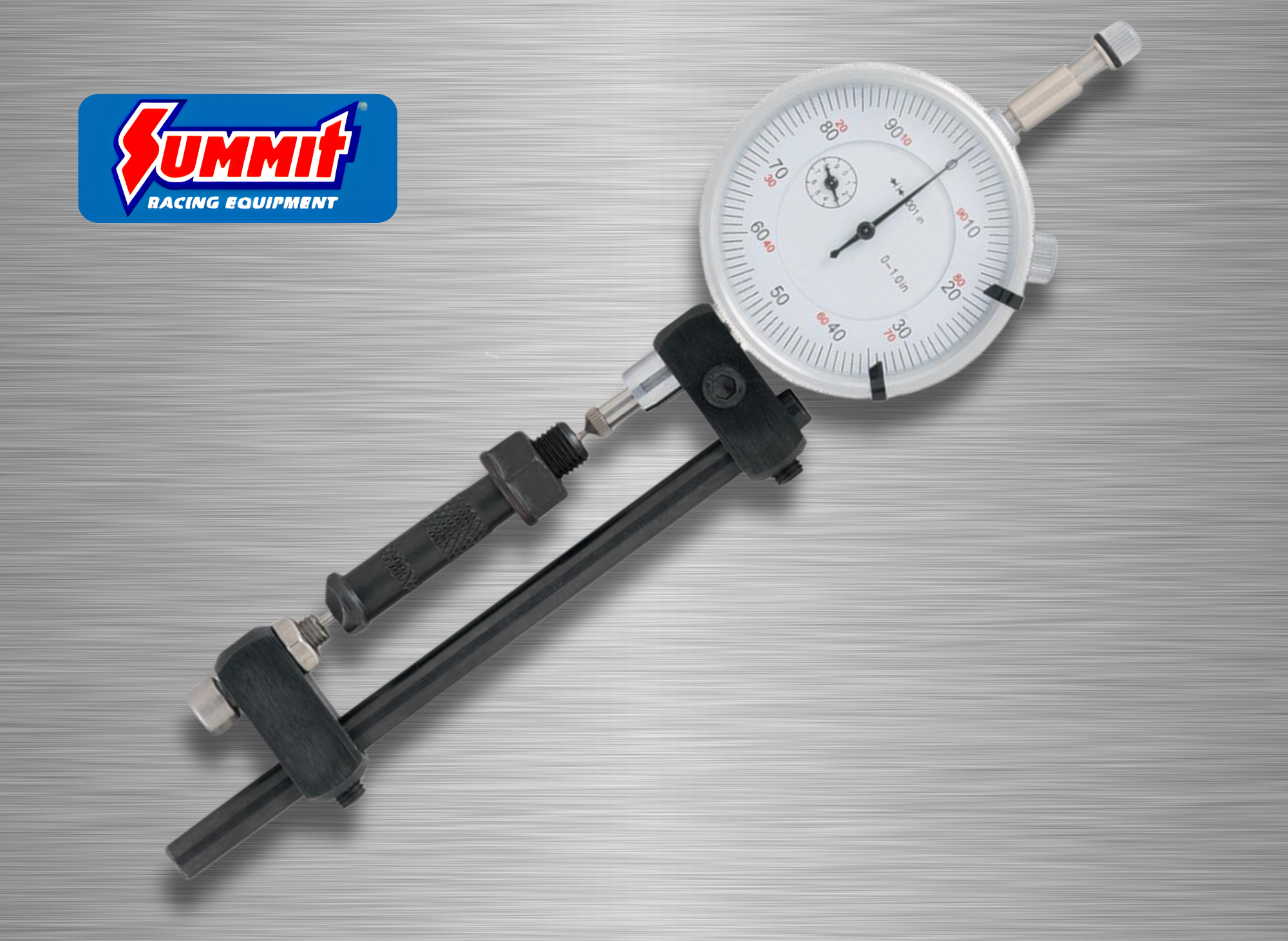
Summit Racing™ Rod Bolt Stretch Gauges SUM-900015
Rod Bolt Stretch Gauge, Steel, Dial Indicator, Adjustable Length, Right/Left Configurations, Kit
Summit Racing™ Rod Bolt Stretch Gauges (SUM-900015)
For those seeking a durable yet budget-friendly option, the Summit Racing SUM-900015 is a solid choice. Constructed from steel, it offers adjustable length and right/left configurations. The dial indicator measures in 0.001 in. increments. At approximately $55.99, it provides an accessible entry point for the DIY builder.
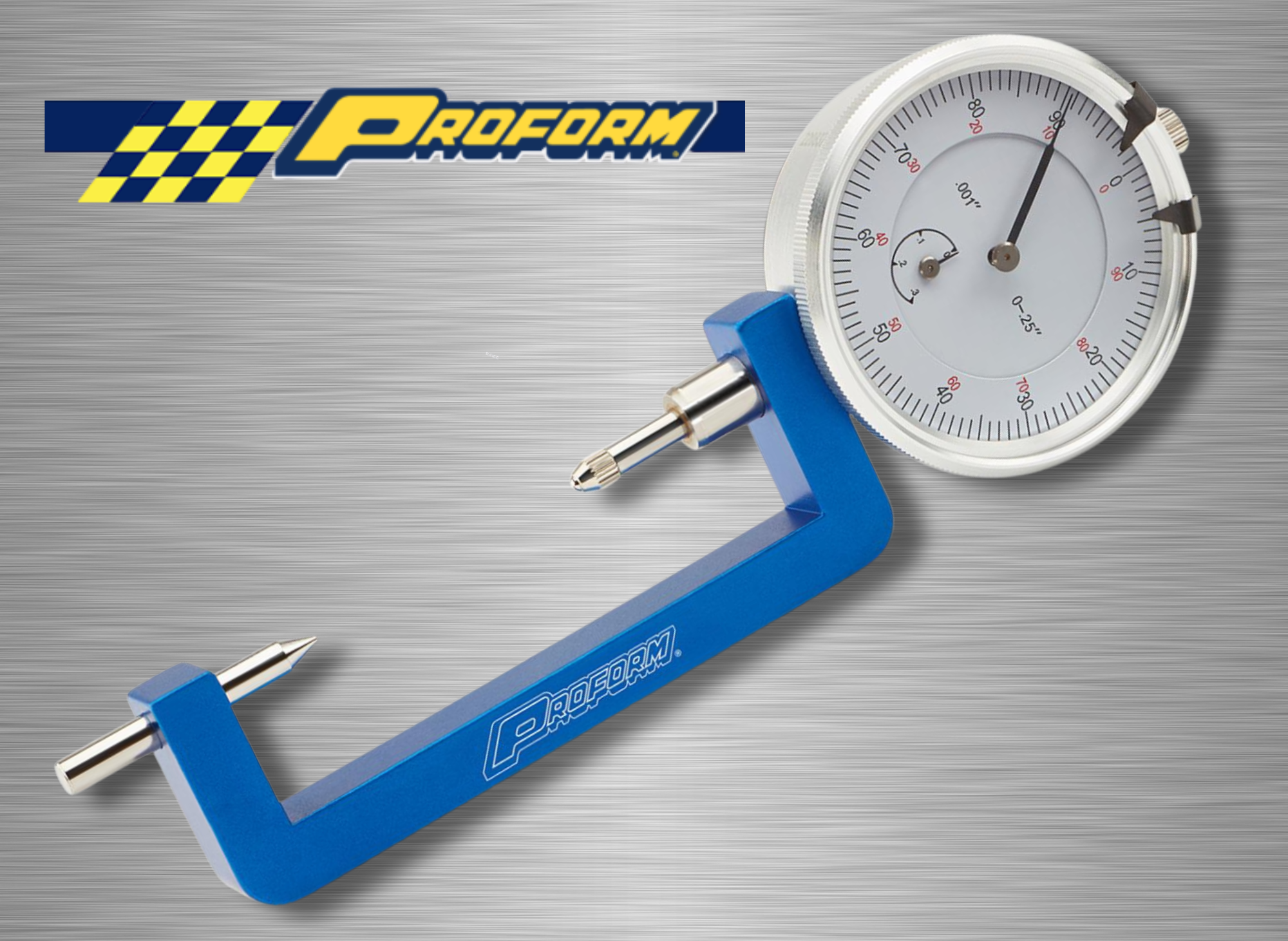
Proform Rod Bolt Stretch Gauges 66788
Rod Bolt Stretch Gauge, Aluminum, Dial Indicator, Adjustable Length, 2.75 in. Capacity, Kit
Proform Rod Bolt Stretch Gauges (PRO-66788)
The Proform 66788 gauge is an aluminum tool featuring a striking blue finish. It includes a high-tension spring for superior holding power and an adjustable anvil capable of measuring a rod bolt length up to 2.75 inches. Its dial indicator reads in 0.001 in. increments within a 0-0.10 in. range, priced at around $76.99.
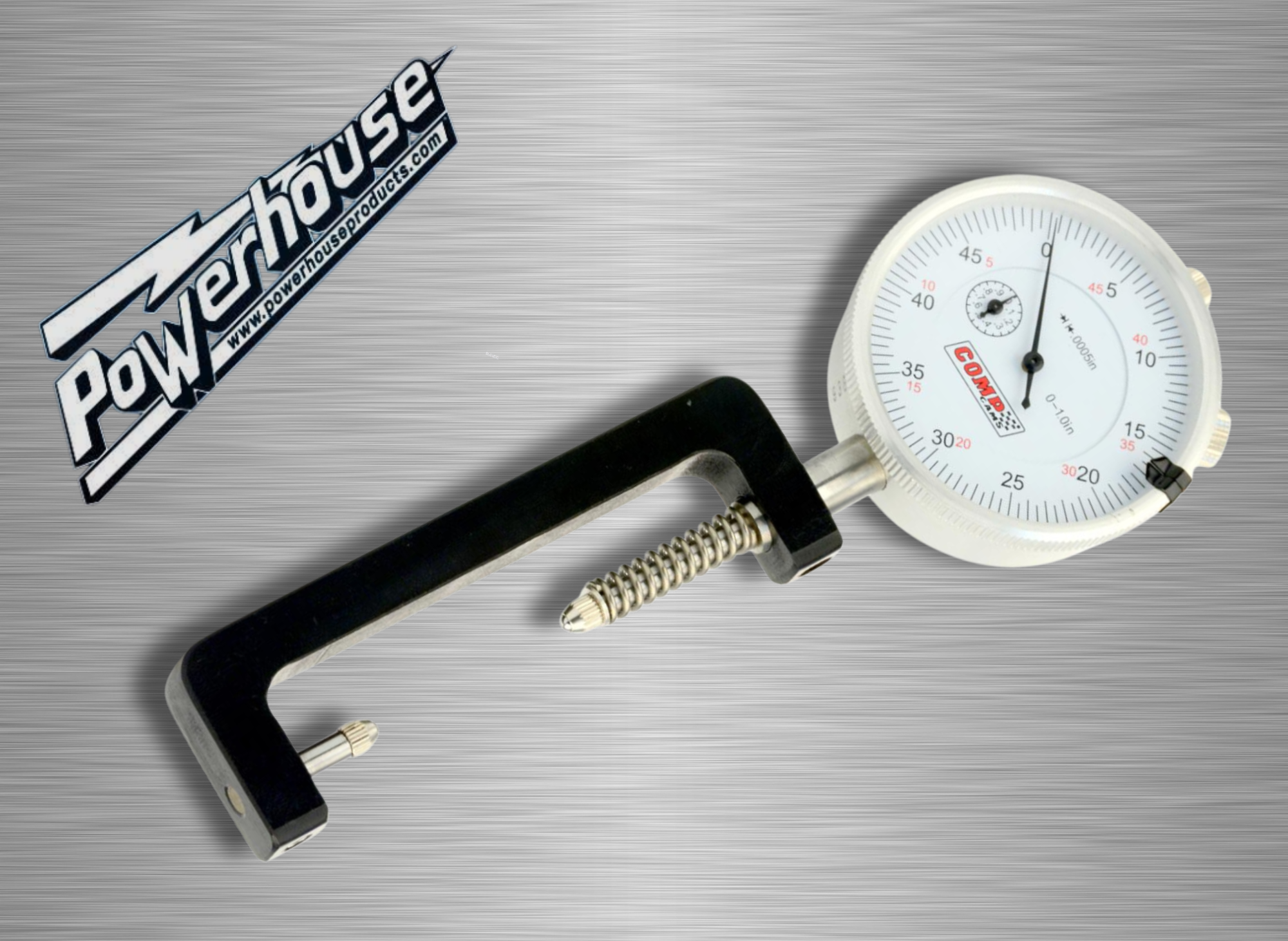
Powerhouse Products Rod Bolt Stretch Gauges POW101300
Rod Bolt Stretch Gauge, Dial Indicator, 0-1.000 in. Range, Aluminum, Black Anodized, Each
Powerhouse Products / COMP Cams Gauges
Both Powerhouse Products (POW101300) and COMP Cams (CCA-POW101300) offer an identical black anodized aluminum gauge. This tool features a super high-tension spring that actively holds the gauge to the bolt while tightening. The included mini dial indicator measures in 0.0005 in. increments across a 0-1.000 in. range. It accommodates lengths up to 2.750 in. and costs about $94.95.
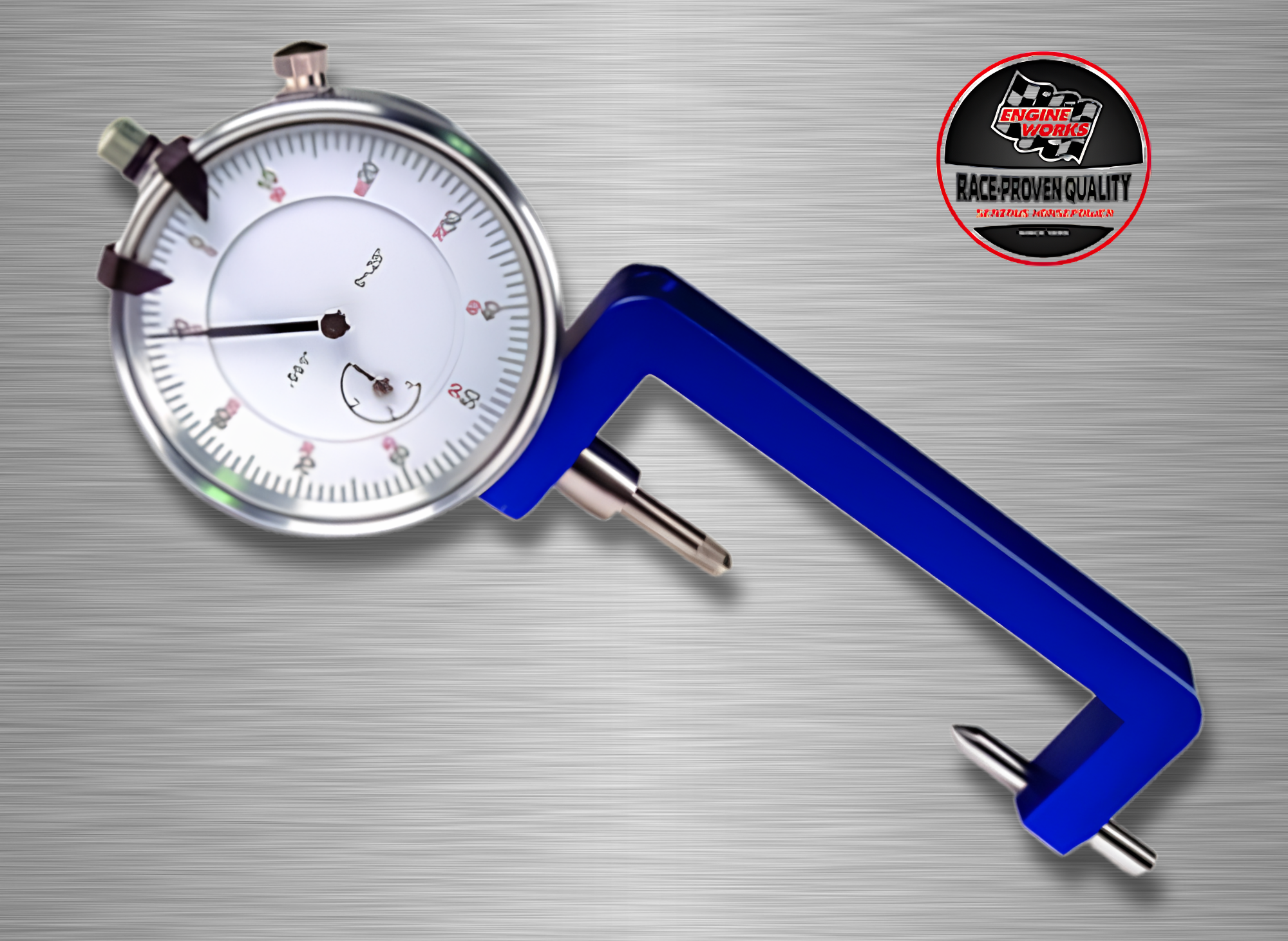
Engine Works Rod Bolt Stretch Gauges 15006
Rod Bolt Stretch Gauge, Aluminum, Dial Indicator, Adjustable Length, 2.75 in. Capacity, Each
Engine Works Rod Bolt Stretch Gauges (EW1-15006)
If ultra-fine precision is your primary goal, the Engine Works EW1-15006 delivers. Made from blue aluminum, this tool features a highly sensitive dial indicator that reads down to 0.0001 in. increments. It also fits bolts up to 2.75 inches long and is priced competitively at roughly $96.21.
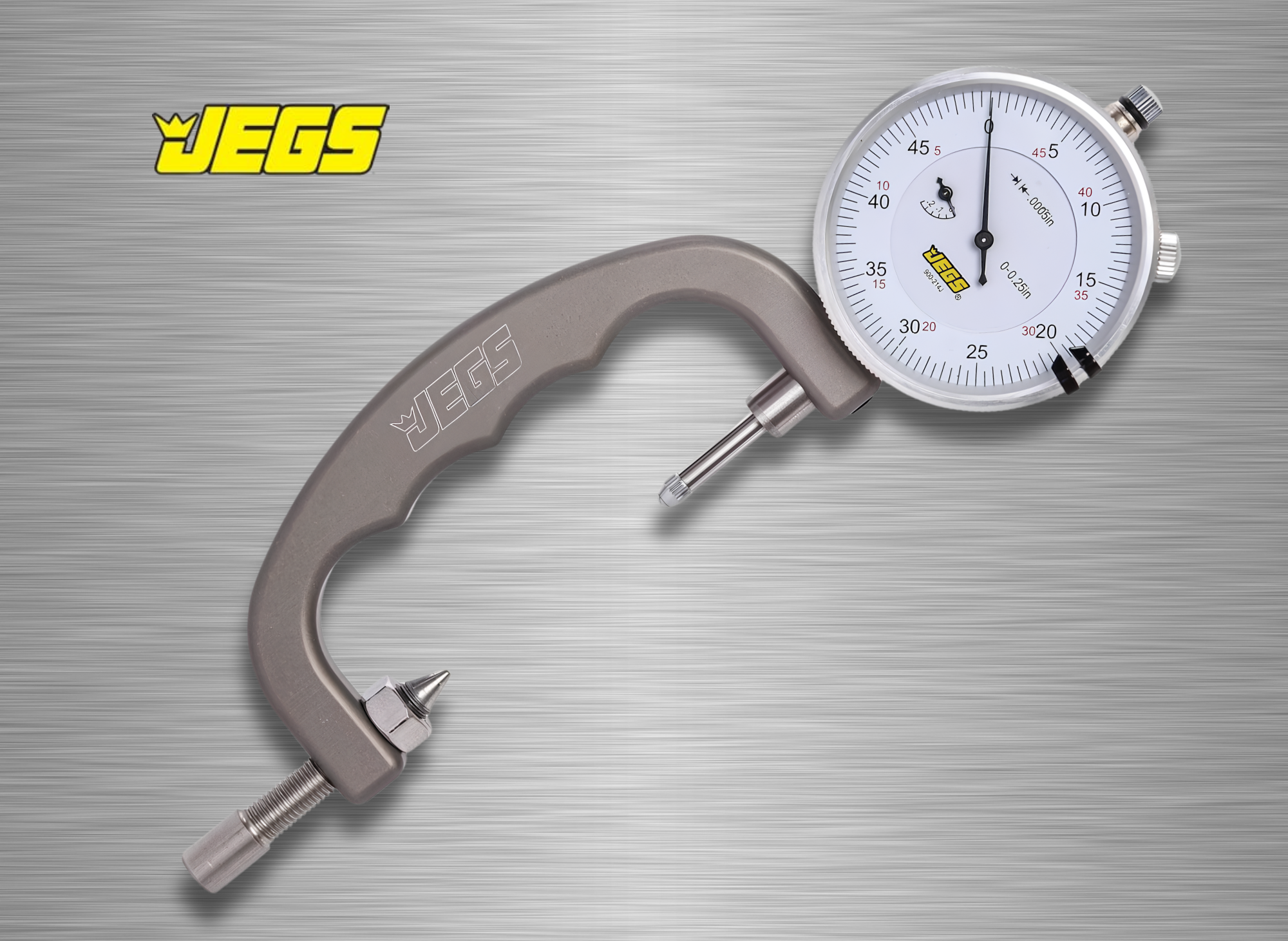
JEGS Rod Bolt Stretch Gauge (80591)
This tool is an essential must-have for engine rebuilds, performance builds, and maintenance tasks. It offers easy and accurate measurement of connecting rod bolt stretch, ensuring precision and reliability.
Crafted from billet aluminum, it delivers significant weight savings and exceptional durability for long-term use. Proudly made in the USA, it features high-quality components and expert assembly, making it a dependable choice for professionals and enthusiasts alike.
How Do You Properly Use a Rod Bolt Stretch Gauge, Step by Step?
Using a stretch gauge requires patience and attention to detail. Follow these steps to ensure you get it right the first time you get started.
1. Preparation and Lubrication
First, ensure your rod bolts, the connecting rod, and the caps are completely clean. Apply the manufacturer's recommended lube specifically to the threads and the underside of the bolt head. The correct lubrication prevents galling and ensures a smooth pull.
2. Take the Initial Measurement
Before applying any load, place the bolt into the connecting rod. Adjust the stretch gauge so the spherical points seat firmly into the dimples on both ends of the bolt. Ensure the gauge feels secure. Set the dial indicator strictly to zero. Make a note of this zero point; this is your baseline un-stretched length.
3. Apply Initial Torque
Snug the bolt down using a standard socket or wrench until it is just seated. Apply a small amount of initial torque to close any gaps between the rod cap and the rod body.
4. Measure the Stretch
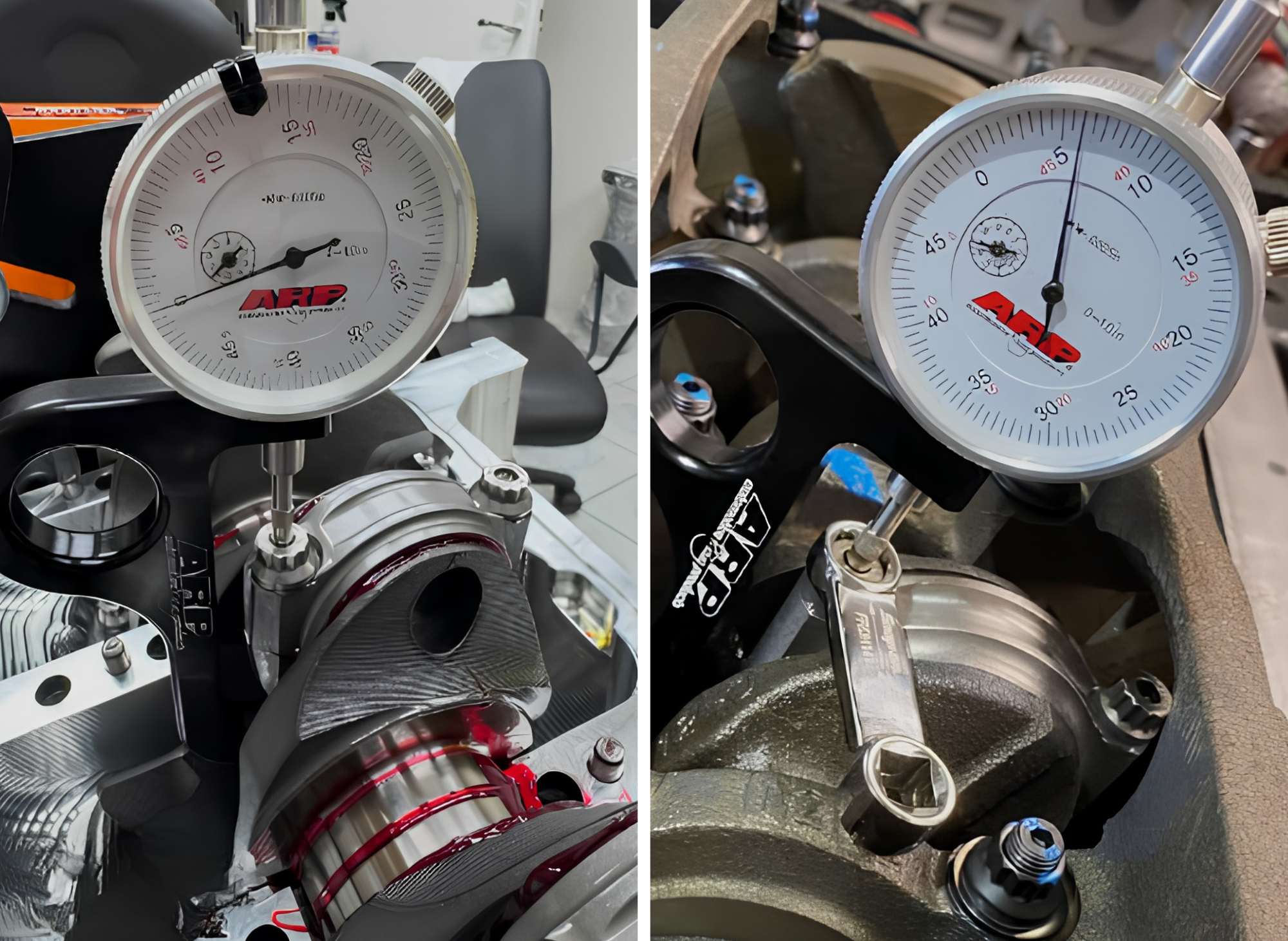
Reattach the bolt stretch gauge. Carefully tighten the fastener in stages, checking stretch between increments and making sure the gauge is calibrated correctly so the reading stays accurate. The dial indicator will begin to move, displaying the exact stretch in thousandths of an inch. Work slow and steady, and pay attention to the feel as you go.
5. Final Adjustment
Continue tightening until the dial indicator shows you have reached the exact required stretch specified by the fastener manufacturer, and feel for any unusual resistance as you tighten. Stop immediately once you hit the mark. Check your work by removing the gauge and re-seating it to ensure the reading remains constant.
What Are the Main Benefits of Achieving the Correct Rod Bolt Stretch?
The primary benefit is absolute confidence in your engine's bottom end. Proper stretch guarantees that the fastener operates within its designed elastic range. This prevents premature bolt yield, a condition where the metal stretches too far and permanently deforms, losing its clamping ability.
Furthermore, correct bolt stretch ensures the connecting rod housing bore remains perfectly round. If bolts are tightened unevenly or insufficiently, the big end of the rod can distort. This distortion pinches the bearing, leading to excessive wear and eventual engine failure. Achieving the exact specified load means your clearances remain accurate, maximizing engine longevity and performance.
How Should You Choose the Right Rod Bolt Stretch Gauge for Your Needs?
Selecting the right gauge comes down to identifying your specific needs based on precision, material preference, and budget.
- Choose the ARP-100-9941 (Steel) if you are a professional engine builder who requires a highly rigid tool that will survive daily shop use without flexing.
- Choose the Engine Works EW1-15006 if you demand the highest level of precision, as its dial indicator increments read down to 0.0001 inches.
- Choose the Summit Racing SUM-900015 if budget is your primary concern, but you still need a reliable, steel-constructed tool that gets the job done accurately.
- Choose the Powerhouse Products/COMP Cams gauges if you struggle with keeping the gauge securely on the bolt, as their super high-tension spring helps hold the tool in place securely during the tightening process.
Securing Your Engine’s Future With the Right Tools
Building a high-performance engine is a labor of love that requires the best tools available. Leaving the most critical fasteners to chance by relying solely on rotational friction is a risk you simply do not need to take.
By investing in a high-quality bolt stretch gauge, you guarantee that your fasteners provide the exact clamping force necessary to protect your engine under extreme conditions.
Thanks to modern precision instruments, every builder has a reliable way to ensure their hard work results in a durable, powerful engine. Read the manufacturer specifications carefully, take your time, and enjoy the peace of mind that comes from knowing the job was done perfectly.
Frequently Asked Questions (FAQ)
What Happens if You Exceed the Required Stretch on a Rod Bolt?
If you pull the fastener past the manufacturer's specified stretch, you will exceed the material's yield point. The bolt will permanently deform, losing its elastic clamping force, which drastically increases the risk of catastrophic rod failure during engine operation.
Can I Use a Torque Angle Gauge Instead of a Rod Bolt Stretch Gauge?
While a torque angle gauge (torque-to-yield method) is highly accurate and commonly used by OEMs, a stretch gauge remains the absolute most precise method for measuring clamping force on aftermarket performance fasteners. Choose a stretch gauge if the bolt design allows for physical measurement.
How Much Does a Rod Bolt Stretch Gauge Typically Cost?
A quality gauge typically ranges from $55 for basic steel entry-level models (like the Summit Racing SUM-900015) up to $240 or more for professional-grade billet steel tools with high-precision indicators (like the ARP-100-9941).
Do I Still Need Lube if I Am Measuring Bolt Stretch Instead of Torque?
Yes. Proper assembly lube is essential to prevent thread galling and ensure the nut turns smoothly, allowing you to achieve the target stretch without damaging the fastener threads.
Can a Stretch Gauge Be Used on Bolts Without Machined Dimples?
No. The spherical points on the gauge require the machined dimples on the bolt head and threaded end to seat properly and provide an accurate, repeatable measurement.
Our Final Conclusion
In the end, rod bolt stretch gauges play a key role in accurate, reliable engine assembly. They help ensure each rod bolt is tightened to the right amount of stretch, which supports better performance and reduces the risk of failure. That extra bit of precision can make a real difference in engine durability and overall confidence during a build.
Thank you for reading!
Your friend,
Todd
#PrecisionEngineering ⚙️ #BoltStretchMeasurement 📏 #EngineeringTools 🛠️ #AccurateResults ✅ #GaugeTech 🔧 #RodBoltTesting 🧪 #MechanicalInnovation 🚀 #ToolPerformance 💪 #EngineeringSolutions 🧰 #TechInAction ⚡
 Todd Bandel
 Todd Bandel
 Todd Bandel
 Todd Bandel
 Todd Bandel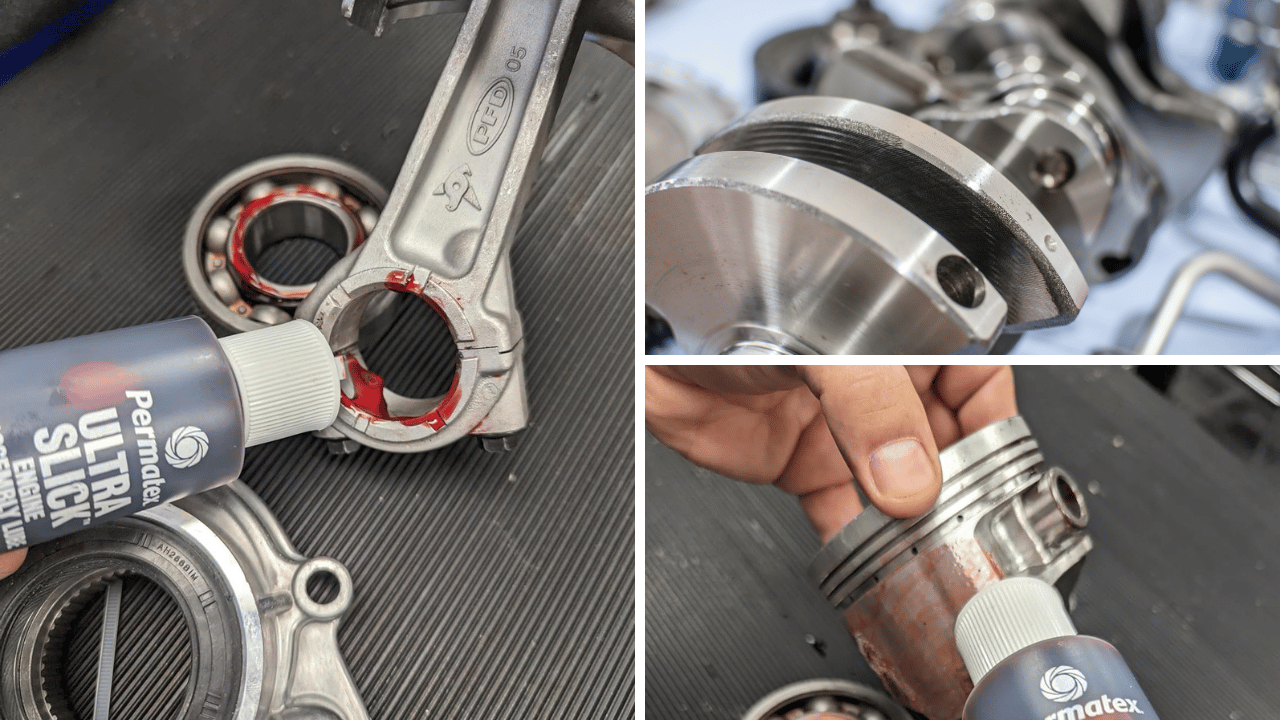
 Todd Bandel
 Todd Bandel
 Todd Bandel
 Todd Bandel
 Todd Bandel