Maximize Engine Performance: Ross Racing Pistons
Choose the right forged pistons for your engine build. Explore dome, flat-top, and dish designs, plus critical specs such as bore size and stroke.
This site contains affiliate links, and we may earn a commission at no extra cost to you. All recommended products are thoroughly vetted.
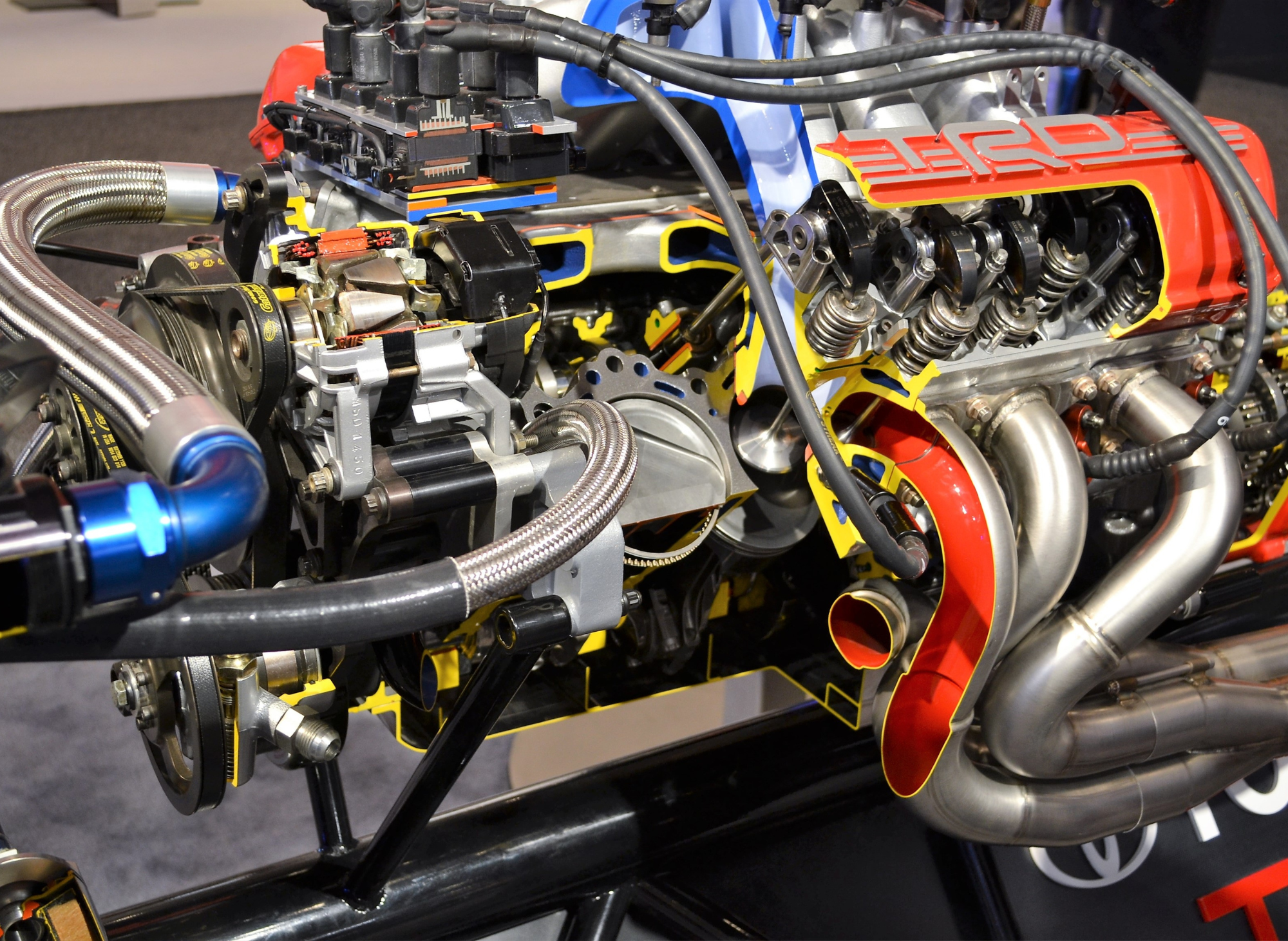
The roar of a high-performance engine is a symphony of precisely timed explosions, immense pressure, and expertly crafted components working in perfect harmony. At the heart of this mechanical masterpiece lies a component that takes the brunt of the abuse while dictating the overall power output.
Choosing the right forged pistons is crucial for maximizing engine power and durability, especially when pushing the limits of speed and performance. Building a reliable and powerful engine requires more than just bolting parts together. It demands an understanding of how each component interacts.
This blog post will guide you through the world of performance pistons, exploring the types available, key features to look for, and a comprehensive selection guide to help you find the perfect match for your build. We will specifically look at offerings from trusted brands like Ross Racing Pistons, demonstrating how their sophisticated design can elevate your racing experience.
Understanding Forged Pistons
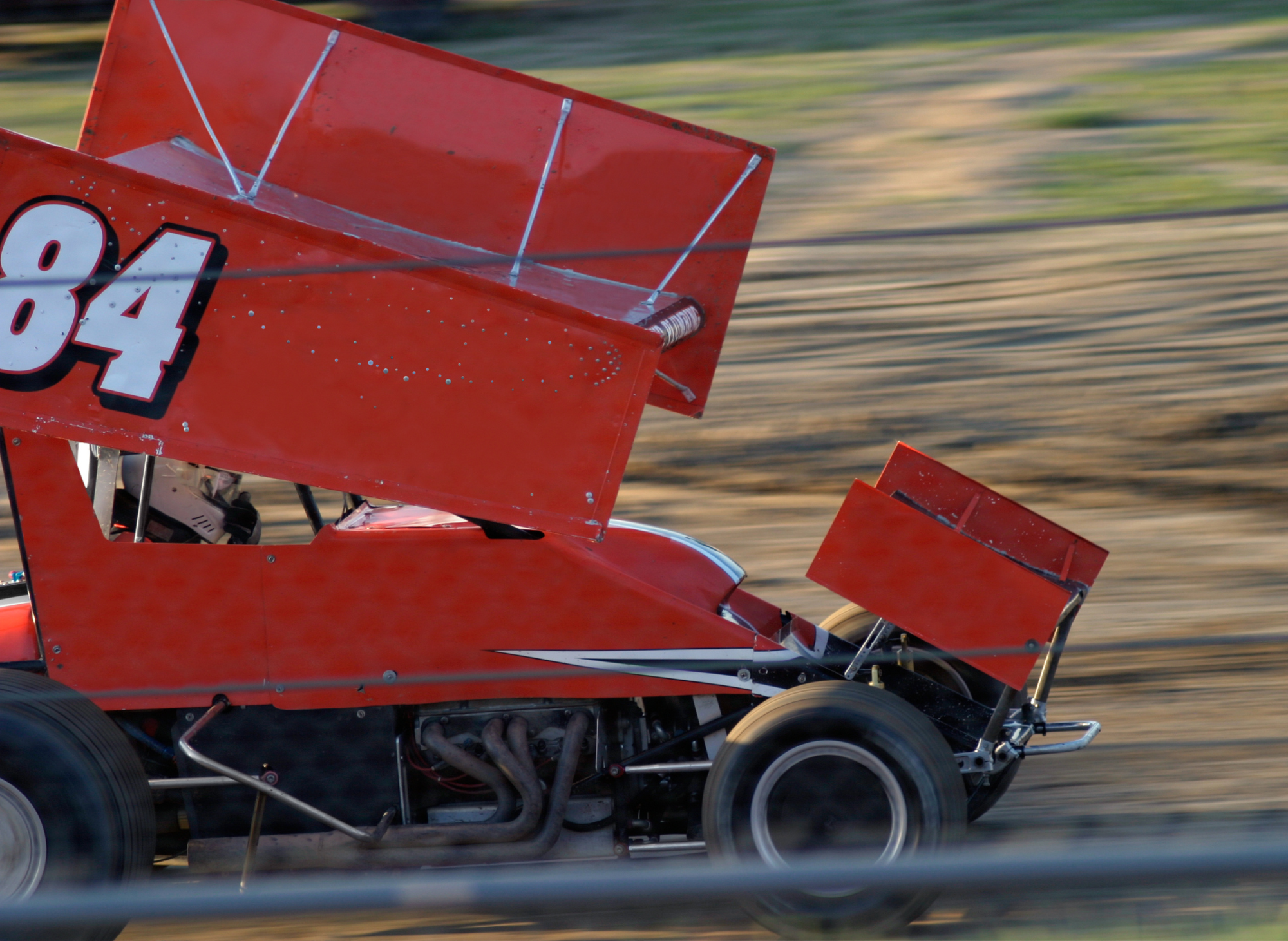
When you decide to build an engine for the racing industry, stock cast parts simply will not survive the intense environment inside the combustion chamber. You need materials built to withstand extreme stress.
What are forged pistons?
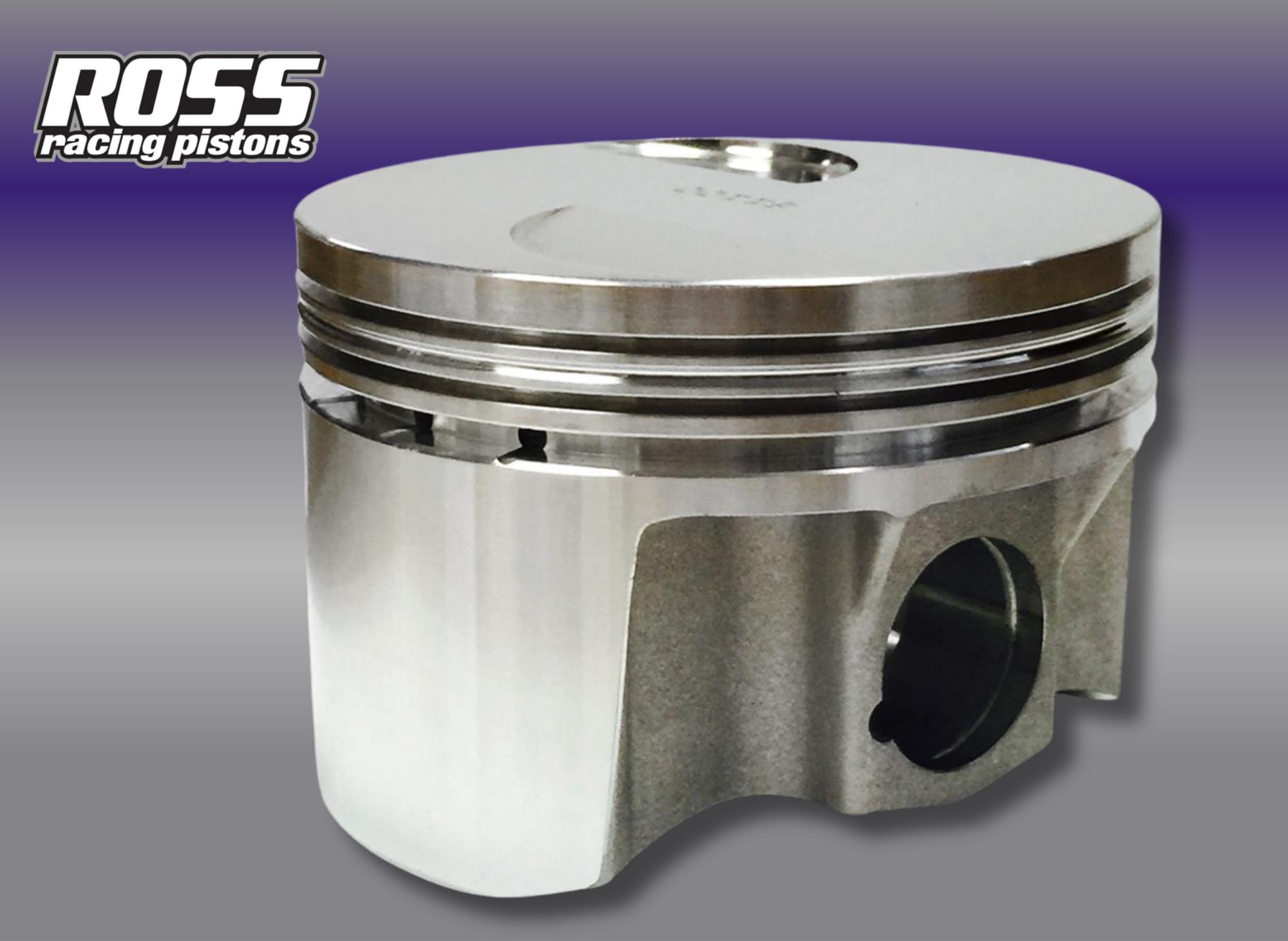
Unlike cast components, which are made by pouring molten metal into a mold, forged pistons are created by pressing a solid piece of high-strength aluminum alloy into shape under immense pressure. This manufacturing process aligns the grain structure of the metal, resulting in a much stronger and more durable part.
The most advanced forged pistons offer superior strength, incredible heat resistance, and the durability needed to survive high-RPM racing applications. When experts ensure the forging is done correctly, these components can withstand the punishment of nitrous, superchargers, and turbochargers.
Key Components of a Piston
A piston is not just a simple cylinder; it is a complex piece of engineering. The piston crown, or top, dictates the compression and can feature a dome, flat, or dish design.
Below the crown are the ring lands, which hold the rings responsible for sealing the combustion chamber. The piston skirt guides the item smoothly within the cylinder wall. Finally, the wrist pin and retainers connect the piston to the connecting rod. Many sets feature pins made from aircraft-quality steel for maximum reliability.
Types of Forged Pistons and Their Applications
Choosing the right type depends entirely on your engine setup and goals. Ross provides a wide array of designs to suit any application.
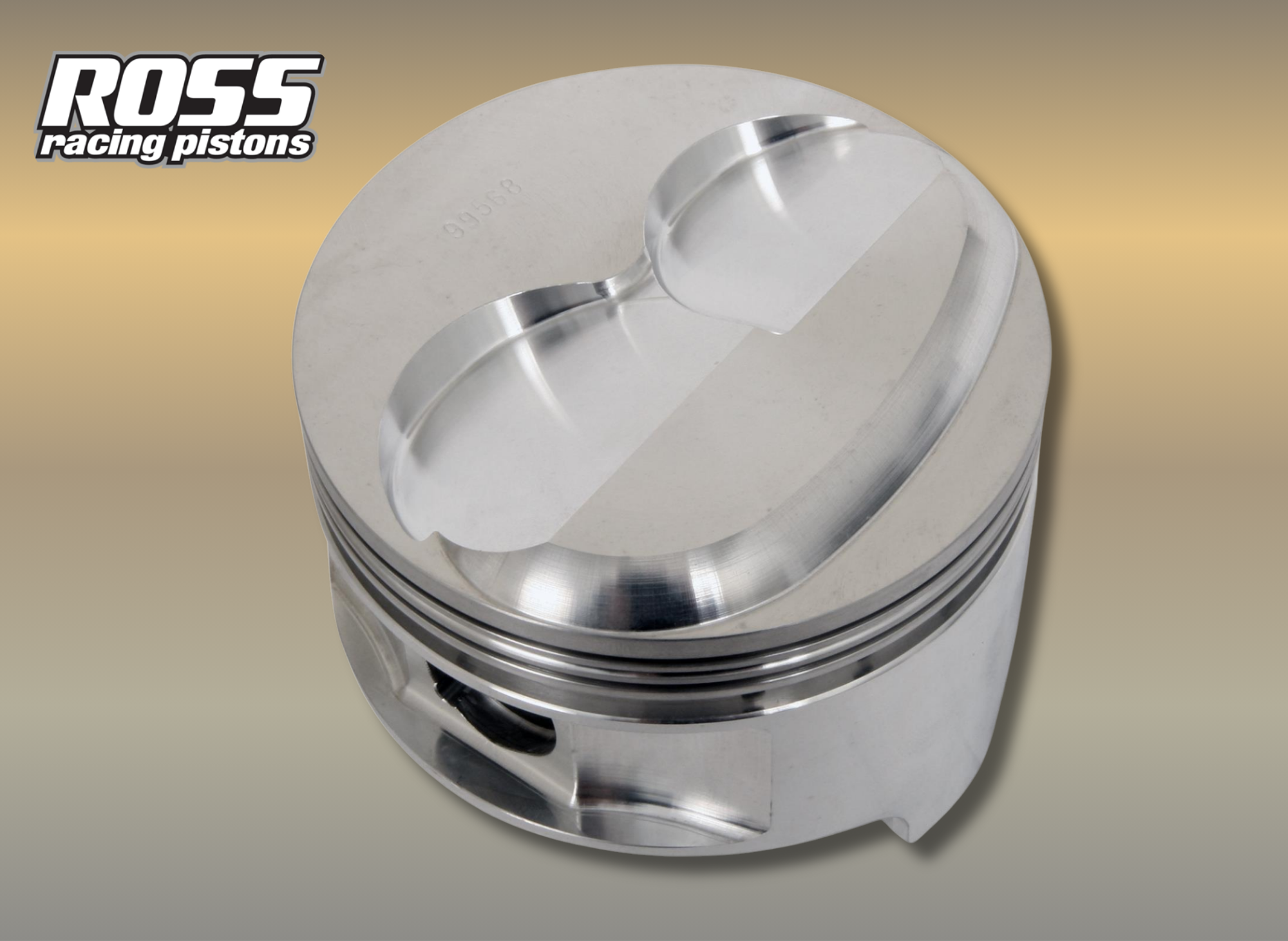
Ross Racing Forged Pistons W99568L
Piston, Forged, Dome, 4.030 in. Bore, Chevy, Left Intake Relief, Each
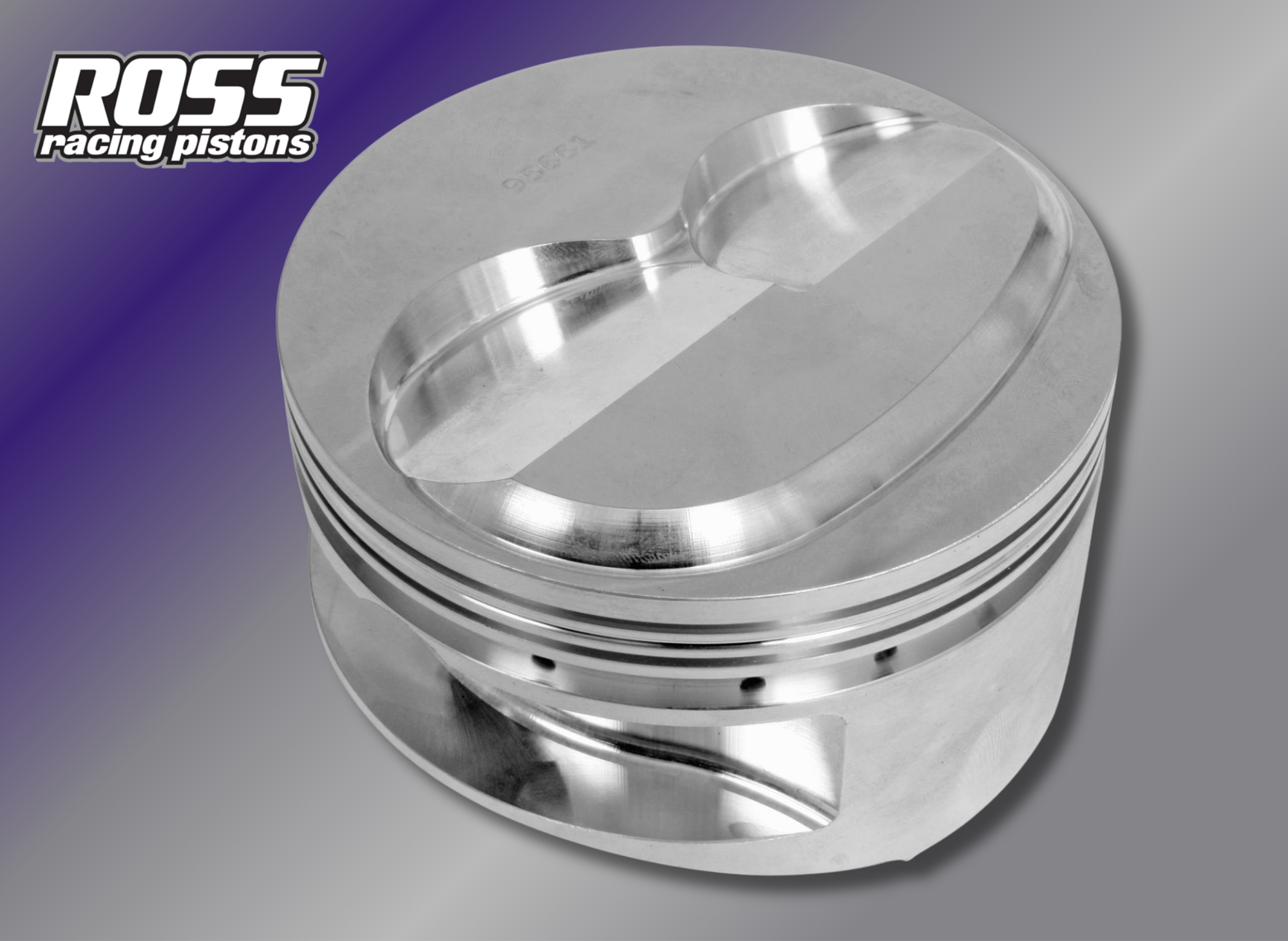
Ross Racing Forged Pistons 95661L
Piston, Forged, Dome, 4.155 in. Bore, Chevy, Each
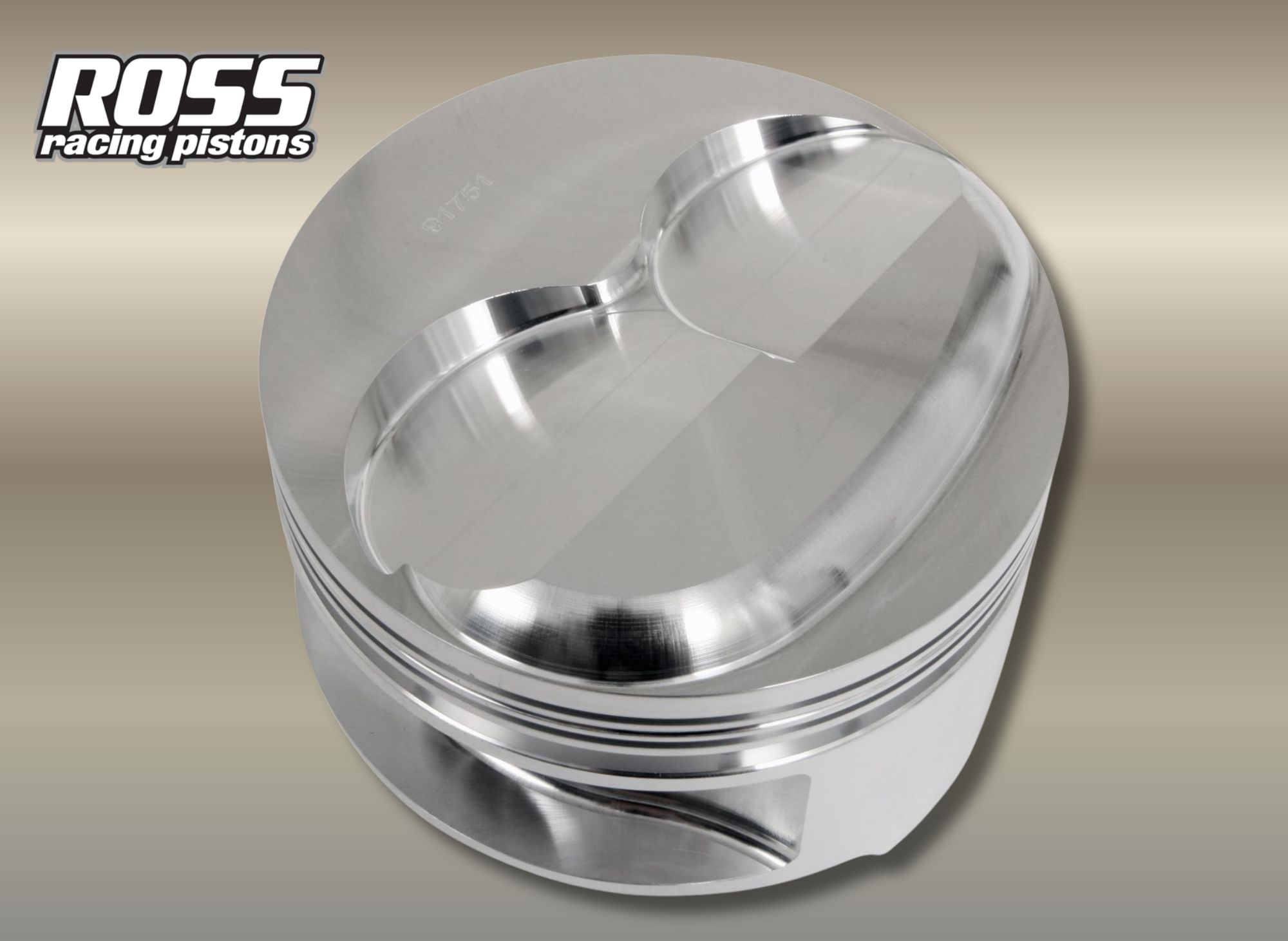
Ross Racing Forged Pistons W91751L
Piston, Forged, Dome, 4.040 in. Bore, Chevy, Small Block, Each
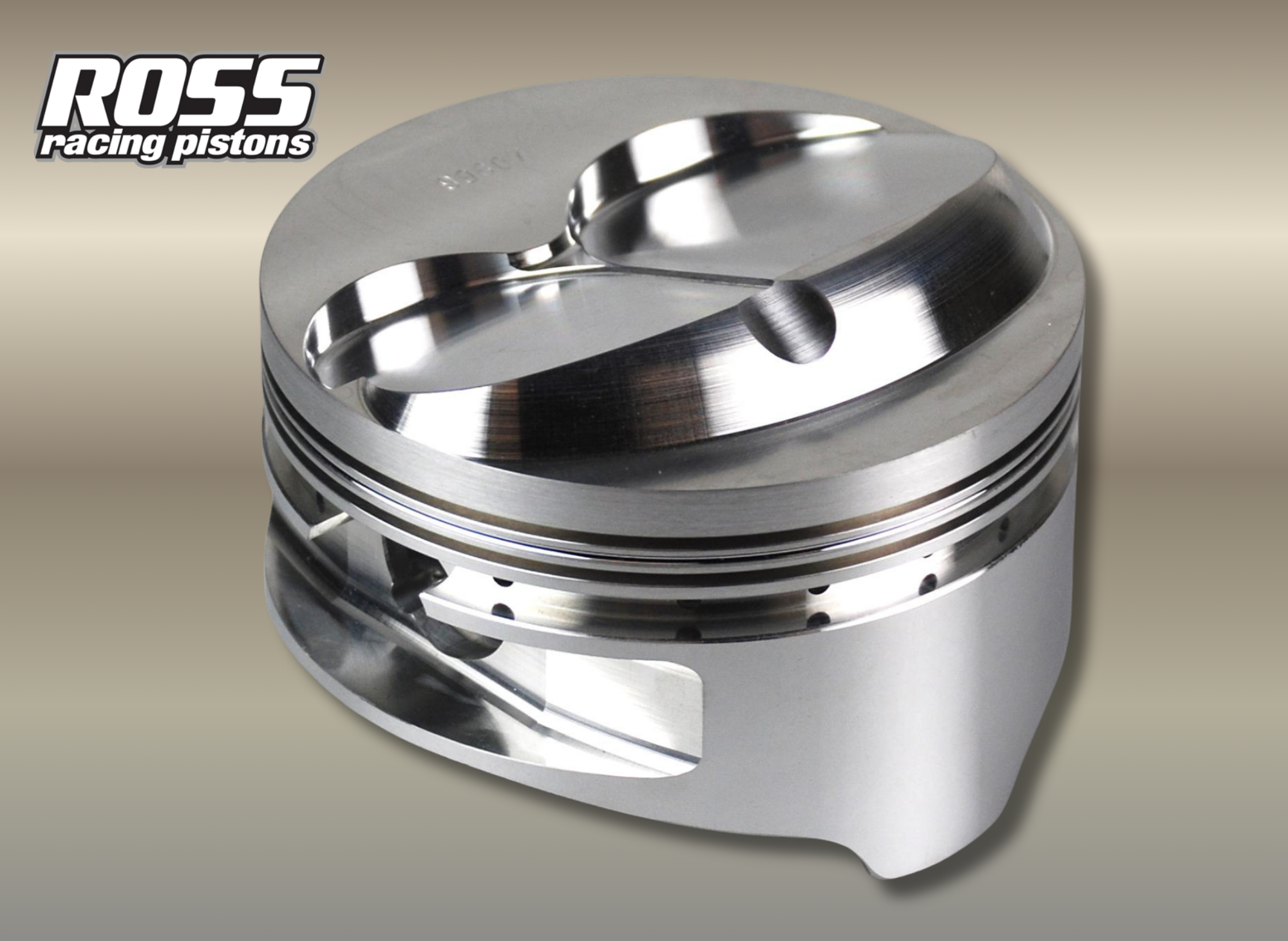
Ross Racing Forged Pistons W80552
Piston, Forged, Dome, 4.030 in. Bore, Ford, Mercury, Each
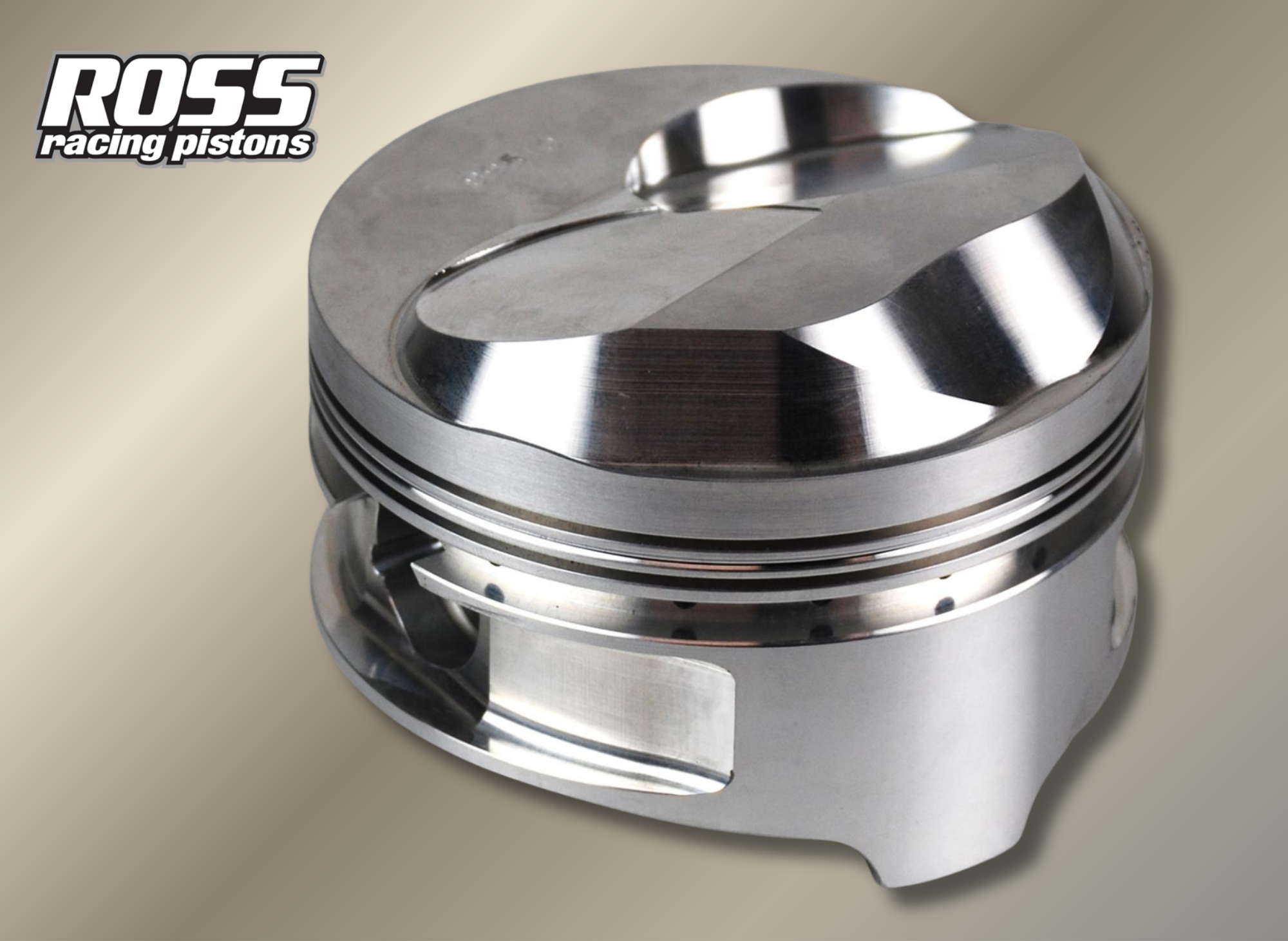
Ross Racing Forged Pistons 99512
Piston, Forged, Dome, 4.500 in. Bore, Chevy, Set of 8
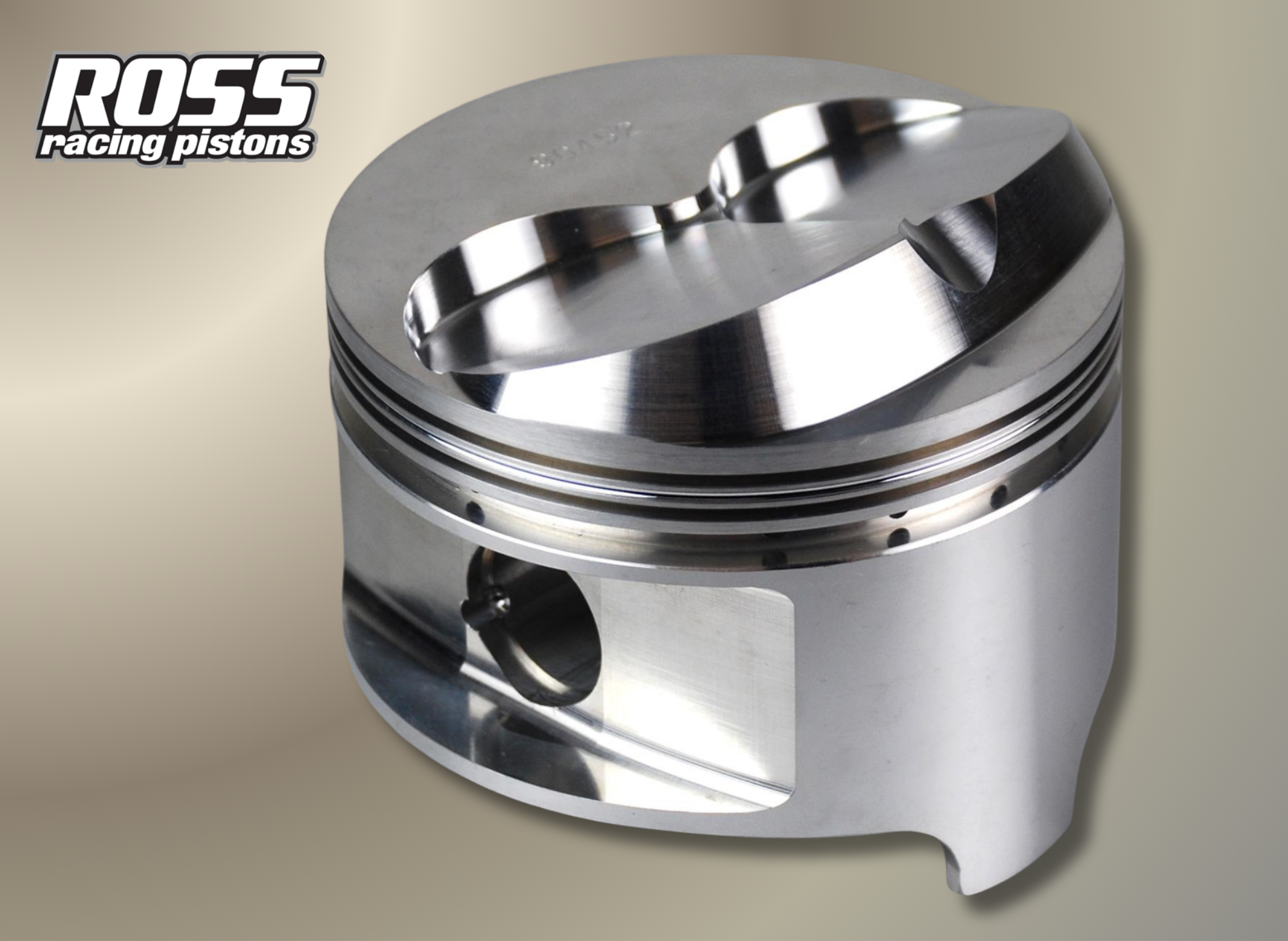
Ross Racing Forged Pistons 90017
Pistons, Forged, Dome, 4.145 in. Bore, Chevy, Set of 8
Dome Pistons
Dome pistons feature a raised center area on the crown. This design significantly increases the compression ratio by reducing the volume of the combustion chamber. These are ideal for high-compression naturally aspirated engines or specific performance builds where maximum squeeze is required.
Ross Racing offers several exceptional dome pistons for different setups. For instance, the ROS-W91751L, ROS-W80552, ROS-99512, ROS-90017, ROS-W99568L, and ROS-95661L all feature a radiused dome and valve pockets engineered for modern high-lift cams. The ROS-99512, an impressive piece of engineering, boasts a -45.00cc dome volume, making it a serious contender for aggressive engine combinations.
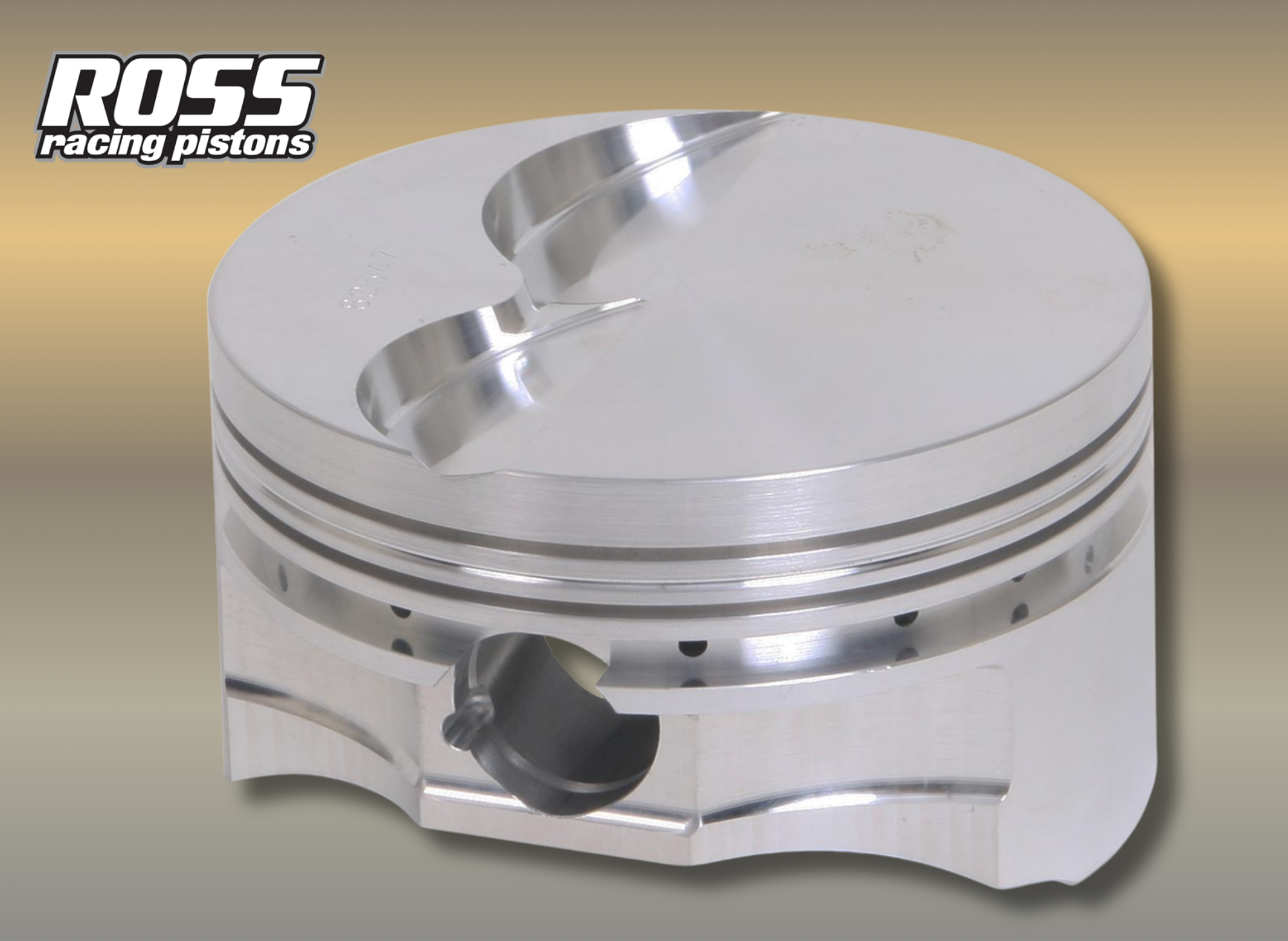
Ross Racing Forged Pistons W99476L
Piston, Forged, Flat, 4.165 in. Bore, Chevy, Small Block, Each
Flat Top Pistons
As the name suggests, a flat top piston has a level crown. They offer a moderate compression ratio, making them incredibly versatile. They work well for street vehicles and moderate-performance applications, and are very boost-friendly when paired with the appropriate cylinder head volume.
The ROS-W99476L is a prime example of a flat top design. It offers a slight +6.00 cc increase in volume due to valve reliefs, providing a solid foundation for forced induction or a heavy nitrous setup. The flat design allows for an even flame propagation, which many engine builders prefer for forced induction.
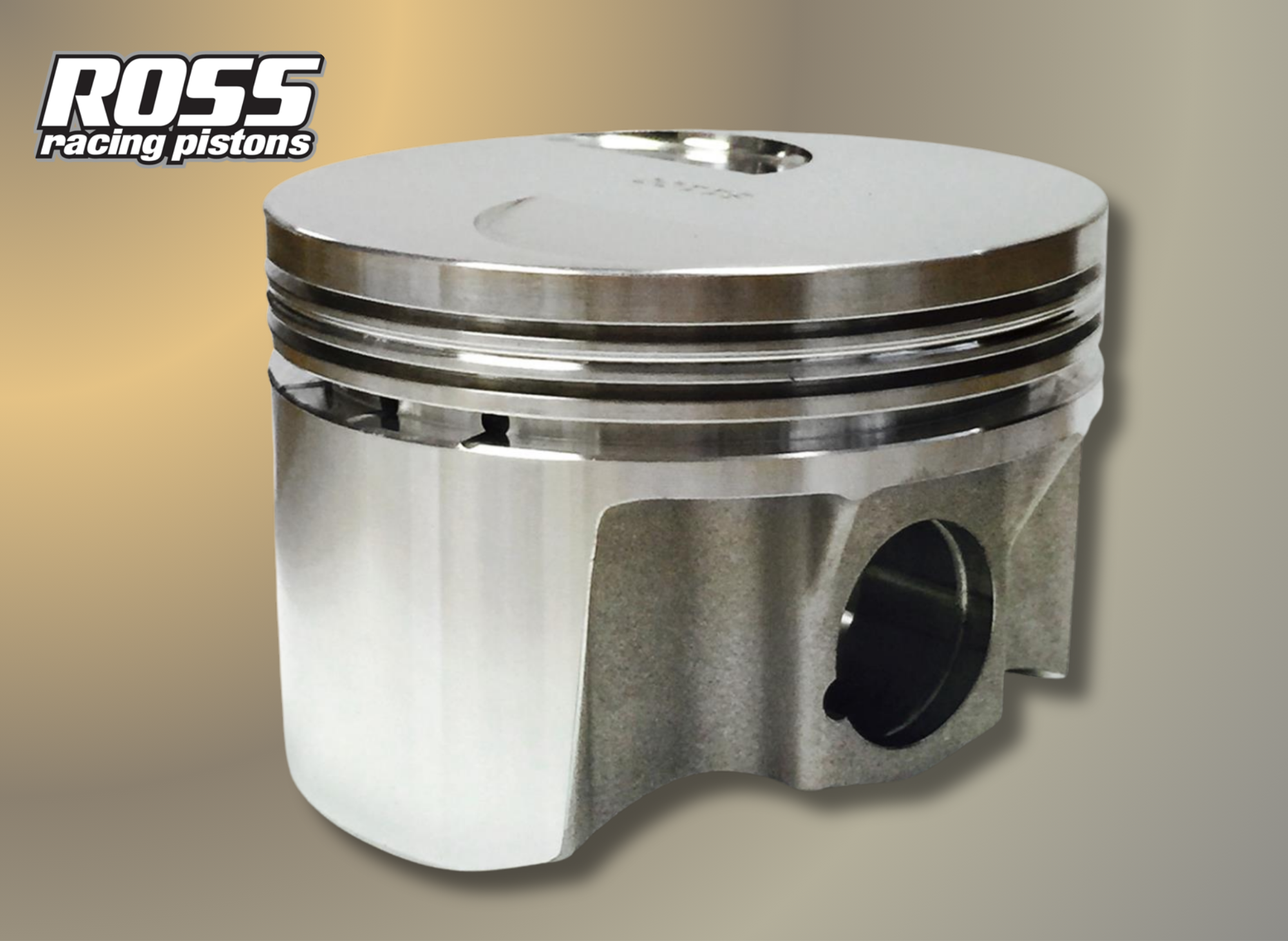
Ross Racing Forged Pistons 82202
Pistons, Forged, Dish, 4.125 in. Bore, Ford, Set of 8
Ross Racing Forged Pistons 82206
Pistons, Forged, Dish, 4.040 in. Bore, Ford, 351W, Stroker, Set of 8
Dish Pistons
Dish pistons have a recessed bowl in the center of the crown. This effectively increases the combustion chamber volume, thereby reducing the static compression ratio. They are the go-to choice for high boost applications, such as turbocharging or supercharging, where keeping cylinder pressures manageable is critical to avoiding detonation.
If you need a dish design, you might review components such as the ROS-82202 and ROS-82206. The ROS-82206, designed for a 351W stroker, features a generous +34.60cc dish, providing the necessary volume for heavy forced induction while maintaining the structural integrity of a custom piston.
Critical Piston Specifications to Consider
Finding the right manufacturer and part number is only the beginning. You must carefully match the specifications to your exact engine geometry.
Bore Size
The bore size determines the diameter of the cylinder. It directly impacts engine displacement and dictates the precise cylinder wall clearance required for proper operation.
You will find standard and oversized options displayed across the market. Matching the piston to your exact cylinder bore is non-negotiable. For example, you might need a 4.040 in. bore (like the ROS-W91751L), 4.030 in., 4.500 in., 4.145 in., 4.165 in., 4.125 in., or 4.155 in., depending on your block preparation.
Stroke and Rod Length
The stroke refers to the distance the piston travels up and down, while the rod length connects it to the crankshaft. These two dimensions impact the piston's movement and overall engine geometry.
Compatibility with your crankshaft and connecting rods is vital. A 3.500 in. stroke paired with a 5.778 in. rod length requires a very specific compression height to ensure the piston does not protrude past the deck of the block.
Compression Height
Compression height is the distance from the centerline of the wrist pin to the flat part of the piston crown. This measurement determines the piston's positioning within the cylinder and directly affects the deck clearance.
Values vary widely depending on the application; you might see a compression height of 1.433 in., 1.668 in., 1.063 in., 1.425 in., 1.165 in., 1.196 in., or 1.290 in. Getting this measurement wrong will ruin your engine.
Piston Head Volume (cc)
Understanding piston head volume is key to calculating your true compression ratio. This volume can be positive (dish), negative (dome), or zero (true flat top). Its direct impact on the static compression ratio cannot be overstated. You will encounter values like -11.00cc, -12.00cc, +6.00cc, +24.80cc, -9.00cc, and +34.60cc. Using 3D analysis software allows builders to precisely calculate how this volume interacts with the cylinder head.
Wrist Pin Style and Diameter
The connection between the piston and the rod happens at the wrist pin. You must choose between a press-fit or a floating pin design. Most racing applications utilize a floating pin secured by retainers (like double Spirolox). The correct pin diameter is also crucial; common sizes include 0.927 in., 0.912 in., and 0.990 in.
Piston Ring Thickness
The rings included or required for your pistons play a massive role in sealing the cylinder and managing oil. A common, high-performance ring package might measure 1 16 x 1 16 x 3 16 (often written as 1/16 in. x 1/16 in. x 3/16 in.). Sometimes you will see variations like 1 16 3 or 16 1 designations in catalogs. Always affirm that the ring thickness matches the lands machined into the piston.
Powering Your Next Build
Whether you are aiming to be among the fastest racers at the track or simply want a reliable, high-horsepower street machine, the internal components you choose will dictate your success.
We suggest you carefully record your engine specifications, use trusted tools and calculators, and review the details of every part before making a purchase. Note that many suppliers ship quickly, allowing you to access these parts quickly. Always verify the image and item details to ensure you get exactly what you need.
If you have questions about which racing pistons to use for your specific application, do not hesitate to reach out to industry professionals. Building an engine is a major investment, and choosing the correct parts the first time will save you time, money, and frustration. Start analyzing your build today, and take the first step toward unmatched engine performance.
Thank you for reading!
Your friend,
Todd
#RossRacingPistons 🏎️🔥 #EnginePerformance 💪⚙️ #RacingPower 🏁🚗 #ForgedStrength 🛠️💥 #SpeedAndDurability 🚀🔧 #PistonPerfection 🎯🏆 #TrackReady 🏟️🏎️ #BuiltToPerform 🏋️♂️⚡ #HighPerformanceParts 🏎️🔩 #RossRacingLegacy 🏁👑
 Todd Bandel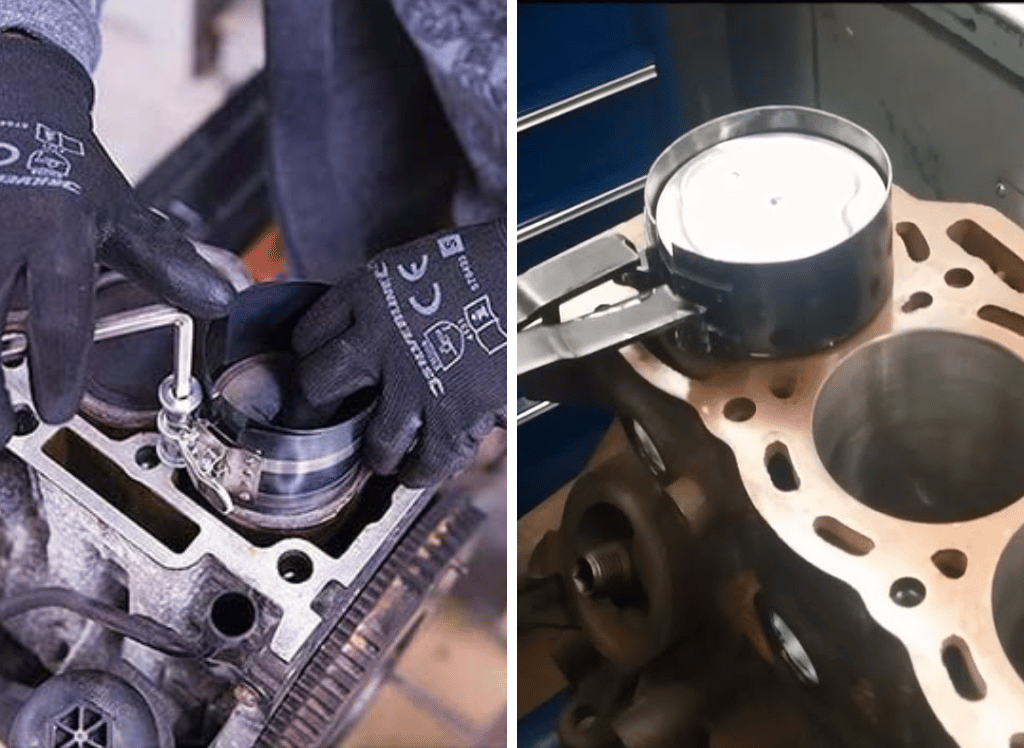
 Todd Bandel
 Todd Bandel