Lang Tools Axle Nut Sockets Guide: Sizes & Uses
Lang Tools Axle Nut Sockets deliver durable impact-rated precision for fast, secure axle nut service on cars and trucks.

If you've ever struggled to remove a stubborn axle nut or watched a socket slip and round the flats on a hub nut, you already know that generic sockets don't cut it for axle work. Axle nut sockets are purpose-built tools that handle the high torque, tight clearances, and precise fit this job demands. This guide covers everything from sizing and materials to real-world vehicle applications and care tips, so you can confidently pick the right set for your shop or garage.
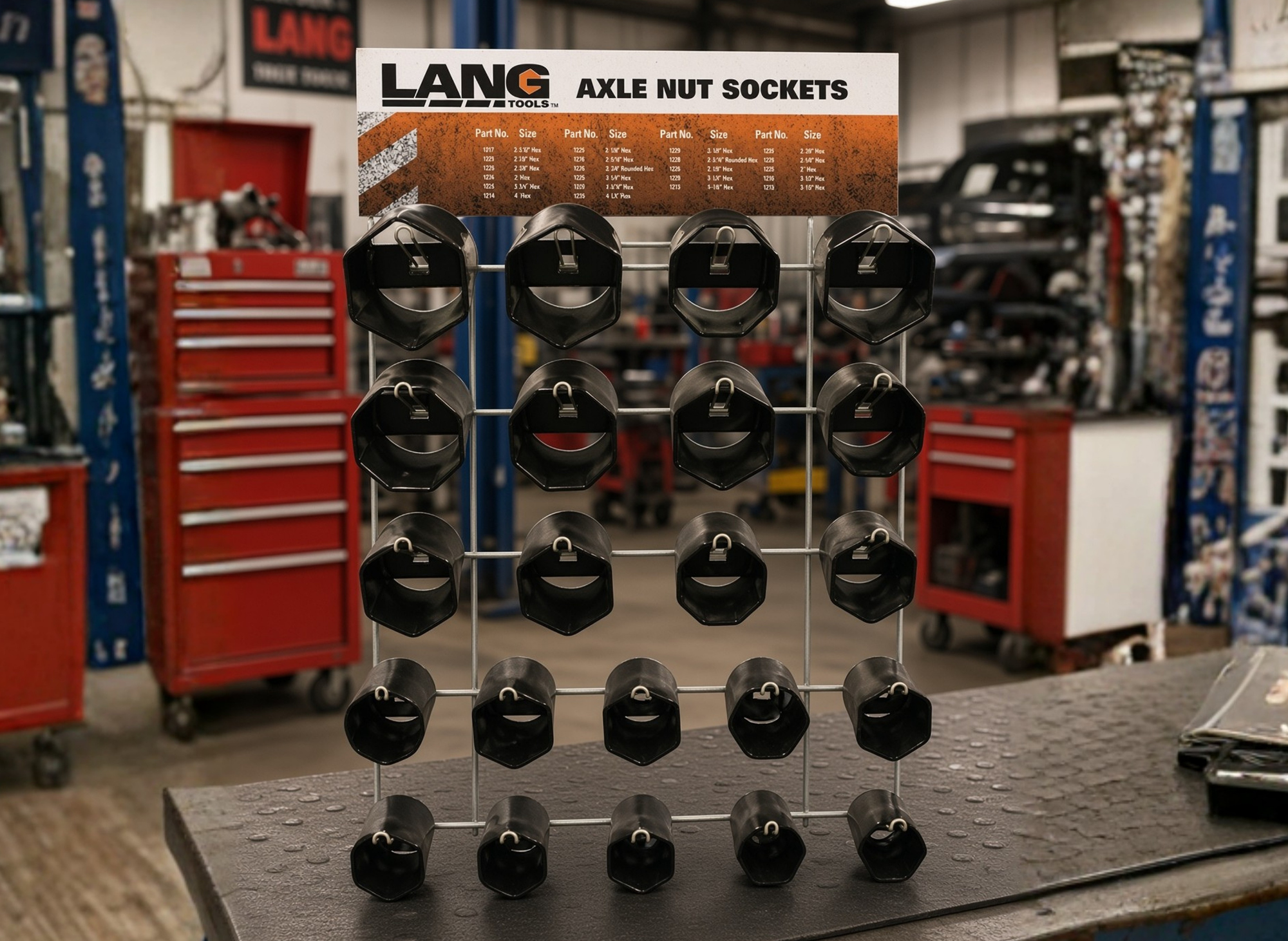
Lang Tools Axle Nut Sockets 1291
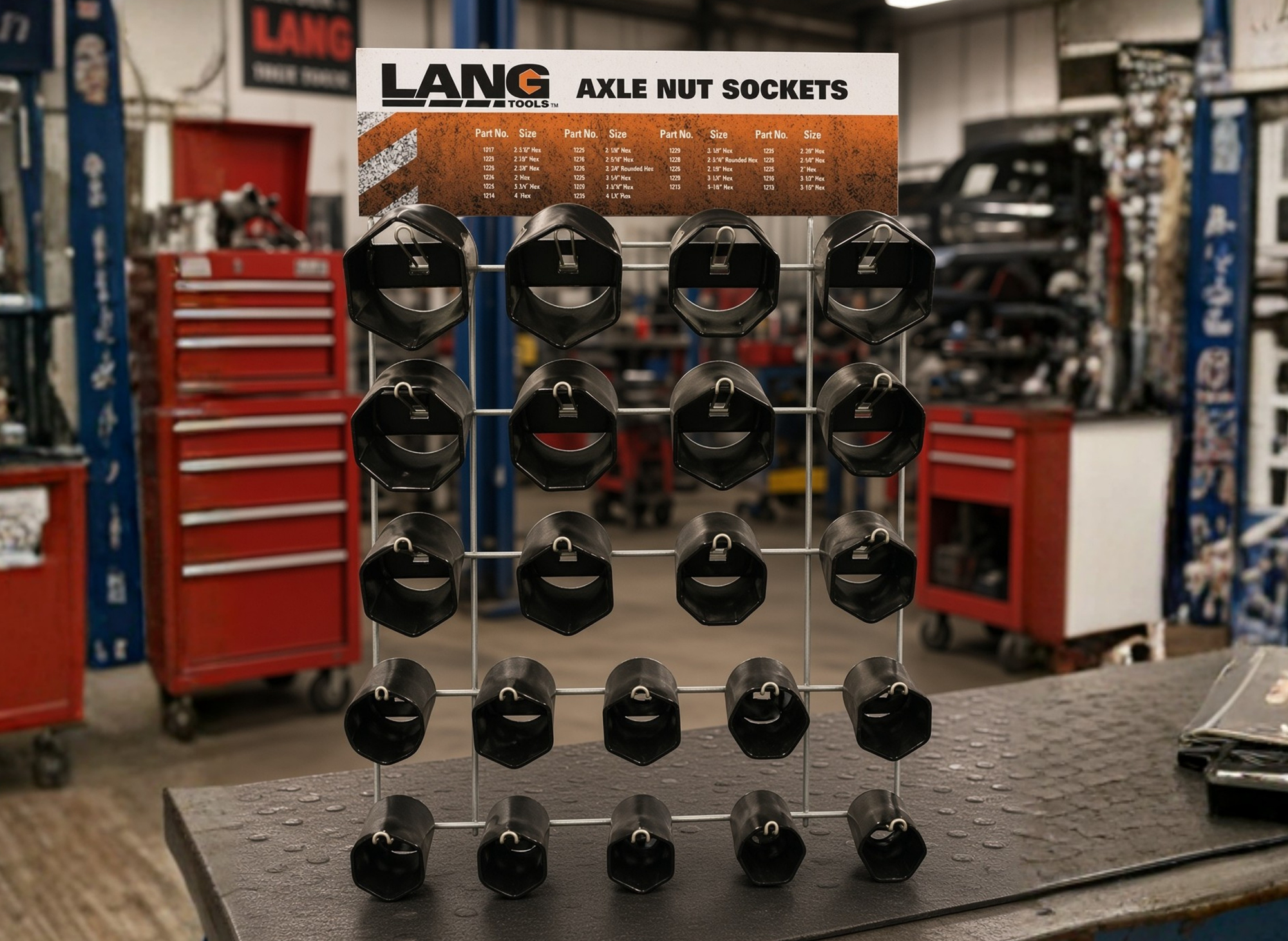
Axle Nut Socket, Standard, Steel, Black, 6-Point and 8-Point, 3/4 in. Drive, with Stand, Set of 22
What Is an Axle Nut Socket and Why It Matters
An axle nut socket is a heavy-duty, large-diameter socket designed specifically to remove and install axle nuts on everything from front-wheel-drive passenger cars to class 8 highway tractors. Unlike the standard shallow or thin-walled sockets you might reach for during general maintenance, axle nut sockets are almost always deep, 6-point, and engineered to transfer serious torque without damaging the fastener.
So what does the axle nut itself actually do? Axle nuts secure the wheel hub and bearings to the drive axle, maintaining the correct bearing preload that keeps your wheel assembly spinning true. Axle nuts are often tightened to very high torque specifications affecting wheel bearing preload, which means even a small amount of slippage or rounding during removal or installation can cascade into expensive hub damage or premature bearing failure.
The torque figures involved are not trivial. Depending on the platform, axle nuts are torqued to specifications ranging from 100 ft-lbs to over 300 ft-lbs on passenger vehicles and light trucks, with heavy-truck applications climbing far beyond that. That kind of force demands a socket that grips every flat of the nut fully and won't deform under load.
Most automotive axle nut sockets use a 1/2-inch drive to accommodate heavy torque loads. When you step up to medium- and heavy-duty truck axle service, 3/4-inch and 1-inch drive sockets become necessary to match both the larger nut diameters and the higher torque requirements. Common axle nut diameters in the automotive world run from roughly 29 mm up to 39 mm, while heavy-truck sockets can reach 4 inches or larger.
Because automakers frequently change axle nut sizes across model years and platforms, many professional technicians prefer owning a complete axle nut socket set rather than scrambling to source a single odd size in the middle of a job. A well-chosen set covers the spread of sizes your shop actually encounters, eliminating downtime and last-minute parts-counter trips.
Key takeaways:
- Axle nut sockets are large-diameter, deep, 6-point sockets built for high torque axle and hub work.
- They are designed to prevent rounding out axle nuts, which protects the fastener and the hub.
- Drive sizes range from 1/2-inch (automotive) to 3/4-inch or 1-inch (heavy truck).
- Using the wrong socket-wrong size, wrong depth, wrong material-risks damage that far exceeds the cost of the correct tool.
- A complete set keeps your shop ready for whatever rolls in.
Key Features of a Quality Axle Nut Socket Set
Not all socket sets labeled for axle work are created equal. Whether you're comparing a metric set covering 29–38 mm for passenger vehicles or a heavy-duty truck kit with 6-point sockets spanning 2 inches to 4 inches, the same core features separate a reliable product from one that will let you down on a seized nut. Here's what to evaluate.
Construction and Material
The single most important material distinction in axle nut sockets is chrome-molybdenum (Cr-Mo) versus chrome-vanadium (Cr-V). Impact sockets are forged from chrome-molybdenum steel and can flex under hammering without shattering, making Cr-Mo the correct choice any time you plan to use a pneumatic or cordless impact wrench.
Chrome sockets are made from chrome-vanadium steel and are intended for hand tools only. Cr-V is harder and more wear-resistant, which makes it great for hand ratchets, but that hardness becomes a liability under impact-Cr-V can crack or send fragments across the shop.
A quality axle nut socket is typically single-piece forged or broached from Cr-Mo, giving it consistent wall thickness and eliminating stress-concentrated weak points that could fail under breaker bar or torque multiplier loads.
6-Point Geometry
6-point sockets grip the flat edges of a hex nut, providing maximum torque transfer across wide surfaces rather than concentrating force on corners. This is critical for axle nuts that may be rusted, staked, or overtightened. Using a 6-point deep impact socket dramatically reduces the chance of rounding flats compared to a 12-point alternative.
That said, 12-point sockets are designed for 12-point axle nuts commonly found on many modern vehicles-certain Toyota and Lexus front-axle designs, for example. If the fastener itself is 12-point, you need a matching 12-point socket. But for the vast majority of hex axle nuts, 6-point is the standard and the safer choice.
Drive Size Compatibility
For light-duty automotive axle work, 1/2-inch drive sockets paired with a quality ratchet or impact wrench handle most jobs. When you move into class 6–8 trucks and heavy equipment-Kenworth, Peterbilt, Freightliner, Mack, Volvo, and similar platforms-3/4-inch or 1-inch drive sockets are better suited. The larger drive square handles the increased torque without risking failure at the connection point.
Depth and Wall Thickness
Axle nut sockets must be deep enough to reach past protruding axle shafts, dust shields, and ABS tone rings. One common mistake is using a regular shallow socket instead of a deep socket that fully engages the nut-this leads to poor contact, slipping, and rounded flats. At the same time, walls need to be thick enough to resist deformation under high torque but slim enough to clear tight hub assemblies.
Finish and Markings
A black phosphate or manganese phosphate finish helps protect against corrosion and chipping during impact use. Unlike polished chrome, these matte finishes absorb impact energy better and last longer in a working shop environment. High-visibility size markings-laser-etched, roll-stamped, or both-let you grab the right socket off the cart or bench without second-guessing.
Organization
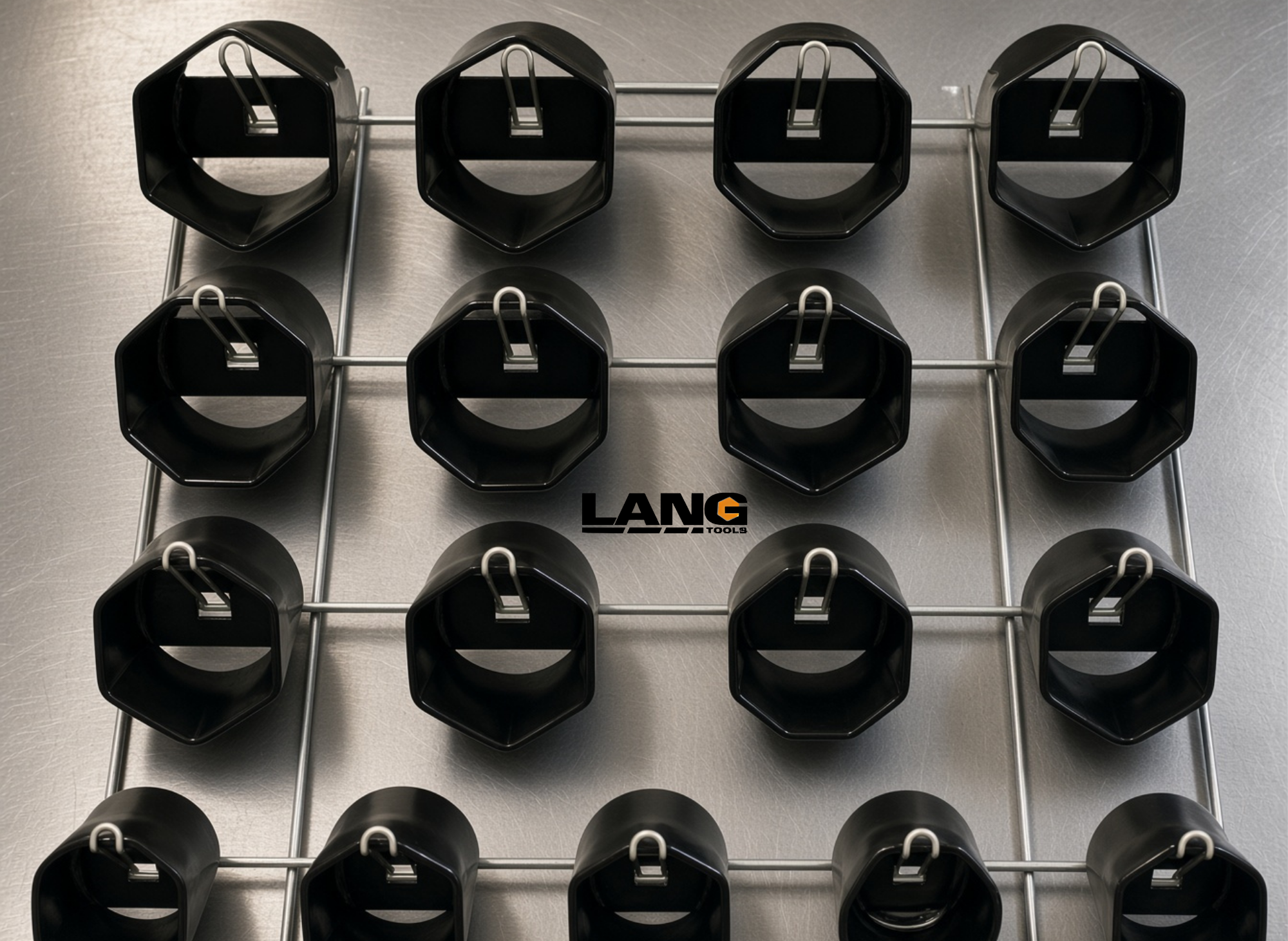
Quality sets come with a molded case, display rack, or socket rail that keeps every piece in order by size. When you're reaching for a 3-1/8-inch or a 34 mm socket in the middle of a brake and hub job, organized storage saves time and reduces the risk of grabbing a size that's close but not correct.
Axle Nut Usage Limitations
Some heavy 6-point axle nut sockets are designed exclusively for hand tools and are not intended for use with power impact wrenches. Axle nut socket sets are designed for breaker bars or ratchets in many heavy-duty applications, and the product packaging or spec sheet will typically state whether impact use is approved. Always verify before hooking up to a gun.
Must-have features checklist:
- Cr-Mo impact-rated construction (if using with impact tools)
- 6-point geometry for hex nuts; 12-point only where the fastener requires it
- Deep socket design with adequate wall thickness
- Proper drive size matched to your torque requirements
- Durable finish with clear, readable size markings
Common Axle Nut Sizes, Applications, and Vehicle Coverage
Axle nut socket sizing is highly application-specific. A socket that fits perfectly on a Honda Civic front hub has nothing in common with the one needed on a Peterbilt steer axle. This section maps the most common socket diameters to real-world vehicle types so you can match your needs before adding anything to your cart.
Automotive and Light-Truck Metric Sizes
Passenger vehicles and light trucks overwhelmingly use metric axle nuts. Common axle nut sizes for passenger vehicles typically include 30 mm and 36 mm, but the full range spans roughly 29 mm through 39 mm. Here's how those sizes generally break down:
Socket Size | Typical Application |
29–30 mm | Compact FWD and AWD vehicles (Honda, Subaru, Nissan) |
32 mm | Many Ford and GM full-size trucks and SUVs |
34–35 mm | Select Chrysler, GM, and import platforms |
36 mm | Common across domestic full-size pickups and SUVs |
39 mm | Some Toyota/Lexus front axles (often 12-point) |
Axle nut sockets can service front-wheel drive vehicles, all-wheel-drive crossovers, and rear-axle applications on light trucks equally well, as long as the size and depth are matched to the specific nut.
Sets like the popular Harbor Freight axle socket set, which includes seven pieces covering the 29–38 mm range, give a home or independent shop broad coverage for most domestic and import platforms in a single purchase. These metric sets typically use a 1/2-inch drive and are compatible with breaker bars and ratchets as well as impact wrenches.
Heavy-Duty Truck and Equipment Sizes
For class 6–8 trucks and buses, axle nut dimensions jump to large SAE (inch-fraction) sizes. Axle nut sockets are used on class 6-8 trucks to service steering and drive axle hubs that see far higher loads and torque specs than anything in the passenger-car world. The standard heavy-duty range includes:
Socket Size (SAE) | Typical Application |
2 in. | Select medium-duty steering axles |
2-3/4 in. | Common drive and steer axle nuts |
3-1/8 in. | Widely found on class 7–8 drive axles |
3-3/4 in. | Heavy steer and trailer axle nuts |
4 in. | Large class 8 drive axle assemblies |
A 6-point axle nut socket set includes five sockets in this heavy-duty SAE range, and it's the configuration most commonly stocked by fleet shops and dealership service departments. Ken-Tool's axle nut socket set has five pieces covering 3-1/4 through 4-3/8 inches, and it's a product commonly found on Kenworth, Peterbilt, Freightliner, Mack, and Volvo service lines. These sockets are commonly used on Class 6-8 trucks across long-haul, vocational, and municipal fleets.
Technicians servicing mixed fleets-where a Ford F-250 might share bay space with a Freightliner Cascadia-often maintain both a metric axle nut socket set for automotive work and a large SAE 6-point set for heavy-rig axles. Keeping both means you don't waste time hunting for the right SKU when a truck rolls in unscheduled.
Determining the Correct Size
Before ordering any socket, confirm the axle nut size:
- Measure across the flats (not corner to corner) using calipers or a ruler.
- Check the service manual or OE parts diagram for the exact specification.
- Inspect the nut geometry-count flats to confirm whether it's 6-point or 12-point.
Typical Job Flow
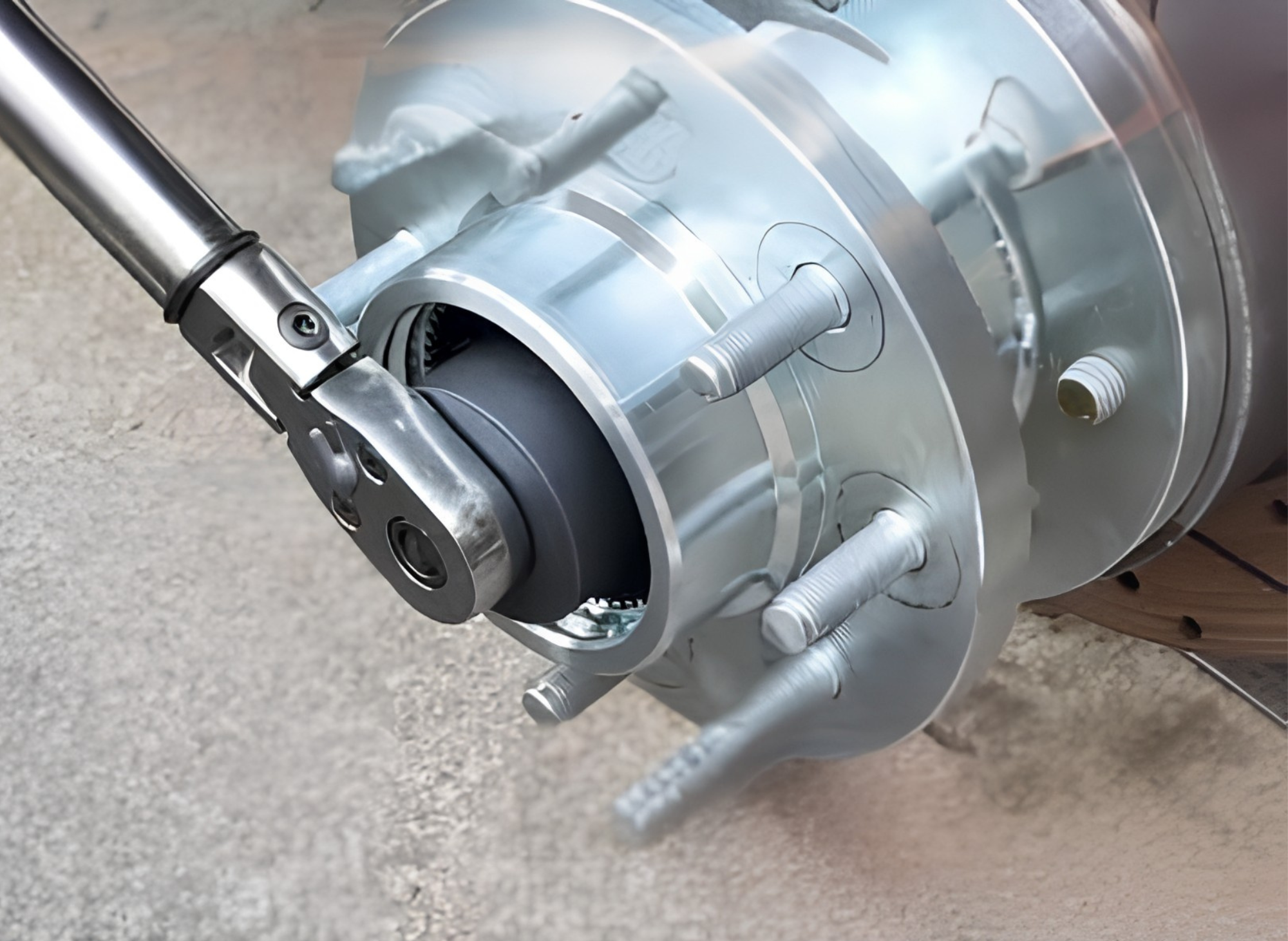
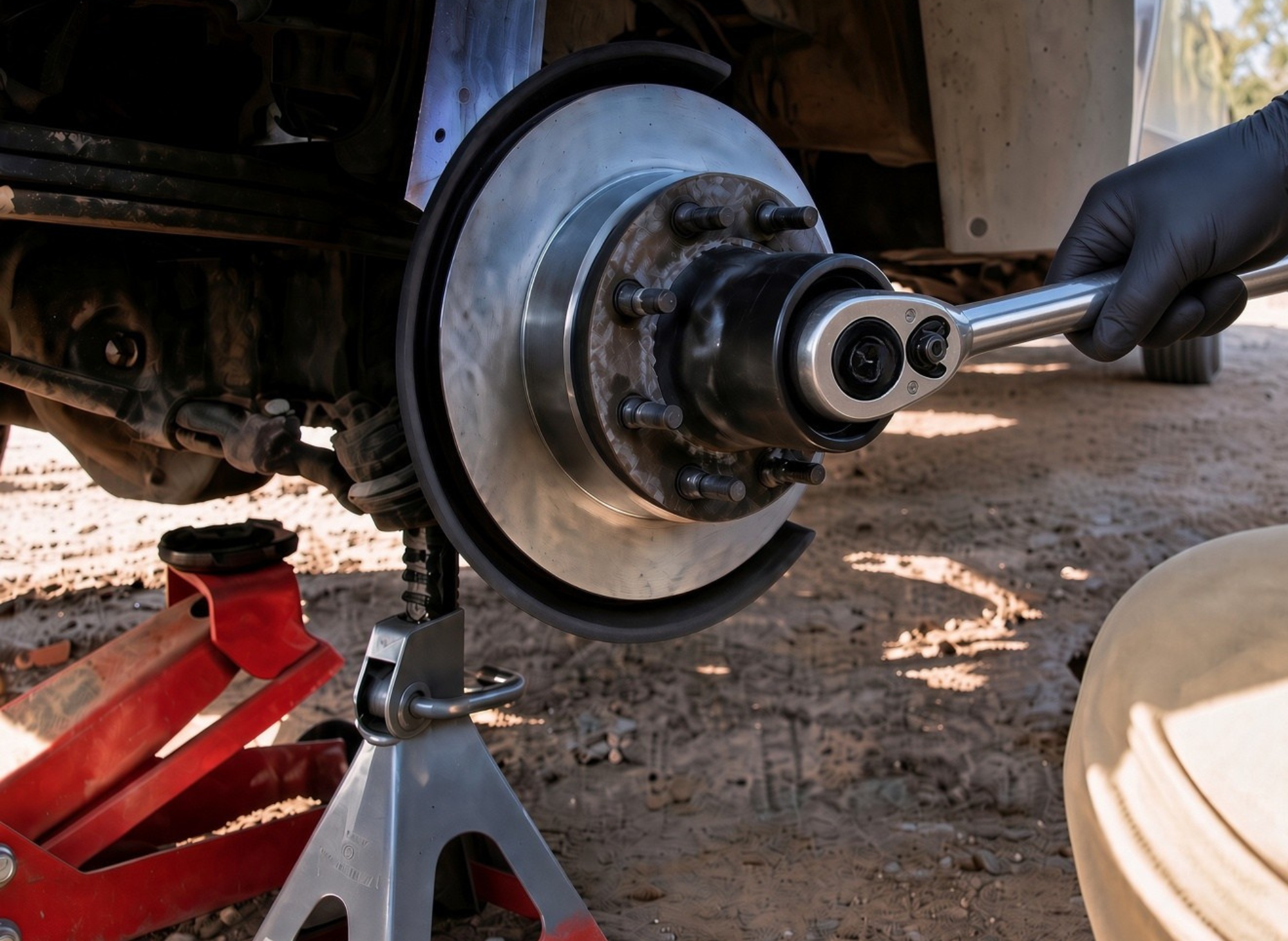
Axle nut sockets slot into a predictable workflow. With the vehicle safely supported and the wheel removed, the first step is to address any locking device. Removing an axle nut may require unstaking or removing a locking device such as a cotter pin before the socket can engage. From there, the correct socket is seated fully over the axle nut, and removal is done with a breaker bar, torque wrench, or torque multiplier depending on the force required.
How to Choose, Use, and Care for Your Axle Nut Sockets
Having the right axle nut sockets on hand is one thing; knowing how to select, apply, and maintain them is what separates a smooth job from a costly mistake. This section walks through the practical side-buying smart, using safely, and keeping your tools in service for years.
Choosing the Right Axle Nut Socket Set
Start with a simple decision path:
- List the vehicles you service most. If your work is mostly passenger cars and half-ton trucks, a 7-piece metric set covering 29–38 mm handles the majority. If you're also servicing class 6–8 rigs, add a 5-piece SAE set in the 2-inch to 4-inch range.
- Identify the specific sizes you need. Cross-reference service manuals or your most frequent job tickets. There's no point paying for sizes you'll never use, but a complete set often costs less per item than buying sockets individually.
- Decide between a full set and individual sockets. For shops that see a wide variety of platforms, a complete axle nut socket set is the more practical purchase. For a DIY owner working on a single vehicle, a single socket might be all that's needed.
When reading reviews and comparing options, pay attention to whether the set is impact-rated or hand-tool-only. An impact socket forged from Cr-Mo can handle both an impact wrench and a breaker bar. A hand-tool-only Cr-V socket should never be used with an impact gun-period. Verify the rating before you finalize the purchase.
Axle nut sockets are essential for service technicians' toolboxes, and choosing quality upfront avoids replacing cheap tools mid-job.
Using Axle Nut Sockets Safely
High torque work demands respect. Here are the practices that keep you and the vehicle safe:
- Break axle nuts loose before lifting whenever possible. The vehicle's weight holds the hub in place and prevents the axle from spinning, giving you a mechanical advantage.
- Support the vehicle securely with jack stands on level ground before working underneath.
- Seat the socket fully before applying force. A partially engaged socket will slip under load and damage both the nut and the tool.
- Never use cheater pipes that exceed the tool's rated length. Extending a breaker bar past its design limits risks snapping the handle or the socket itself.
- Wear eye protection and gloves, especially when using impact tools on corroded fasteners.
Inspecting and cleaning the axle threads is crucial before installing a new axle nut. Dirty or damaged threads can give a false torque reading and compromise bearing preload.
For reinstallation, always torque the axle nut to the factory specification using a calibrated torque wrench. Overtightening can crush bearings; undertightening allows the hub to develop play. After reaching spec, stake the nut or install a new cotter pin if the OE design calls for it.
Maintenance and Storage
Impact-rated axle nut sockets are tough, but they're not indestructible. After each use:
- Wipe the socket clean to remove metal shavings, grease, and road grime.
- Inspect the 6-point drive opening and the internal flats for cracks, chips, or deformation. Even hairline cracks can propagate under the next heavy load.
- Check the drive square end for wear-a wallowed-out square won't retain securely on a ratchet or impact anvil.
- Return each socket to its case, rail, or labeled drawer. Mixing sizes or tossing sockets loose in a toolbox invites grabbing the wrong one on the next job.
Proper care means you enjoy the full service life of your tools rather than replacing them prematurely.
Buyer's Checklist
Before you finalize your order, run through this quick list:
- Vehicles covered: Do the sizes in the set match the platforms you work on?
- Sizes included: Does the set fill gaps in your current inventory?
- Drive size: Is it 1/2-inch for automotive or 3/4-inch / 1-inch for heavy-duty?
- Impact vs. hand-tool use: Is the set Cr-Mo and impact-rated, or Cr-V hand-tool-only?
- Storage: Does it come with a case, rail, or organizer?
Investing in a properly matched axle nut socket set pays for itself the first time you avoid rounding a nut, damaging a hub, or losing an hour searching for the right tool. Whether you're pulling hubs on a fleet of Kenworths or swapping CV axles on a daily driver, the right sockets make the job faster, safer, and more predictable. Audit what's in your toolbox today, identify the gaps, and fill them with a set that's built for the work.
Thank you for reading!
Your friend,
Todd
Lang Tools Axle Nut Sockets deliver durable impact-rated precision for fast, secure axle nut service on cars and trucks.
LangTools 🔧 #AxleNutSockets 🛠️ #AutoTools 💪 #MechanicTools 🚗 #ImpactSockets ⚙️ #DIYMechanic 🔩 #TruckRepair 🛻 #ShopTools 💼 #AutomotiveTools 🏁 #ToolReview
This site contains affiliate links, and we may earn a commission at no extra cost to you. All recommended products are thoroughly vetted.
 Todd Bandel
 Todd Bandel
 Todd Bandel
 Todd Bandel
 Todd Bandel