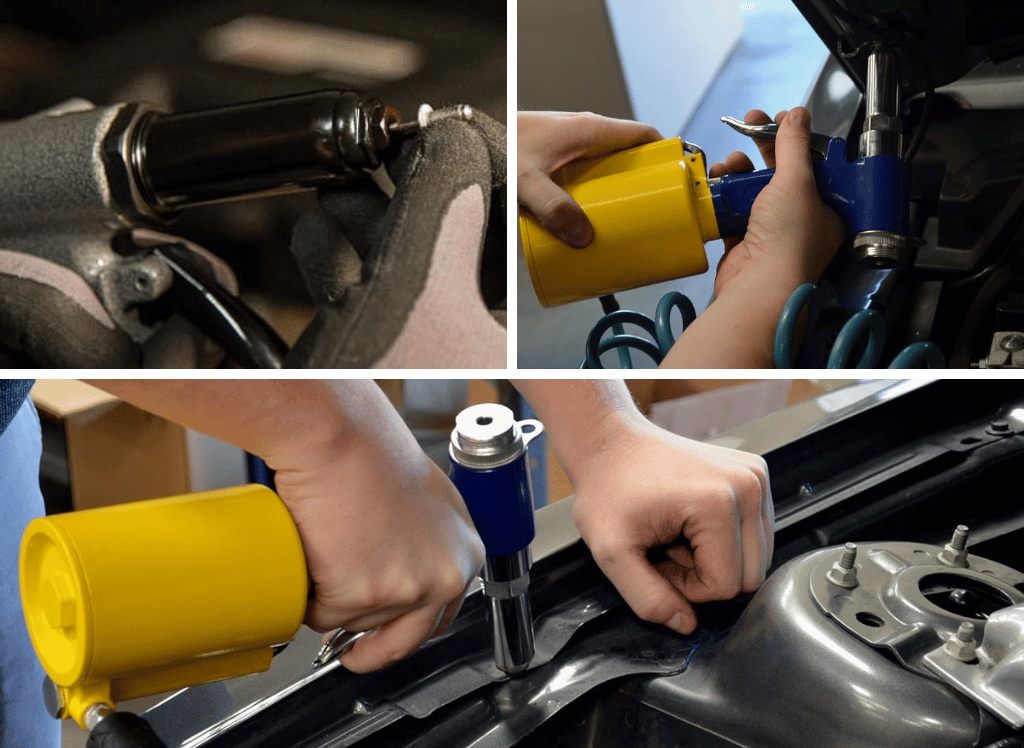
Milwaukee M12 Rivet Gun 2550-20: Complete Guide
Milwaukee M12 Rivet Gun: compact cordless riveter pulls 3/16" stainless with 60% less effort and 450 rivets per charge.
Quick Overview: What Is the Milwaukee M12 Rivet Tool 2550-20?
The Milwaukee M12 rivet gun (model 2550-20) is a compact cordless rivet tool built to replace both manual hand riveters and bulky pneumatic products that require a compressor and air hose. If you set rivets regularly in your trade, this tool is designed to make that work faster, easier, and far less taxing on your hands.
As part of the Milwaukee M12 battery platform offering over 90 solutions on one battery system, the 2550-20 slots right into an ecosystem you may already own. It's the first cordless solution that delivers fast, easy riveting while maintaining performance, durability, and size in a package small enough for one-handed work.
This M12 rivet tool is suitable for automotive, HVAC, construction, and general maintenance applications. Whether you're hanging gutters, assembling ductwork, or fastening body panels, it handles aluminum, steel, and stainless steel rivets without the squeeze fatigue of a hand tool or the setup hassle of pneumatics.
The 2550-20 is sold as a bare tool for users who already have M12 REDLITHIUM batteries, and as M12 rivet tool kit packages (like the 2550-22) that bundle the tool with batteries, a charger, and a contractor bag.
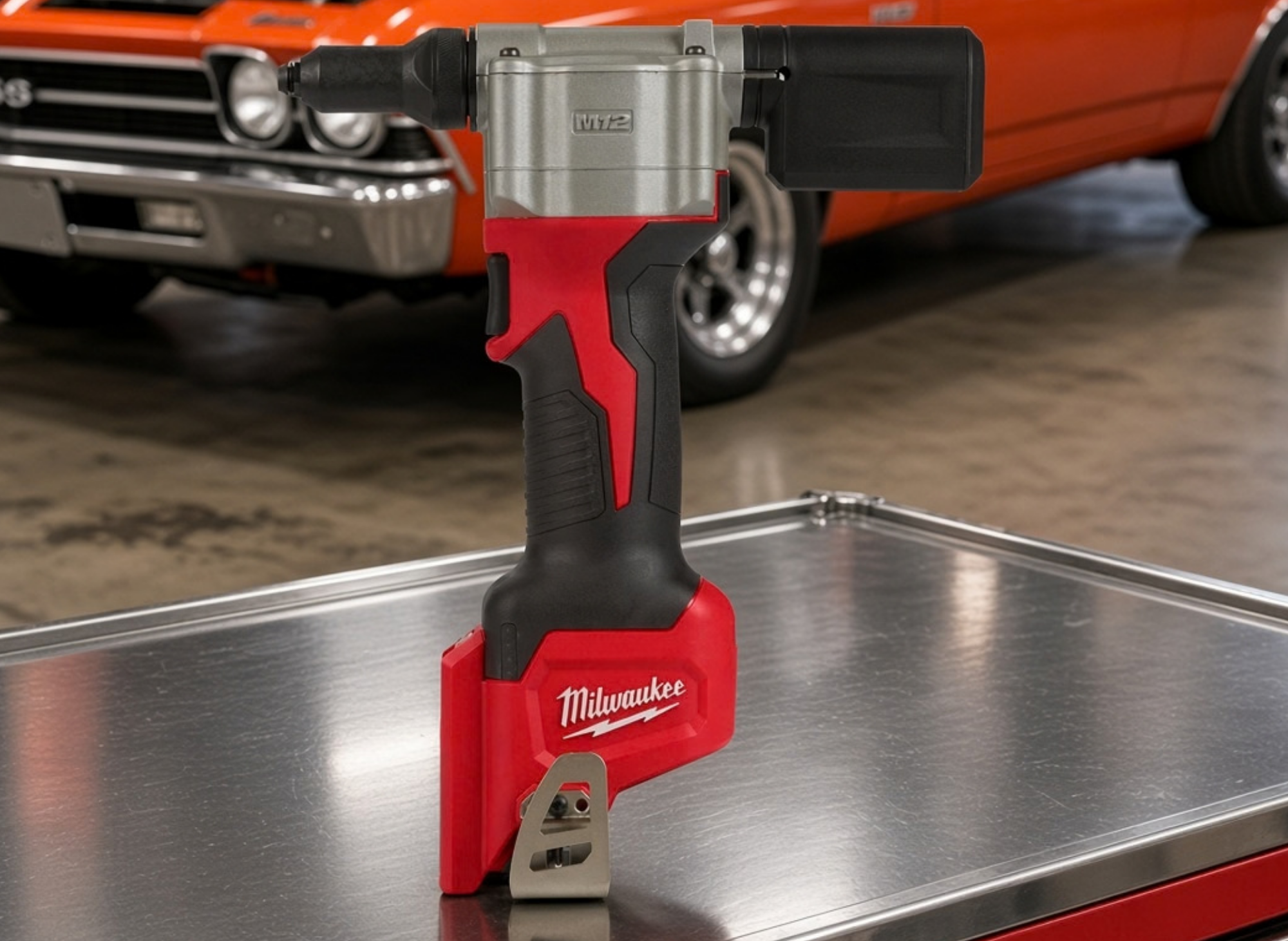
Milwaukee M12 Rivet Tools 2550-20
Rivet Guns, M12 Cordless, 1/8 in., 3/16 in.,, 3/32 in., 5/32 in., No Battery, Each
Key Specs and Performance (2550-20 at a Glance)
Before diving deeper, here are the specifications, brand data, and manufacturer ratings you need to evaluate this cordless rivet tool quickly.
Specification | Value |
Pull Force | 2,000 lbs pull force |
Stroke Length | 0.8 inches) |
Tool Length | 6.5 inches (without mandrel collector) |
Tool Weight | ~4.15–4.3 lb (excluding battery) |
Rivet Diameters | 3/32", 1/8", 5/32", 3/16" |
Materials | Aluminum, steel, stainless steel blind rivets |
Voltage | 12V (M12 platform) |
Warranty | 5-year limited (tool) |
Battery runtime estimates (1.5Ah M12 REDLITHIUM pack):
- Approximately 450 pcs of 1/8 steel rivets per charge
- Approximately 250 pcs of 3/16 stainless steel rivets per charge
The tool can pull 1/8", 5/32", and 3/16" rivets across aluminum, steel, and stainless materials, covering the vast majority of blind rivet work in light- to medium-duty applications. It delivers 2,000 lbs. of pulling force, which is enough to cleanly snap mandrels on common rivet sizes without stalling.
Users typically pair the tool with compact 1.5Ah or 2.0Ah M12 REDLITHIUM packs for portability, or step up to 3.0Ah and 4.0Ah packs for extended production runs.
Design, Ergonomics, and Build Quality
The M12 rivet tool is the most compact cordless rivet tool on the market, measuring only 6.5 inches in length, allowing users more access in tight spaces where bulkier tools simply won't fit.
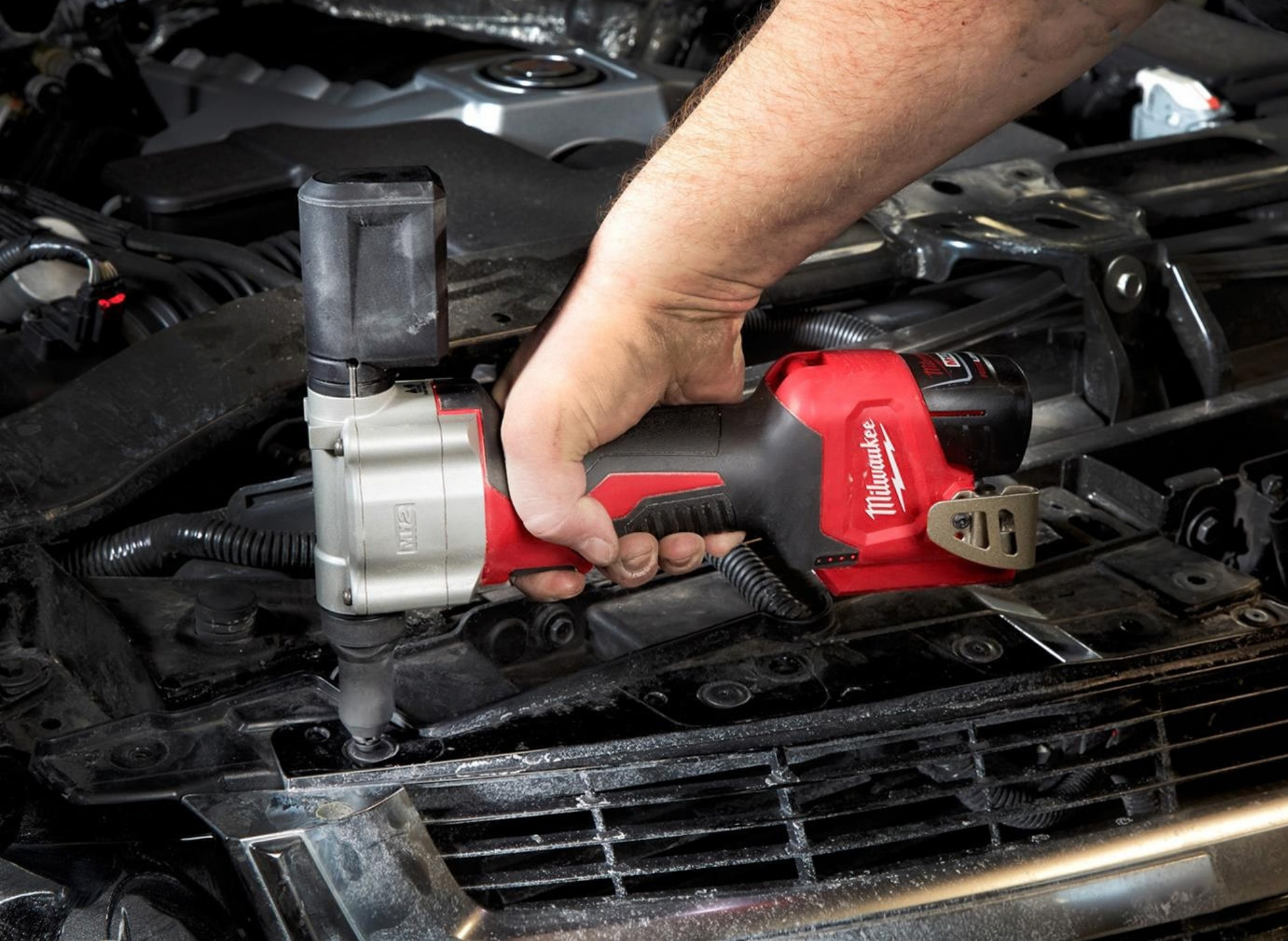
- The short nose reach and slim profile make it practical for work inside gutters, under vehicle hoods, and in crowded sheet metal assemblies.
- A rubber overmold covers the grip surfaces, and the center of gravity sits close to the user's hand, reducing front-heaviness. The tool holds the rivet in any orientation, ergonomically designed for overhead and vertical use without the rivet falling out.
- An integrated LED work light illuminates the rivet location, which is genuinely helpful in dim ductwork or engine bays.
- The M12 REDLITHIUM battery pack includes an integrated fuel gauge so you can monitor remaining capacity at a glance.
- It features onboard storage for nosepieces and a wrench, keeping accessories organized and attached to the tool itself.
- The housing is impact-resistant and built for greater durability from common jobsite conditions. It feels consistent with the rest of the Milwaukee M12 lineup in terms of build quality and fit.
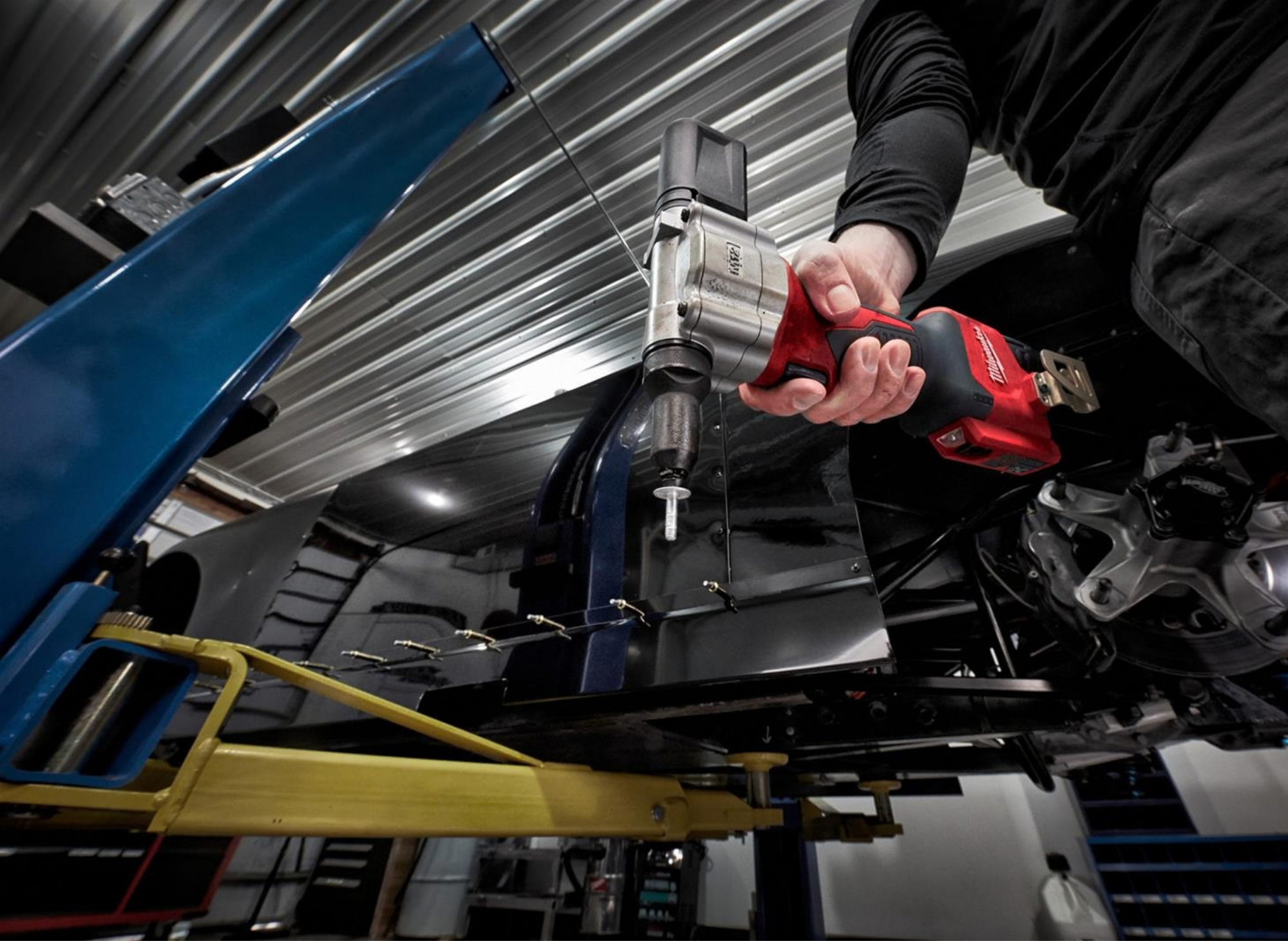
The compact form factor and balanced weight make this tool a great replacement for pneumatic products and manual riveters, particularly when working overhead or at awkward angles for extended periods.
How the M12 Rivet Tool Works (Operation and Nosepieces)
The basic operation makes this tool accessible even if you've never used a powered riveter. Select a nosepiece, load a rivet, position it in your workpiece, and pull the trigger. The tool does the rest.
Step-by-step workflow:
- Select the correct nosepiece for your rivet diameter (3/32", 1/8", 5/32", or 3/16"). The tool ships with all four sizes.
- Insert the mandrel into the nosepiece before use. The retention system grips the mandrel so the rivet stays seated even when working overhead.
- Align the rivet body with the pre-drilled hole in your material and press it flush.
- Pull the trigger. The tool pulls the mandrel until it snaps, setting the rivet cleanly.
- The spent mandrel ejects into the tool's clear container to catch spent mandrels. The mandrel box holds 100–150 mandrels securely before it needs emptying.
Changing nosepieces:
- Remove the nose housing by hand.
- Use the wrench to change nosepieces easily — unthread the current nosepiece, thread the new one finger-tight, then snug it with the wrench. Avoid over-torquing.
- Reinstall the nose housing.
A common quirk reported by users: the small nosepiece retention spring can cause pieces to pop out if you swap nosepieces too aggressively. Work deliberately and keep the small parts over a clean surface.
The tool pulls rivets quickly without jams or issues under normal use, and the intuitive operation makes this tool straightforward for both experienced pros and first-time cordless rivet users.
Real-World Applications: Where the Milwaukee M12 Rivet Shines
The 2550-20 earns its keep across multiple trades and project types. Here's where users are putting it to work most often:
- Gutter and downspout installation: Aluminum rivets on residential and light commercial buildings. The cordless design means no extension cords or hoses dragging across ladders and rooflines.
- HVAC ductwork: Sheet metal flanges, duct straps, and brackets. HVAC technicians report the compact size lets them reach fastening points inside assembled duct runs.
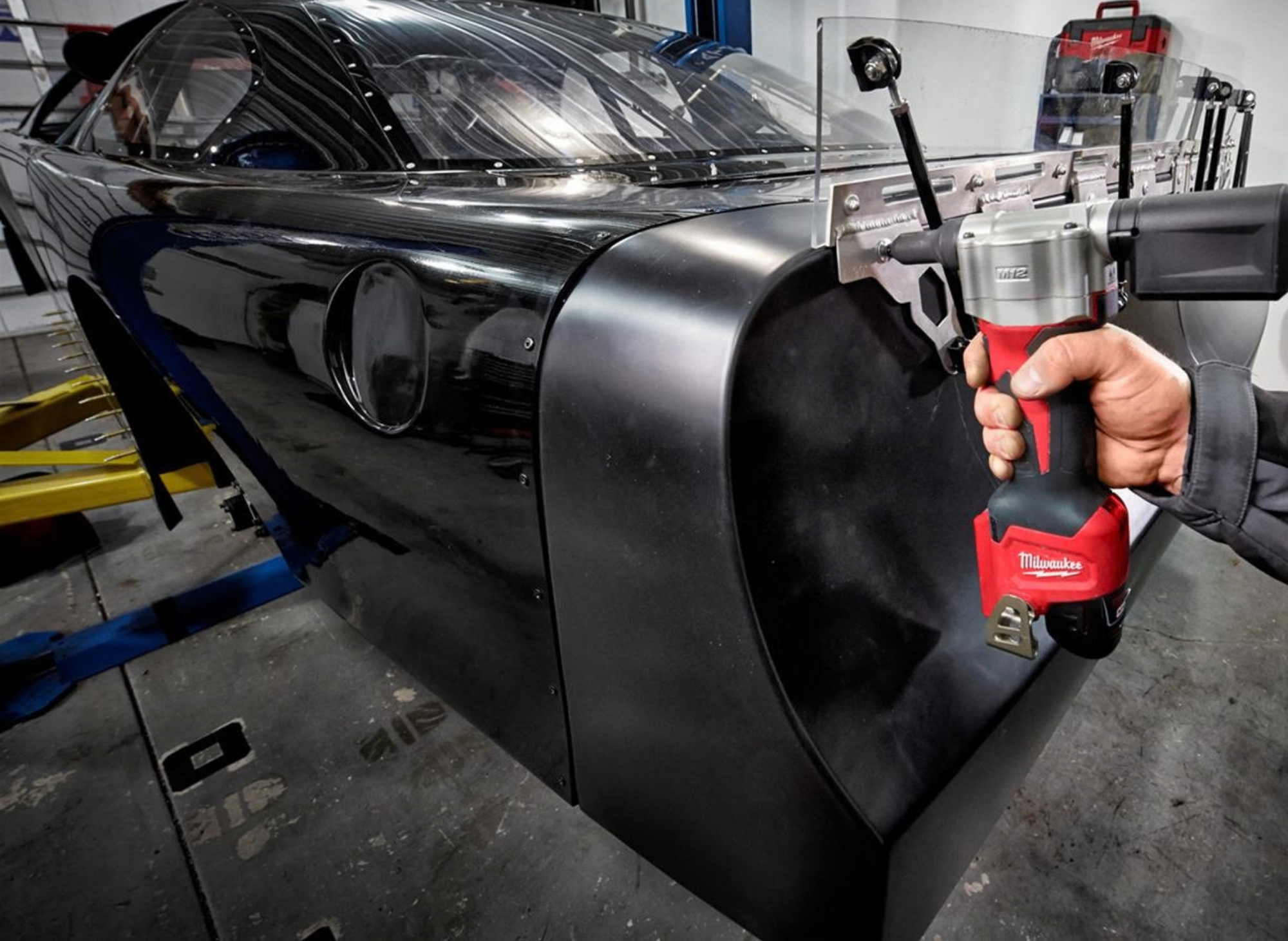
- Automotive: Body panels, off-road accessories, undercarriage brackets, and interior trim. The short length allows users to work inside engine bays and wheel wells where a pneumatic gun's hose would be a liability.
- Metal fabrication and general construction: Shelving, enclosures, security mesh, signage, and structural trim. One user reported setting over twelve hundred rivets in a single workshop day.
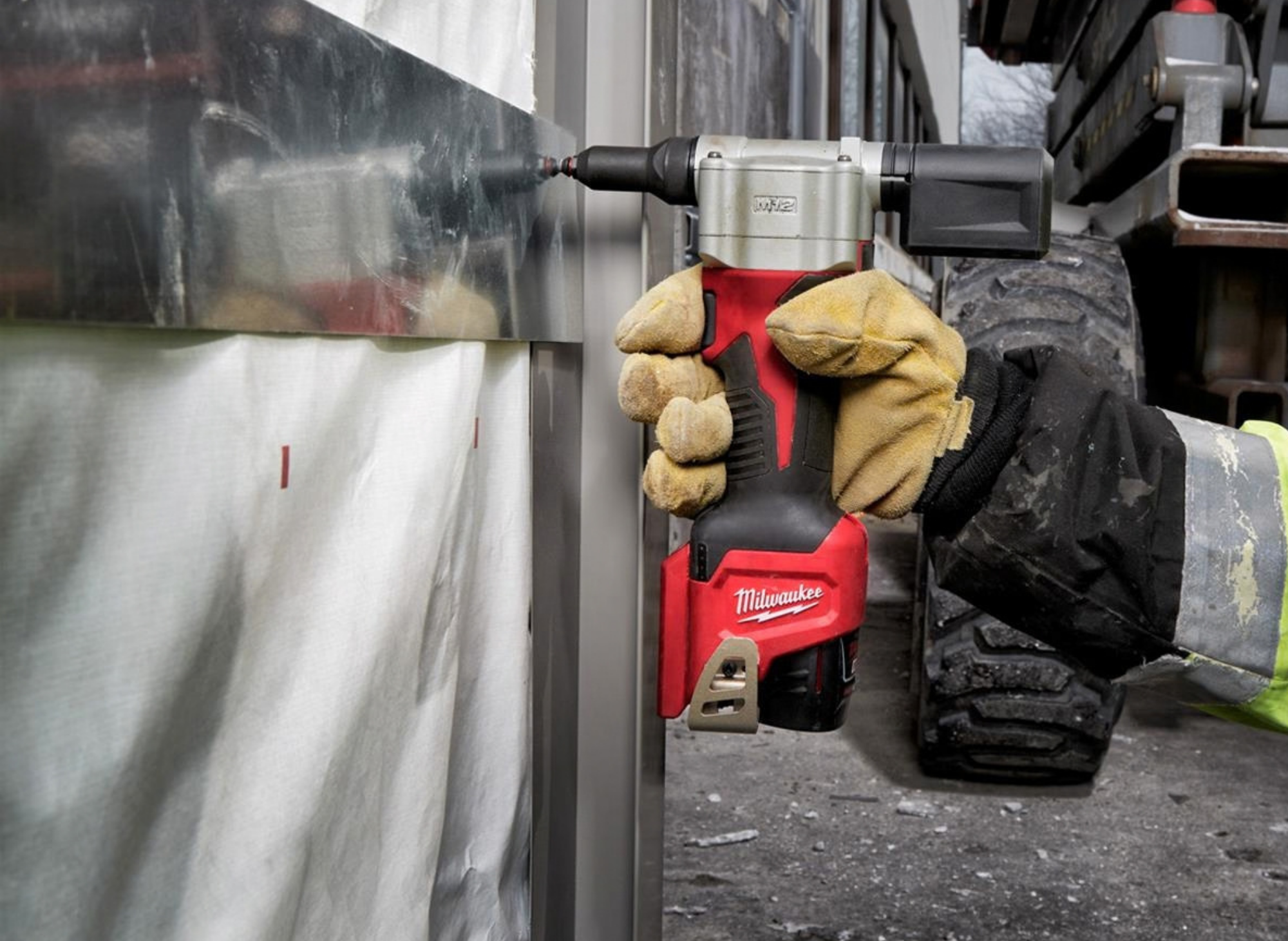
The tool is compact and ideal for tight or confined spaces, and it operates without compressors or hoses. The mandrel collection box prevents spent mandrels from dropping into gutters, engine bays, or other work areas where loose metal pieces create problems.
The 3/16 stainless steel capacity covers the heaviest common blind rivet work most tradespeople encounter, while the smaller sizes handle everyday aluminum rivets and steel rivets efficiently.
Cordless Rivet vs Pneumatic & Hand Rivet Tools
If you're weighing the Milwaukee M12 rivet gun against what you already own, here's how the three main options stack up.
Compared to hand riveters:
- The M12 rivet tool reduces muscle effort by 60% compared to hand tools. Over a day of repetitive riveting, that force reduction translates directly to less fatigue and fewer repetitive-strain issues.
- Cycle times are noticeably faster, especially when pulling steel rivets or stainless steel rivets that require significant grip strength by hand.
- A hand tool still works in a pinch, but for any job involving more than a handful of rivets, the cordless solution saves real time and energy.
Compared to pneumatic riveters:
- No compressor, no air hose, no fittings, no air leaks. Setup is as simple as snapping on a battery.
- The cordless rivet tool weighs more than a basic air riveter, but you gain complete mobility on ladders, roofs, and in crawl spaces.
- Pneumatic tools can match or exceed cycle speed if you have a robust compressor, but the infrastructure overhead makes them impractical for mobile or remote work.
Cost trade-offs:
- The 2550-20 has a higher upfront price than a manual riveter or a basic pneumatic gun. Over time, users who set rivets regularly recoup that cost through faster work and reduced physical strain.
- For users already on the Milwaukee M12 platform, the bare tool purchase keeps incremental cost low since you already own batteries and a charger.
The M12 rivet tool is part of a broader shift across the tool industry from air-powered specialty tools toward battery-driven alternatives, and this particular force tool delivers enough pull strength for the vast majority of blind rivet applications.
M12 Rivet Tool Kit Options vs Bare Tool (2550-20-Only)
When shopping for the Milwaukee M12 rivet tool, you'll encounter two main configurations.
Bare tool (model 2550-20):
- Includes the rivet tool, four nosepieces (3/32", 1/8", 5/32", 3/16"), and the nosepiece wrench.
- No battery or charger included.
- Best for users who already own M12 REDLITHIUM batteries and don't need duplicates.
M12 rivet tool kit (e.g., model 2550-22):
- Typically includes the rivet tool, at least one M12 REDLITHIUM battery pack, a charger, nosepieces, wrench, and a contractor bag or carrying case.
- Designed for first-time Milwaukee M12 buyers or anyone building a new kit from scratch.
If you're a homeowner picking up your first M12 tool, the kit makes sense. Pros who already have a drawer full of M12 batteries will save money going with the bare tool and putting the price difference toward consumables or additional nosepiece sets.
The bare tool is usually significantly cheaper than a full kit, so the savings are meaningful if you don't need the bundled accessories.
Battery and Runtime: Getting the Most from M12 REDLITHIUM
Runtime matters when you're setting rivets all day. The M12 rivet tool pulls 250 3/16" stainless steel rivets per charge, and the tool can pull up to 450 1/8" steel rivets per charge on a single 1.5Ah M12 REDLITHIUM pack under manufacturer-rated conditions.
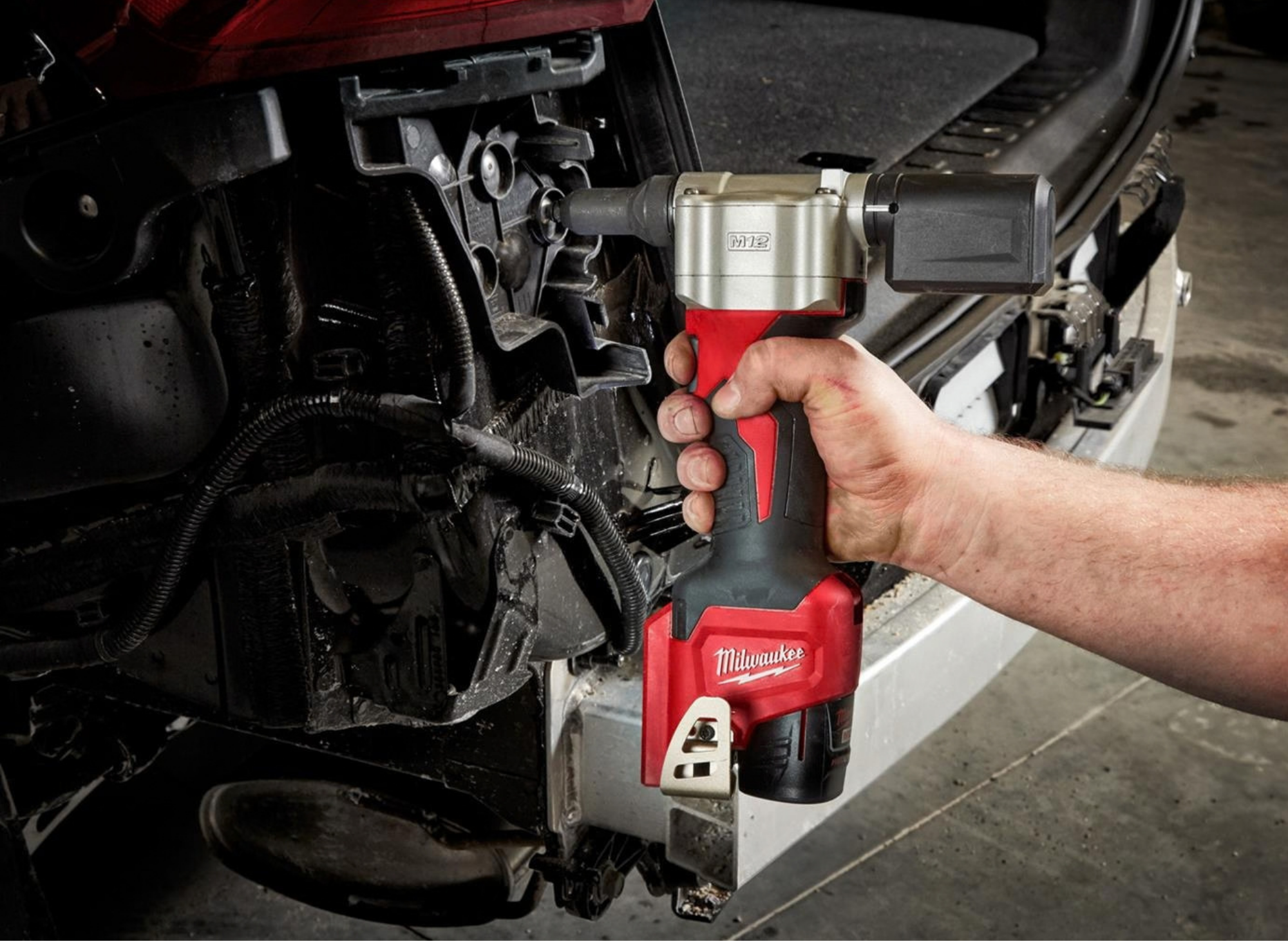
Choosing the right battery:
- Compact CP packs (1.5Ah, 2.0Ah) keep weight down for overhead and ladder work. This is the preferred setup when tool balance matters most.
- Extended-capacity packs (3.0Ah, 4.0Ah, 6.0Ah) proportionally increase the number of steel rivets on one charge but add weight at the rear of the tool.
- For production-style bench work, a larger battery paired with a second pack on the charger keeps you running continuously.
Tips to maximize runtime:
- Store and use batteries at moderate room temperatures. Cold weather reduces lithium-ion output noticeably.
- Avoid repeated stalling — if a rivet isn't pulling, check your nosepiece and rivet size before forcing the tool.
- Rotate two or more packs on a charger during big jobs rather than running a single battery to full depletion.
- All genuine M12 REDLITHIUM batteries feature integrated fuel gauges, so plan your recharges before the pack dies mid-run.
The M12 battery platform offering compatibility across the entire M12 ecosystem means your rivet tool batteries pull double duty on drills, drivers, rotary tools, and anything else in the lineup. That's the practical advantage current cordless solutions deliver — one battery system powers everything.
Pros, Limitations, and User Feedback
No tool is perfect. Here's a balanced summary of what users consistently report about the Milwaukee M12 rivet gun across major retail review platforms.
Commonly cited advantages:
- Dramatic reduction in hand fatigue versus manual riveters, especially on long runs of steel or stainless rivets.
- Fast, repeatable pulls with clean mandrel snaps. The tool pulls rivets quickly without jams in normal use.
- Compact, cordless design with good grip and balanced weight. The 2,000 lbs pull force handles everything up to 3/16" stainless reliably.
- Seamless compatibility with the broad M12 REDLITHIUM ecosystem — no new chargers or proprietary packs to buy.
- The longer life over current cordless alternatives that Milwaukee claims holds up well in user reports, with many noting years of reliable service.
Typical limitations or complaints:
- Higher upfront cost compared to a basic hand rivet tool. Budget-conscious occasional users may struggle to justify the investment.
- The nosepiece spring and small retention parts can be fiddly. Following the recommended change method avoids most issues.
- Not designed for structural rivets larger than 3/16" or heavy industrial-gauge work. For those applications, you'll need a larger platform.
- Weight becomes noticeable during extended overhead sessions, particularly with larger battery packs.
- Battery performance in cold weather or under continuous heavy pulling of large rivets can fall below rated numbers, which is standard for any lithium-ion cordless tool.
Overall, users across HVAC, gutter, automotive, and fabrication work rate this as a significant upgrade over hand and pneumatic alternatives for everyday riveting tasks. The performance, durability, and size combination hits a sweet spot for most tradespeople.
Safety, Maintenance, and Best Practices
A 2,000 lb pull force tool deserves respect. Follow these guidelines to keep yourself safe and the tool running well.
Safety recommendations:
- Wear safety glasses. Spent mandrels eject from the tool and can become projectiles if the collection system isn't properly attached.
- Secure your workpiece before riveting. Movement during the pull cycle can cause mis-sets or material damage.
- Keep fingers clear of the nosepiece area and moving jaws during operation.
- Never point the tool at anyone — mandrel ejection is forceful.
Battery safety:
- Use only genuine M12 REDLITHIUM batteries and chargers. Third-party packs can cause damage or void your warranty.
- Avoid exposing batteries to moisture, extreme heat, or prolonged direct sunlight.
- Follow Milwaukee's published charging guidelines and inspect battery contacts periodically.
Maintenance:
- Empty the mandrel collector regularly. A full collector can jam the tool and slow your workflow.
- Inspect and clean nosepiece threads periodically to prevent cross-threading.
- Check the jaw set for wear, especially after extended runs of stainless steel rivets, which are harder on internal components.
- Wipe down the housing after dusty or dirty jobs to keep debris out of moving parts.
- Store the tool in its case or contractor bag with nosepieces and wrench organized in their onboard holders.
Read the Milwaukee operator's manual before first use. It covers the parts list, functional descriptions, and warranty terms that every owner should understand.
Warranty, Support, and Where to Buy
The tool has a 5-year warranty from Milwaukee, covering defects in materials and workmanship. The battery is covered by a 2-year warranty, though terms can vary by region and battery line — verify current coverage on Milwaukee's official site before purchase.
Home Depot offers a 90-day return policy on the 2550-20, which gives you a reasonable window to test the tool on real jobs. Other major retailers have their own return windows, so check before buying.
The 2550-20 cordless rivet tool is widely available through home centers, industrial suppliers, and online marketplaces. You'll find it stocked at specialty tool retailers and large e-commerce platforms alongside the full range of M12 accessories and replacement parts.
Who should buy this tool:
- HVAC technicians, gutter installers, auto body professionals, and fabricators who set rivets regularly. The solution delivers greater durability and speed than hand or pneumatic alternatives for everyday work.
- DIYers tackling large riveting projects where a manual squeezer would be impractical.
- Anyone already invested in Milwaukee M12 who wants to add a cordless rivet capability without buying into a new battery system.
Whether you go with the bare tool or a full kit, the Milwaukee M12 rivet gun is a cordless solution that delivers fast, easy riveting across the rivet sizes and materials most tradespeople encounter daily. If you're still squeezing a hand riveter or dragging an air hose to set blind fasteners, this is the tool worth evaluating next.
Thank you for reading!
Your friend,
Todd
This site contains affiliate links, and we may earn a commission at no extra cost to you. All recommended products are thoroughly vetted.
💪 #MilwaukeeM12 #RivetGun #CordlessTools #M12Platform #JobsiteReady #MetalFabrication #PowerTools #ToolReview #DIYProjects #FabricationLife ⚡🛠️🔥
 Todd Bandel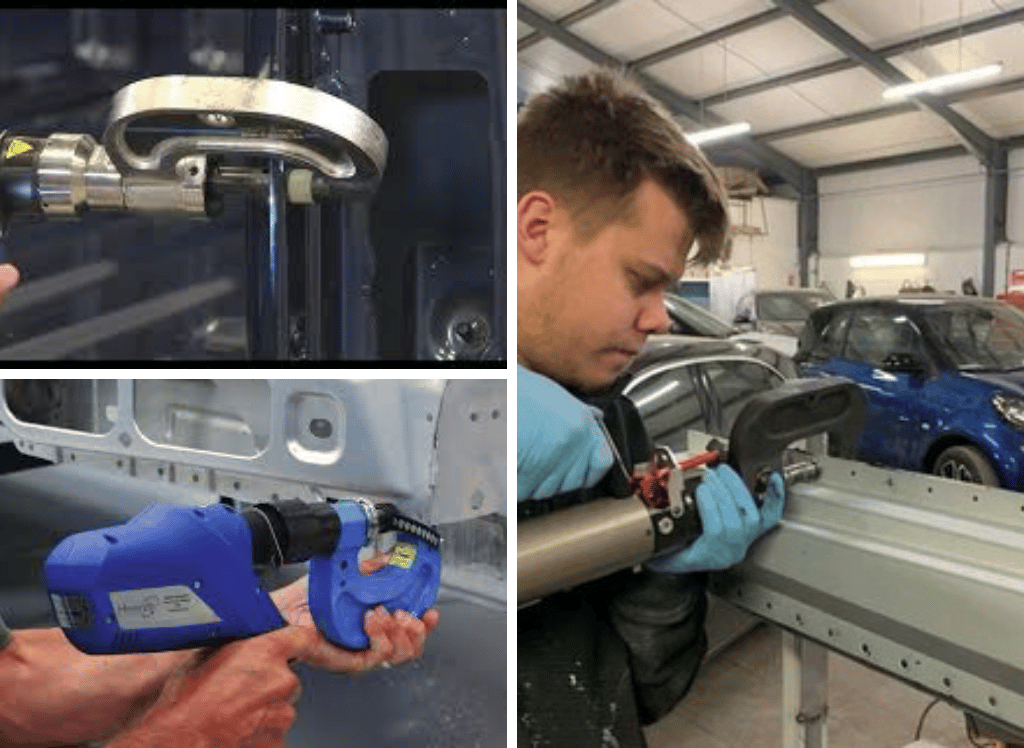
 Todd Bandel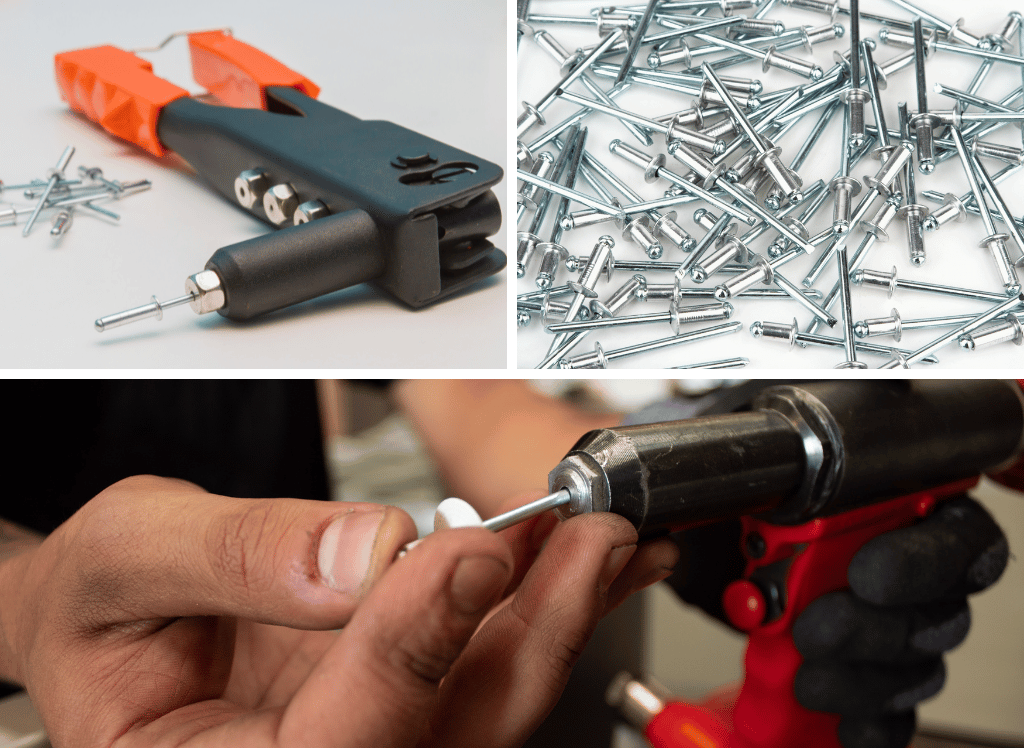
 Todd Bandel
 Todd Bandel
 Todd Bandel
 Todd Bandel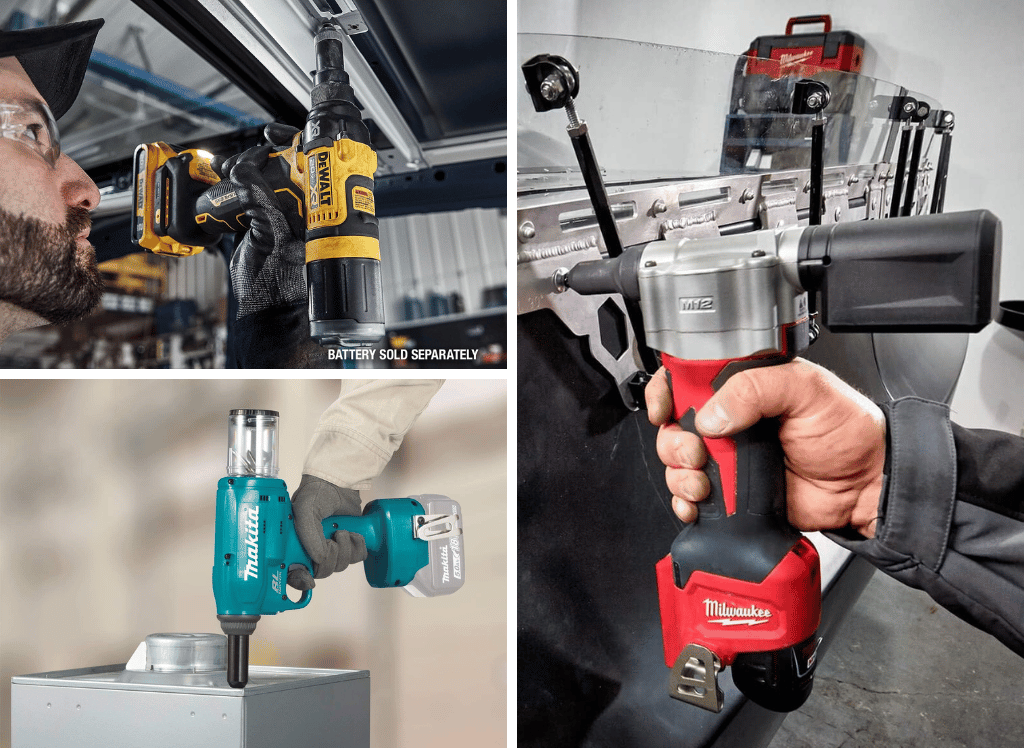
 Todd Bandel