The Corvette C2 Sting Ray: An American Icon Reborn
Discover the legend of the Corvette C2 Sting Ray. Explore its revolutionary design, technical specs, and lasting impact on American car culture.

Welcome to Mechanicaddicts. As an Amazon Associate, we earn from qualifying purchases (at no cost to you) from links found within these pages if you choose to buy something.
When you close your eyes and picture the quintessential American sports car, what do you see? For many, the image that immediately springs to mind is the sharp, aggressive profile of the Chevrolet Corvette C2 Sting Ray. Produced for only five short years between 1963 and 1967, this second-generation Corvette didn’t just follow in the footsteps of its predecessor; it sprinted past it, shattering expectations and redefining what an American performance car could be.
The C2 wasn’t merely an update; it was a revolution on wheels. Born from the race tracks and wind tunnels of General Motors, it brought a level of sophistication and futuristic design that had previously been the exclusive domain of European exotics. With its independent rear suspension, hidden headlights, and that unforgettable split rear window on the ‘63 coupe, the Sting Ray was a bold declaration of automotive independence. In the broader context of Corvette history, the C2's development was driven by the collaborative efforts of other GM engineers, whose innovations and teamwork helped transform the Corvette into a world-class contender.
In this deep dive, we’re going to explore the legend of the C2 Sting Ray. We’ll pop the hood to look at the engineering marvels that powered it, trace the sweeping curves of its design evolution, and understand why, decades later, it remains one of the most coveted collector cars on the planet. The C2 Corvette was designed under the direction of GM chief stylist Bill Mitchell, with contributions from Larry Shinoda. It was influenced by earlier race car concepts such as the Q-Corvette and the Sting Ray racer. Whether you’re a die-hard Chevy fan or just someone who appreciates beautiful machinery, the story of the Sting Ray is one you won’t want to miss.
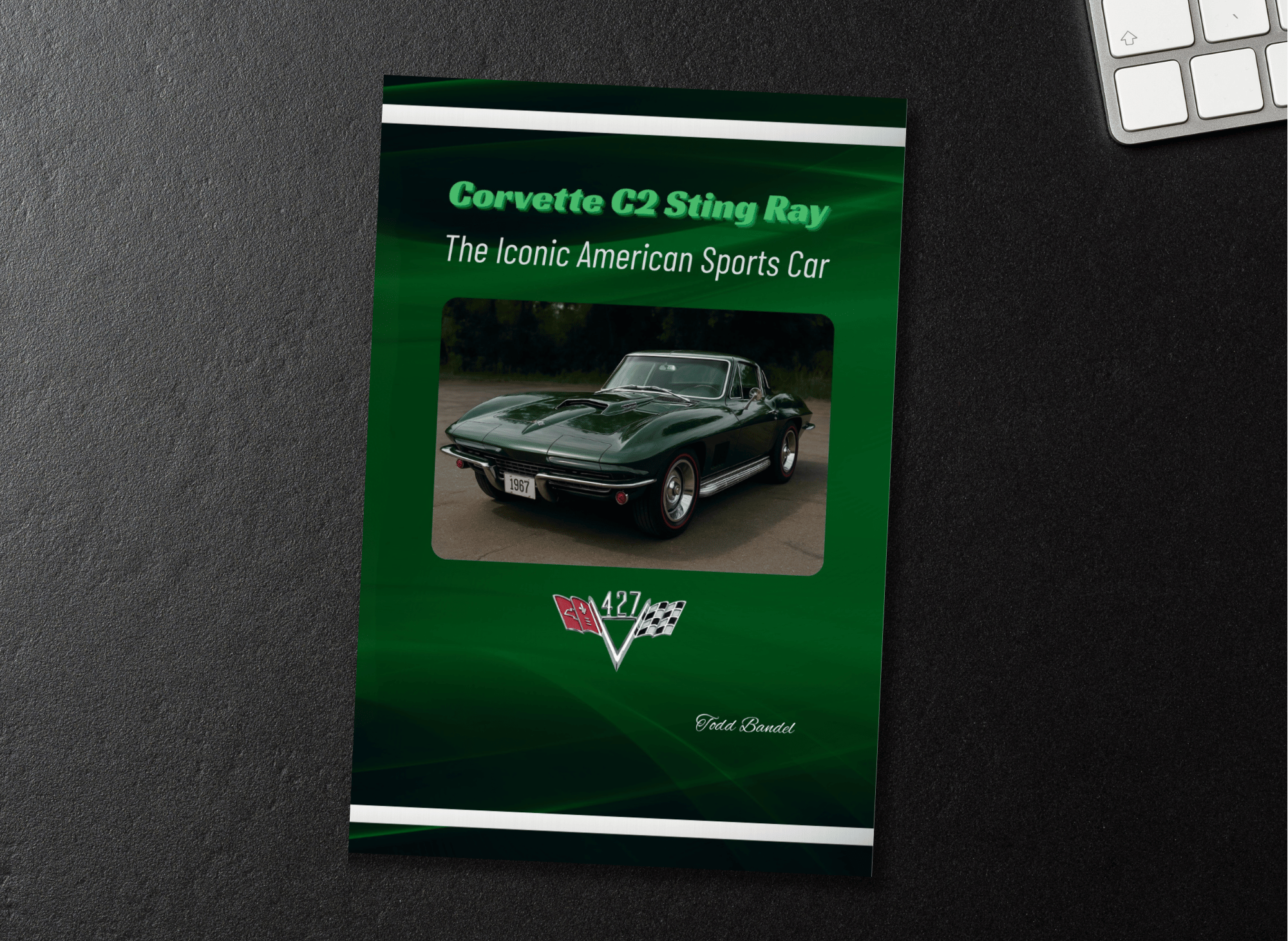
Corvette C2 Sting Ray: The Iconic American Sports Car
Through meticulously detailed insights and behind-the-scenes stories, readers will appreciate the Sting Ray's revolutionary engineering, cultural significance, and its enduring influence on American traditions however this is not a picture book.
Design Evolution: From Mako Shark to Street Sting Ray and the Split Rear Window
To understand the C2, you have to look at what came before it and what was happening behind the scenes at GM. The first-generation Corvette (C1) had established Chevrolet as a player in the sports car market, but by the early ‘60s, it was mechanically aging. The C2 needed to be a leap forward, not a step.
The Sting Ray's design language owes a massive debt to the XP-755 concept car, better known as the Mako Shark. Designed by Larry Shinoda under the direction of Bill Mitchell, GM’s Vice President of Styling, the Mako Shark was inspired by a shark Mitchell had caught while deep-sea fishing. He was so captivated by the creature’s iridescent colors and sleek form that he demanded a car that looked just like it.
The result was a concept with sharp, distinct fender peaks and a tapered tail that looked fast even when standing still. The C2 Corvette's design was also influenced by the Jaguar E-Type and marine life such as sharks, blending European elegance with aggressive American styling. During the early development phase, a full-scale wooden mock-up was created to work out interior dimensions and design details before finalizing the vehicle's features.
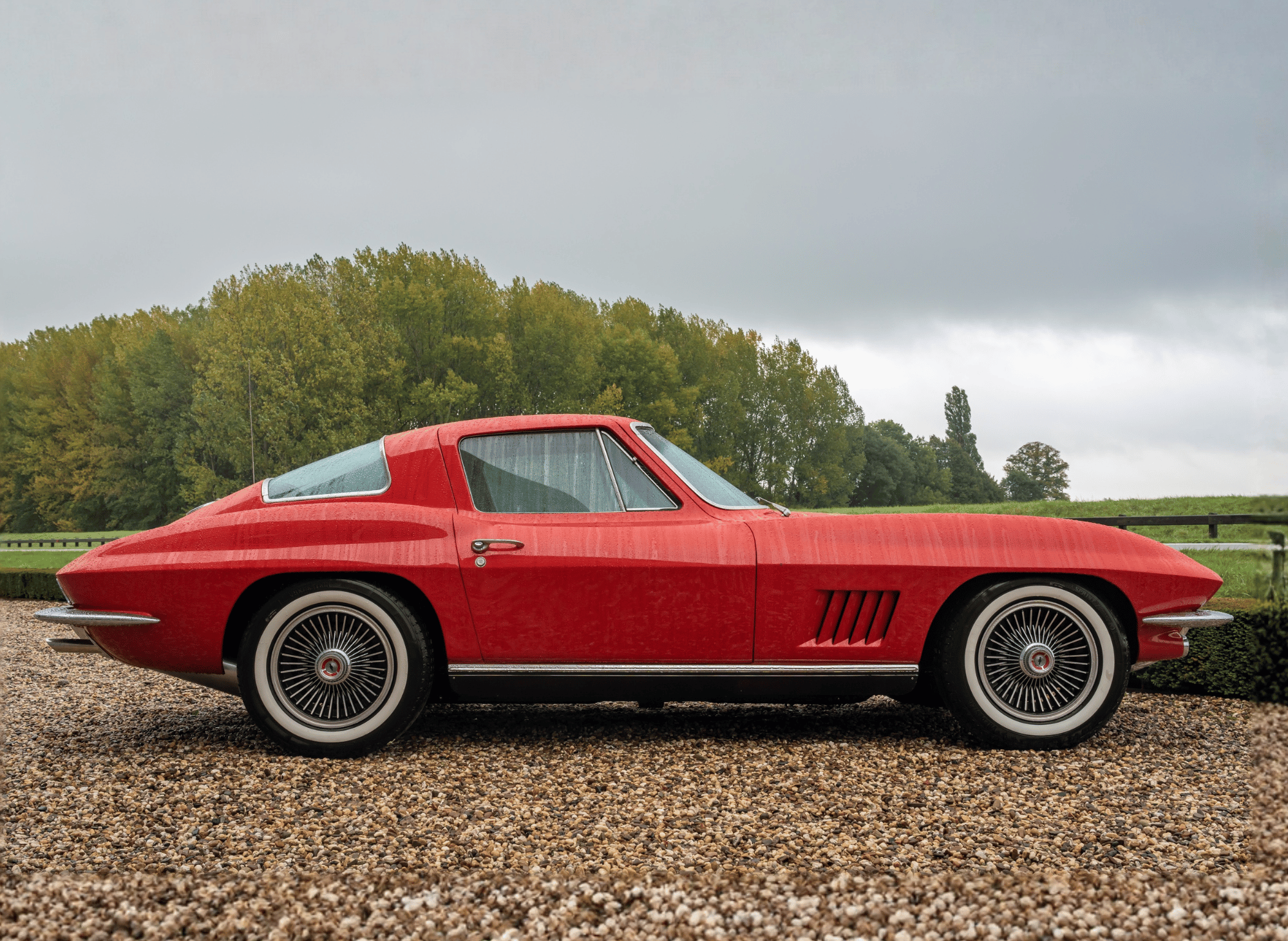
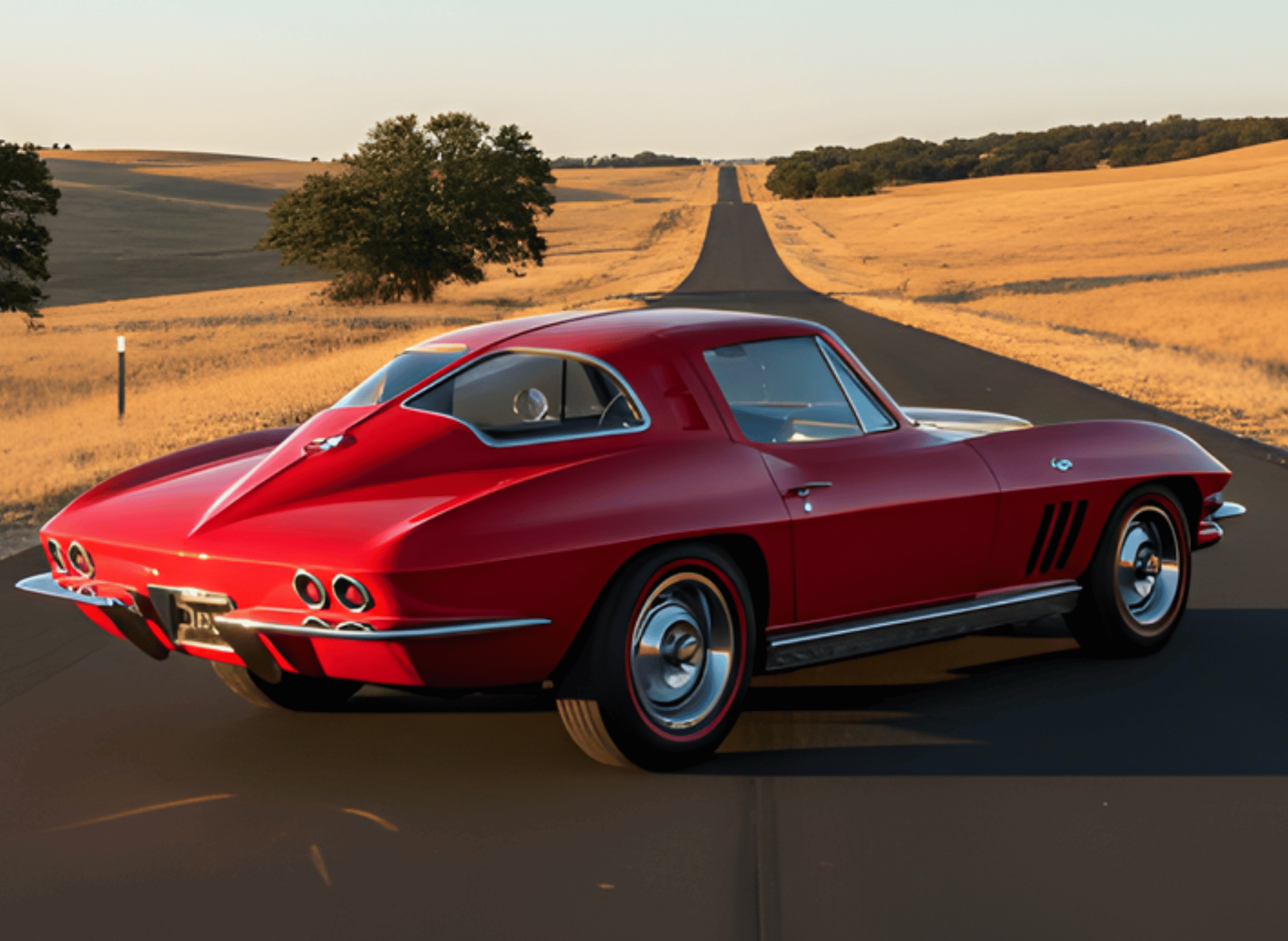
When the production C2 arrived in 1963, it retained much of that predatory aggression. It was the first Corvette to be offered as a coupe, a decision that fundamentally changed the car’s character. The coupe featured a tapering “boat-tail” rear deck and, most controversially, a split rear window. This spine running down the back was a pet project of Mitchell’s, who loved the way it continued the central crease of the hood and roof. However, Zora Arkus-Duntov, the legendary “Father of the Corvette,” hated it.
He argued it ruined rear visibility, which it did, and fought to have it removed. Duntov eventually won the war; the split window lasted only one year, making the 1963 model instantly identifiable and incredibly valuable today. The 1963 Corvette Sting Ray coupe's split-window design is highly sought after by collectors due to its rarity, as it was only produced for one model year.
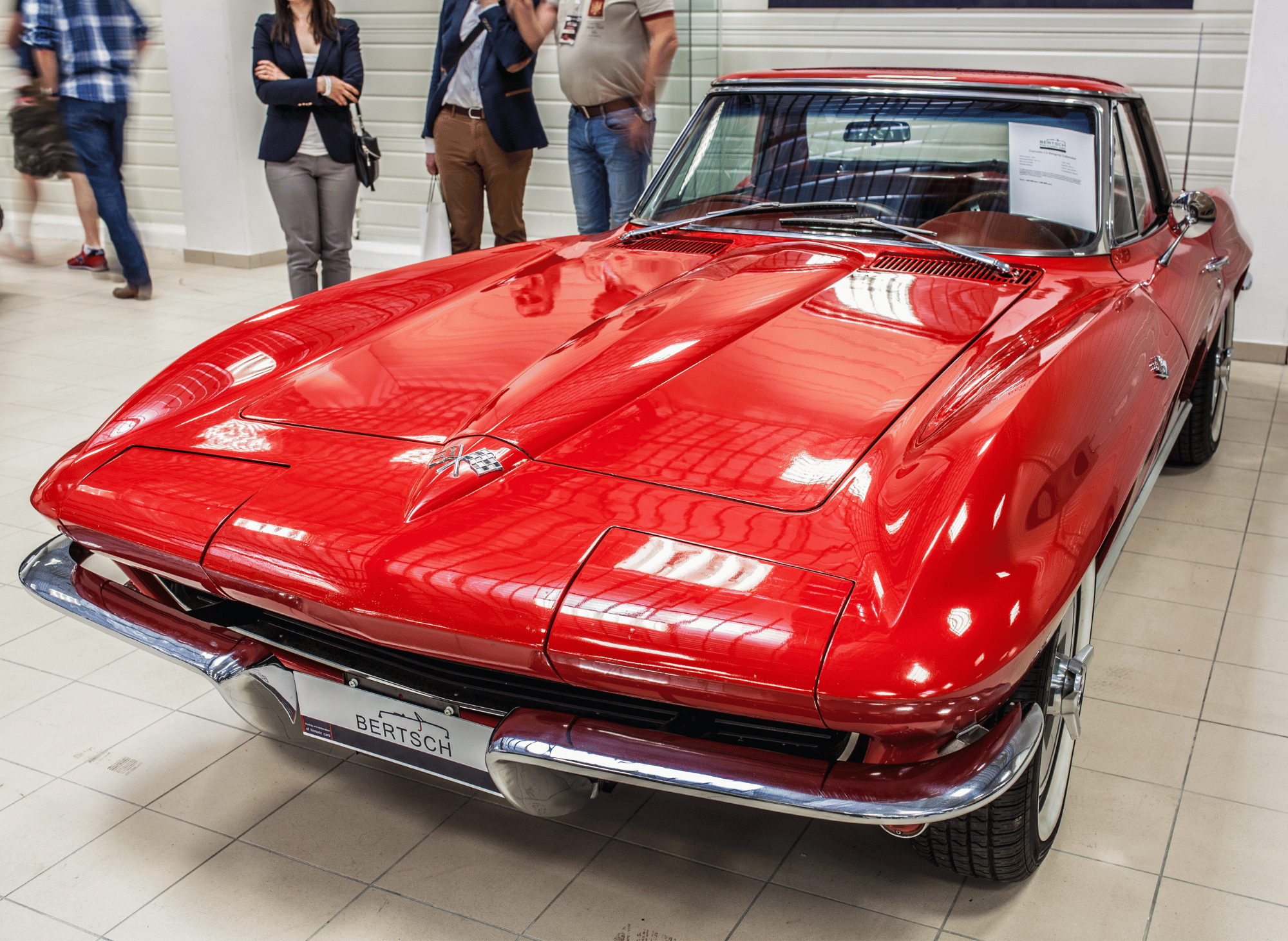
Another defining feature was the introduction of hidden headlights. Rotating housings allowed the headlights to disappear into the sharp leading edge of the nose when not in use, creating an unbroken aerodynamic line. The doors cut into the roofline to aid entry and exit, a practical touch that also added to the car’s jet-fighter aesthetic. The C2 was smaller, lower, and more aerodynamic than the C1, sitting on a wheelbase that was four inches shorter.
The exterior styling was influenced by wind tunnel testing, which helped refine its shape for improved aerodynamics, a key factor in the car's speed and handling. Every line on the car, from the fake hood vents (which were functional on race versions) to the side gills and the integrated fuel filler flap on the rear deck, screamed performance and attention to both function and aesthetics. The chassis featured a robust frame rail, serving as a key structural component that supported the body and connected various suspension parts, enhancing handling, weight reduction, and overall stability.
Body Style Options and Variations
When Chevrolet introduced the Corvette C2 Sting Ray, it wasn’t just a leap forward in performance; it was a showcase of bold body style options and technical innovations that set new standards for American sports cars. The most instantly recognizable of these was the split rear window, a feature exclusive to the 1963 coupe.
This dramatic design element, inspired by the earlier Q-Corvette and its coupe-only model, gave the Sting Ray a futuristic look and made it an instant classic. However, the split rear window also sparked debate due to its impact on rear visibility. By 1964, Chevrolet responded to driver feedback by replacing it with a single-piece rear window, improving practicality while still retaining the Sting Ray’s signature silhouette.
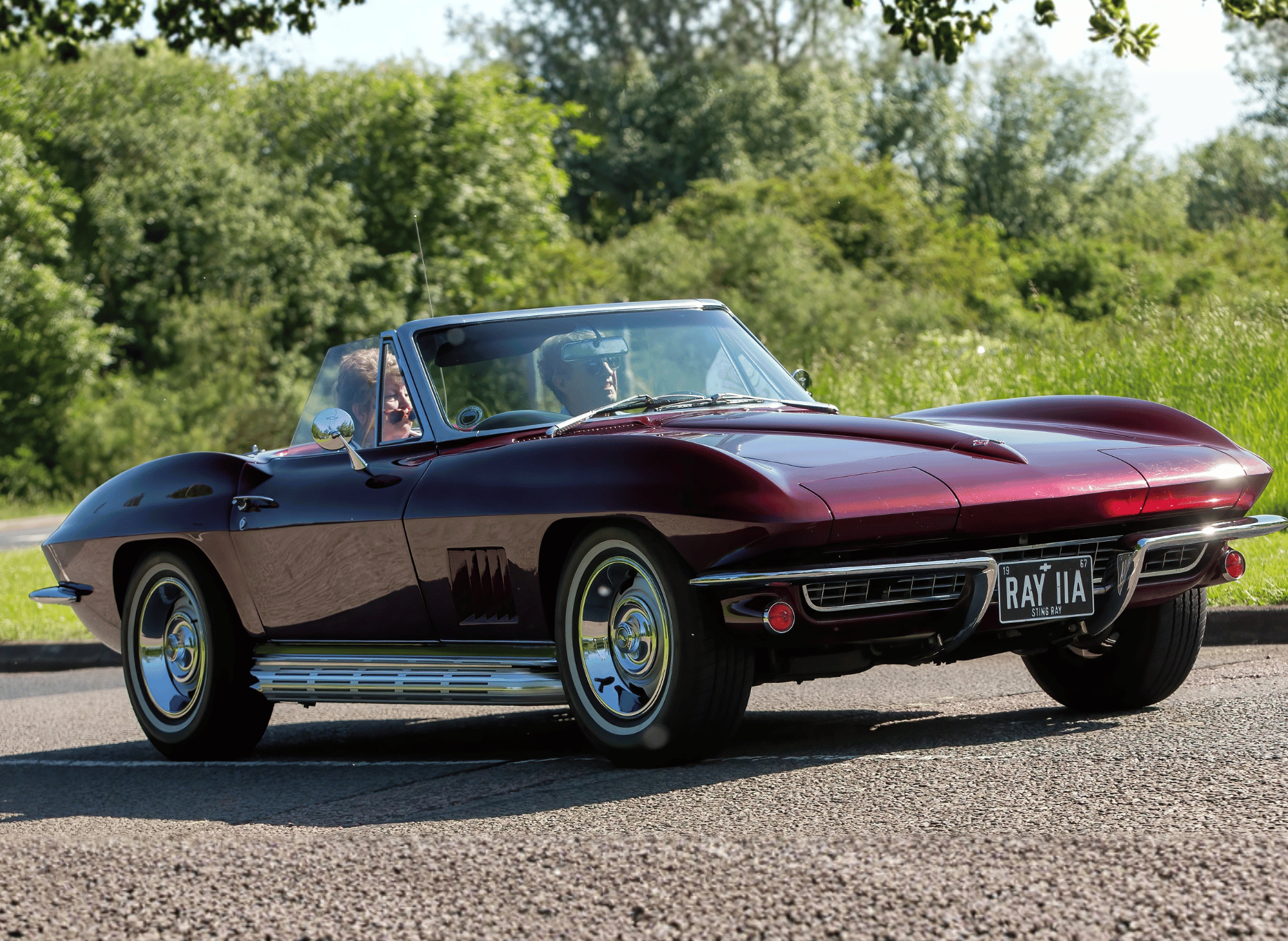
Beyond the iconic coupe, the C2 Corvette was also available as a convertible, offering drivers the thrill of open-air motoring. The convertible’s detachable hardtop allowed owners to tailor their driving experience to the weather or their mood, making the C2 as versatile as it was stylish. Whether you preferred the coupe’s dramatic lines or the convertible’s wind-in-your-hair freedom, the C2 delivered a body style to suit every enthusiast.
Underneath its sculpted exterior, the C2 Corvette was engineered for a superior ride and world-class handling. The introduction of independent rear suspension was a game-changer, featuring a frame-mounted differential, U-jointed half shafts, and a transverse leaf spring. This advanced rear suspension array delivered a smoother ride and improved tire adhesion, especially when compared to the solid axle setup of previous Corvettes.
The use of coil springs up front, combined with a trailing radius rod-mounted hub carrier and rubber-cushioned struts, further enhanced ride quality and cornering prowess. The new hydraulic steering damper, essentially a shock absorber for the steering system, helped tame road feedback, while optional power steering made the C2 more approachable for everyday driving.
Chevrolet didn’t stop at handling; they also pushed the envelope with big block power. The arrival of the 396 and, later, the legendary 427 cubic-inch engines transformed the C2 into a true muscle car, delivering breathtaking acceleration and cementing its reputation on the world racing stage. The availability of a four-speed manual gearbox gave drivers precise control over all that power, while the introduction of four-wheel disc brakes in later models provided the stopping force needed for serious performance driving.
The C2’s exterior styling drew inspiration from earlier race cars, with peaked fenders, functional (and sometimes fake) hood vents, and a purposeful stance that hinted at its racing pedigree. Every detail, from the trailing radius rod to the rubber-cushioned struts carried in the rear suspension, was designed to maximize performance without sacrificing comfort.
In the end, the Chevrolet Corvette C2 offered a range of body style options and technical variations that appealed to both purists and thrill-seekers. Whether you were drawn to the rarity of the split rear window, the versatility of the convertible with its detachable hardtop, or the raw power of a big block Sting Ray, the C2 Corvette stood as a testament to American ingenuity. Its influence is still felt in every advanced Corvette that rolls off the line today, a lasting legacy of innovation, style, and performance.
Technical Specifications: Engineering a Legend
Beneath that stunning fiberglass skin lay a chassis that was light-years ahead of the solid-axle C1. The C2 introduced a completely new ladder-type frame that was stiffer and lighter, providing a solid foundation for serious suspension work. The five-crossmember layout of the chassis lowered the center of gravity, enhancing handling and stability.
The production model and the first-ever production coupe marked significant milestones in the C2's development, showcasing the transition from concept to a consumer-ready sports car. The new Corvette represented a leap in engineering and design, setting new standards for performance and innovation in the Corvette lineage. While the C2's fiberglass body does not rust, the underlying steel frame is susceptible to corrosion, making thorough inspections critical for longevity. Over its five-year run, the C2 Corvette's production included a total of 118,000 units, underscoring its popularity and impact.
The Suspension Revolution
The biggest news was the independent rear suspension (IRS). This was a game-changer. The old solid axle, while durable, was heavy and prone to hopping over bumps. The new IRS system used a transverse leaf spring and U-joint half-shafts that doubled as upper control arms. This new rear suspension array, derived from the CERV I concept, featured lightweight construction and was engineered to reduce ride harshness while significantly improving tire adhesion and handling capabilities.
This setup, combined with rubber-cushioned struts, allowed each rear wheel to react to road imperfections independently. The result was vastly improved tire adhesion and a smoother ride, making the Corvette a car that could finally corner with the best of Europe. Additionally, transferred braking torque through the suspension components enhanced tire grip and stability during deceleration, further optimizing handling performance. Early prototypes and race cars also featured rear brakes mounted inboard, a design that contributed to weight reduction and improved handling, especially in high-performance and racing applications.
Up front, the suspension was refined with unequal-length A-arms and coil springs, designed to work in harmony with the new rear setup. The steering was sharpened, too, with a faster ratio and a new hydraulic steering damper to reduce kickback. For the first time, power steering became a popular option, making the car more livable at low speeds without sacrificing high-speed feel.
Braking Power
Stopping power was another area of rapid evolution. The 1963 and 1964 models came with large 11-inch drum brakes, which were adequate for the street but faded quickly under race conditions. However, in 1965, Chevrolet introduced four-wheel disc brakes as standard equipment.
These four-piston calipers clamped down on vented rotors, providing immense, fade-free stopping power and allowing the system to handle high braking torque during aggressive driving. Period road tests, such as those conducted by Motor Trend, highlighted the significantly improved braking performance of the C2 Corvette. It was a revelation for American performance cars, most of which were still relying on outdated drum technology.
Under the Hood
Then, of course, there were the engines. The C2 era was the golden age of horsepower wars, and the Sting Ray was on the front lines.
- Small Block: The base engines were 327 cubic inch V8s, ranging from mild 250-horsepower cruisers to the screaming, fuel-injected L84 that pumped out 360 (and later 375) horsepower. These “Fuelies” were mechanical marvels, offering crisp throttle response and high-revving power, often paired with an aluminum manifold for improved performance.
- Big Block: In the middle of the 1965 model year, everything changed with the introduction of the Big Block. The 396 cubic inch “Turbo-Jet” V8 arrived, delivering 425 horsepower and mountains of torque. This evolved into the legendary 427 cubic inch engines of 1966 and 1967. The pinnacle was the L88 427, a barely disguised race engine rated conservatively at 430 horsepower but actually producing well over 500.
The 1963 Corvette Sting Ray marked a pivotal moment in automotive history, especially for those seeking ultimate performance. It was the year Chevrolet introduced the legendary Z06 package, a performance-oriented option that transformed the already impressive Corvette into a track-ready machine. At the heart of the Z06 package was a high-performance, fuel-injected 327 cubic-inch engine, delivering a robust 360 horsepower.
This potent powerplant was complemented by a heavy-duty suspension system designed to enhance handling and durability, larger anti-sway bars to minimize body roll, and bigger brakes with specialized linings to ensure maximum stopping power. These upgrades made the Z06 a formidable contender on the racetrack, though its availability was limited to coupes due to the oversized gas tank required for endurance racing. With only 199 Z06 Corvettes produced in 1963, most of which were reserved for racing teams, this package remains a rare and coveted piece of Corvette history.
Power from the 327 cubic-inch V8 was sent to the rear wheels through a choice of transmissions, including a 3-speed or 4-speed manual gearbox, as well as a 2-speed Powerglide automatic. Among enthusiasts, the 4-speed manual, particularly the close-ratio Muncie units, was the preferred option. These gearboxes provided a direct mechanical connection to the thunderous V8, allowing drivers to fully exploit the engine's performance potential.
The Z06's advanced suspension system, which replaced conventional twin-tube units with more robust components, further enhanced its handling capabilities. Combined with hydraulically assisted steering, the Z06 offered precise control and responsiveness, making it a joy to drive both on and off the track.
The Corvette's engineering excellence extended beyond its drivetrain and suspension. The axle ratios were carefully selected to balance acceleration and top-end speed, ensuring the Z06 could perform admirably in a variety of racing scenarios. Up front, the larger anti-sway bars worked in tandem with the suspension to keep the front wheels planted during aggressive cornering. This attention to detail in the chassis and handling dynamics set the Z06 apart from its competitors and solidified its reputation as a performance icon.
Interestingly, the development of the 1963 Corvette Sting Ray involved a wooden mock-up created by the design team to refine its revolutionary styling. This mock-up helped shape the car's iconic split-window coupe design, which not only enhanced aerodynamics but also provided a distinctive aesthetic that remains celebrated to this day.
Despite its focus on performance, the Corvette retained a surprising amount of practicality, with luggage space cleverly integrated into the rear of the coupe. This blend of style, performance, and usability made the 1963 Corvette Sting Ray, particularly the Z06 variant, a groundbreaking achievement in American sports car design.
Underneath the car, components like the relay rod played a crucial role in ensuring precise steering and handling. Every element of the Z06 was engineered with performance in mind, creating a car that was as thrilling to drive as it was to behold. For those fortunate enough to own one of the 199 Z06 Corvettes produced in 1963, it was more than just a car; it was a statement of engineering prowess and a testament to Chevrolet's commitment to pushing the boundaries of performance.
Cultural Impact: The Astronaut's Choice
The Corvette C2 didn’t just exist on the road; it lived in the American imagination. In the 1960s, America was obsessed with two things: the Space Race and speed. The Sting Ray became the unofficial car of the NASA astronauts. Through a clever leasing program by a Florida Chevrolet dealer, astronauts like Alan Shepard and Gus Grissom could lease brand-new Corvettes for $1 a year. Seeing these American heroes stepping out of their sleek, low-slung Sting Rays cemented the car’s image as a symbol of cutting-edge technology and bravery.
The Corvette convertible, with its open-top design, became especially iconic, offering drivers an exhilarating experience and making it a favorite for summer cruising. By 1965, two-thirds of C2 Corvette production was devoted to convertibles, reflecting the strong buyer preference for this variant.
It was also a fixture in Hollywood. Elvis Presley drove a Sting Ray in the film “Clambake,” and the car appeared in countless TV shows and movies, always signaling that the driver was cool, successful, and a little dangerous. It represented a specific kind of American freedom, the freedom of the open road, the freedom to go fast, and the freedom to look good doing it.
Culturally, the C2 bridged the gap between the clean, optimistic styling of the 1950s and the muscular, aggressive stance of the muscle car era. It was sophisticated enough for the country club but tough enough for the drag strip. It told the world that American engineering could be refined, not just brute force.
Motorsport Legacy: Bred for the Track
Zora Arkus-Duntov always intended the Corvette to be a race car. The C2 was his best weapon yet. The "Sting Ray" name itself was taken from the Sting Ray racer that Mitchell had built privately.
Almost immediately upon release, the C2 hit the tracks. The most famous iteration was the 1963 Grand Sport. Duntov secretly built five of these lightweight monsters to take on the Shelby Cobras and Ferraris at Le Mans and Sebring. They featured thinner fiberglass, aluminum tube frames, and roaring 377 cubic inch aluminum V8s. Although the program was officially killed by GM's ban on factory racing, the five Grand Sports escaped into private hands and became legends, dominating local races and proving the chassis's potential.
Even the production cars were formidable. With the Z06 "Special Performance Equipment Package," buyers could order a race-ready Corvette straight from the dealership. This package included stiffer springs and shocks, a thicker front stabilizer bar, and a massive 36-gallon fuel tank for endurance racing (giving these rare cars the nickname "Big Tankers").
The lessons learned on the track fed directly back into production. The move to disc brakes, the refinement of the fuel injection systems, and the aerodynamic tweaks were all born from the heat of competition. The C2 proved that an American sports car could handle the twisty circuits of Europe and the road courses of America, earning respect from competitors who had previously dismissed the Corvette as a "plastic toy."
Personal Stories & Interviews
Ask anyone who has owned a C2, and their eyes will light up. It’s a visceral experience that modern cars, for all their speed and comfort, struggle to replicate.
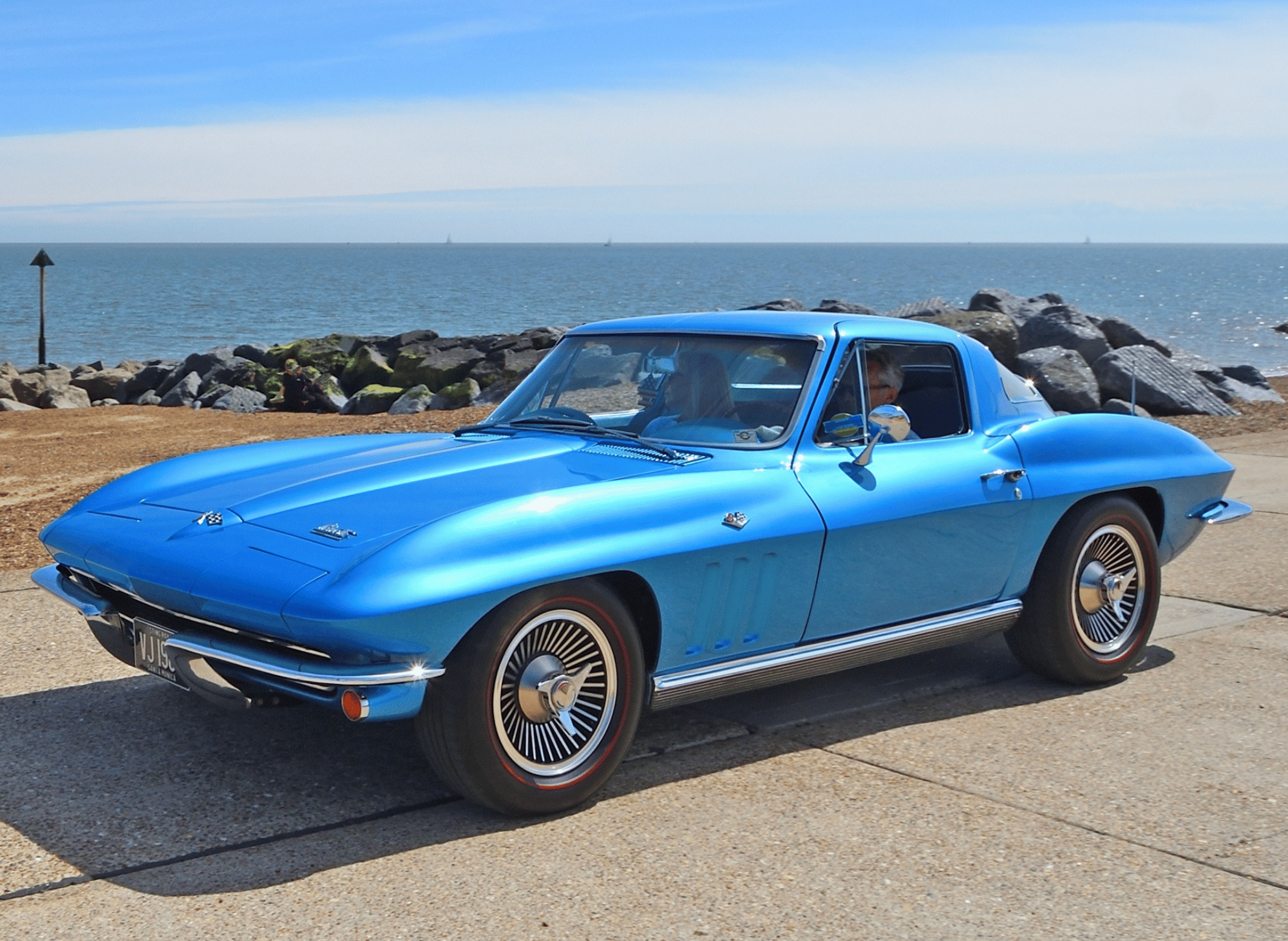
"It's the smell," says Mike, a long-time owner of a '66 convertible in Nassau Blue. "That mix of old leather, unburnt fuel, and hot fiberglass. You get in, and you're transported. The steering is heavy by today's standards, and you can feel every pebble through that thin wooden steering wheel, but that's the point. You're driving the car; the car isn't driving you."
We also spoke with Sarah, whose father bought a '63 Split Window coupe new and passed it down to her. "Growing up, I hated the split window," she laughs. "I couldn't see anything out of the back when I was learning to drive it. My dad told me, 'You don't need to look behind you, you're faster than everyone else.' Now, every time I take it to a show, people swarm it. They just want to look at that back glass. It’s a piece of art."
Former amateur racer Tom recalls the transition from the solid axle to the IRS. "I raced a '60 Corvette for years, and it was a handful. The back end would dance around if the track was rough. When I got my '64, it was like night and day. I could put the power down coming out of corners so much earlier. It made me a better driver instantly."
Legacy and Influence
The C2 Sting Ray's influence is still felt in automotive design today. The "coke bottle" shape, where the fenders bulge out, and the center of the car narrows, became a standard for muscle cars and sports cars throughout the late 60s and 70s. The hidden headlights became a Corvette trademark that lasted until 2005.
But beyond the styling cues, the C2 established the Corvette's mechanical formula for decades: V8 power up front, fiberglass body, and independent rear suspension. It set the performance benchmark that every subsequent generation had to meet. The C2 showed that GM was willing to take risks, to push boundaries, and to engineer a car that didn't just compete on price, but on merit.
When the C7 Corvette revived the "Stingray" name in 2014 (albeit as one word), it was a direct homage to the C2. The sharp creases and aggressive vents of the modern Corvettes can trace their lineage directly back to Bill Mitchell's shark-inspired dream.
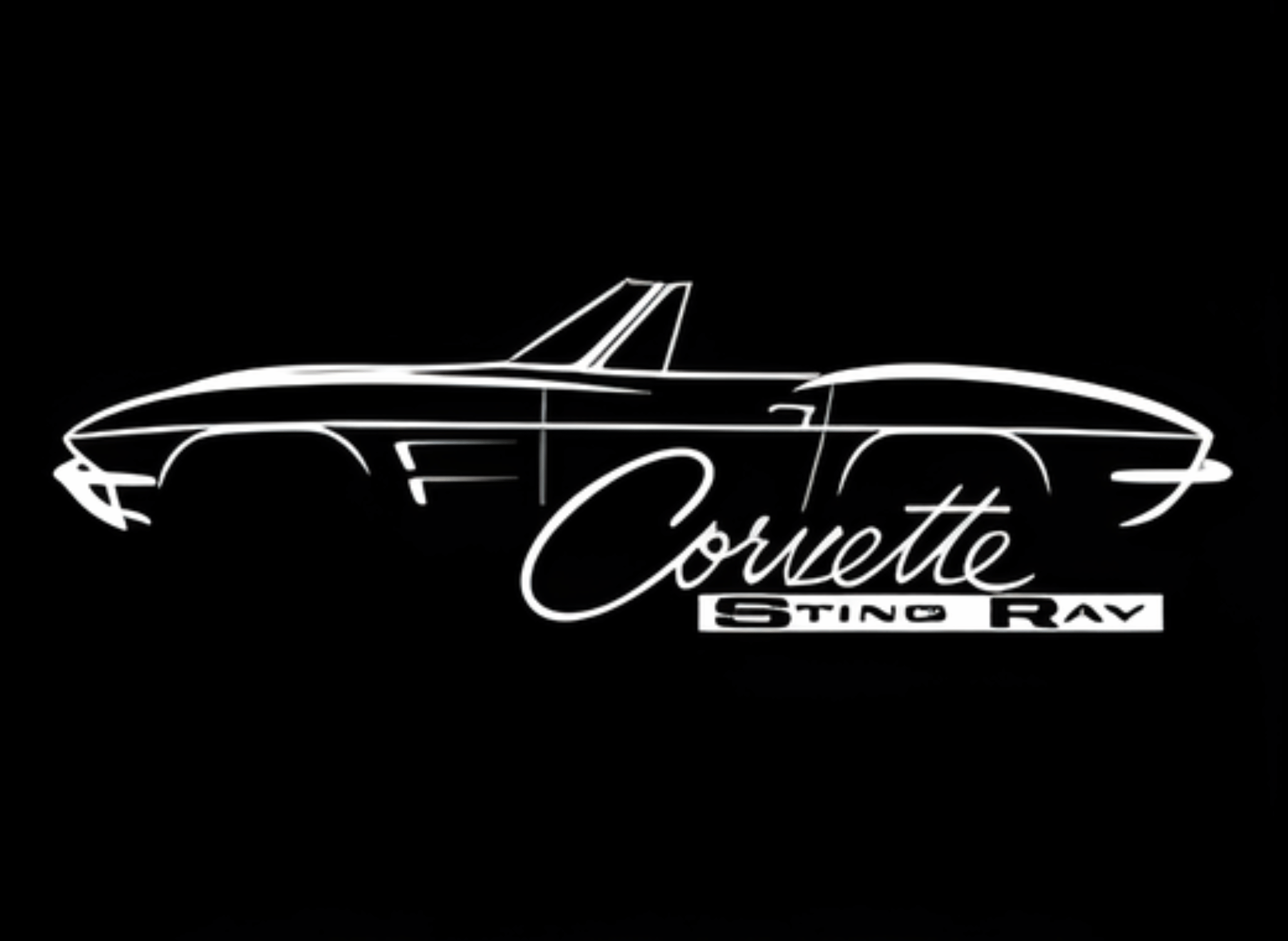
Continuing the Legend
The Chevrolet Corvette C2 Sting Ray is more than just a collection of steel, glass, and fiberglass. It is a rolling sculpture that captures a moment in time when American confidence was at its peak. It represents a perfect storm of design brilliance, engineering innovation, and cultural relevance.
From the controversial split window of the '63 to the earth-shaking 427s of the '67, every year of the C2 production run offered something special. It proved that a domestic car could possess the poise of a European GT and the punch of an American hot rod. Today, as we move toward an electric future, the Sting Ray's analog, mechanical soul serves as a beautiful reminder of the golden age of internal combustion. It remains one of the greatest cars ever built.
Thank you for reading!
Your friend,
Todd
#CorvetteC2 #StingRay #ClassicCar #VintageVibes #AmericanMuscle #CarEnthusiast #RetroRide #DreamCar #IconicDesign #TimelessBeauty
🚗🔥🏁✨🇺🇸😍💨🛠️📸🌟
Amazon Prime offers a wide range of products designed to cater to diverse customer needs, all with the added benefit of fast, reliable delivery. From household essentials and groceries to electronics, clothing, and entertainment, Prime members get access to exclusive deals and discounts across various categories.
Additionally, Prime membership includes access to services like Prime Video for streaming movies and TV shows, Amazon Music for ad-free music, and Prime Reading for eBooks and magazines. This comprehensive suite of benefits makes Amazon Prime a convenient and value-packed option for millions of customers worldwide.
- Prime for you, adult
- Free 30-day trial of Prime
- All of Prime, half the price.
- Prime Video
- Wedding Registry
- Kindle Unlimited
- Amazon Music
 Todd Bandel
 Todd Bandel
 Todd Bandel
 Todd Bandel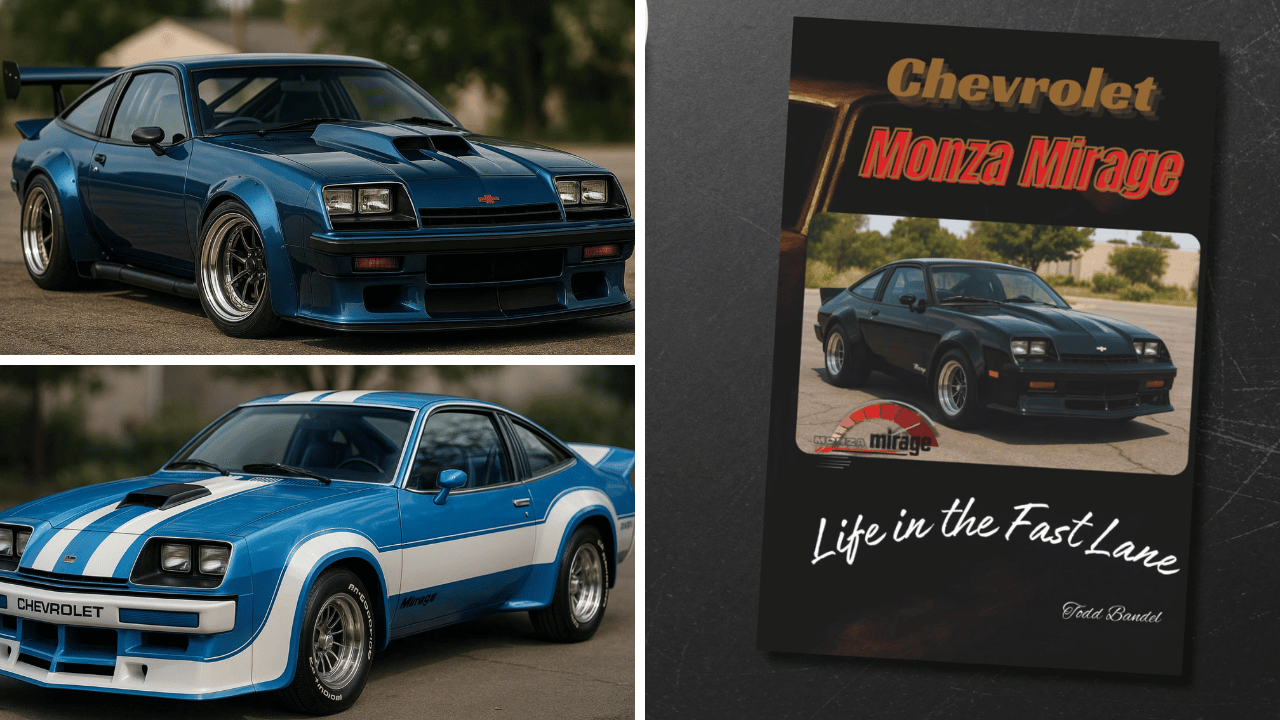
 Todd Bandel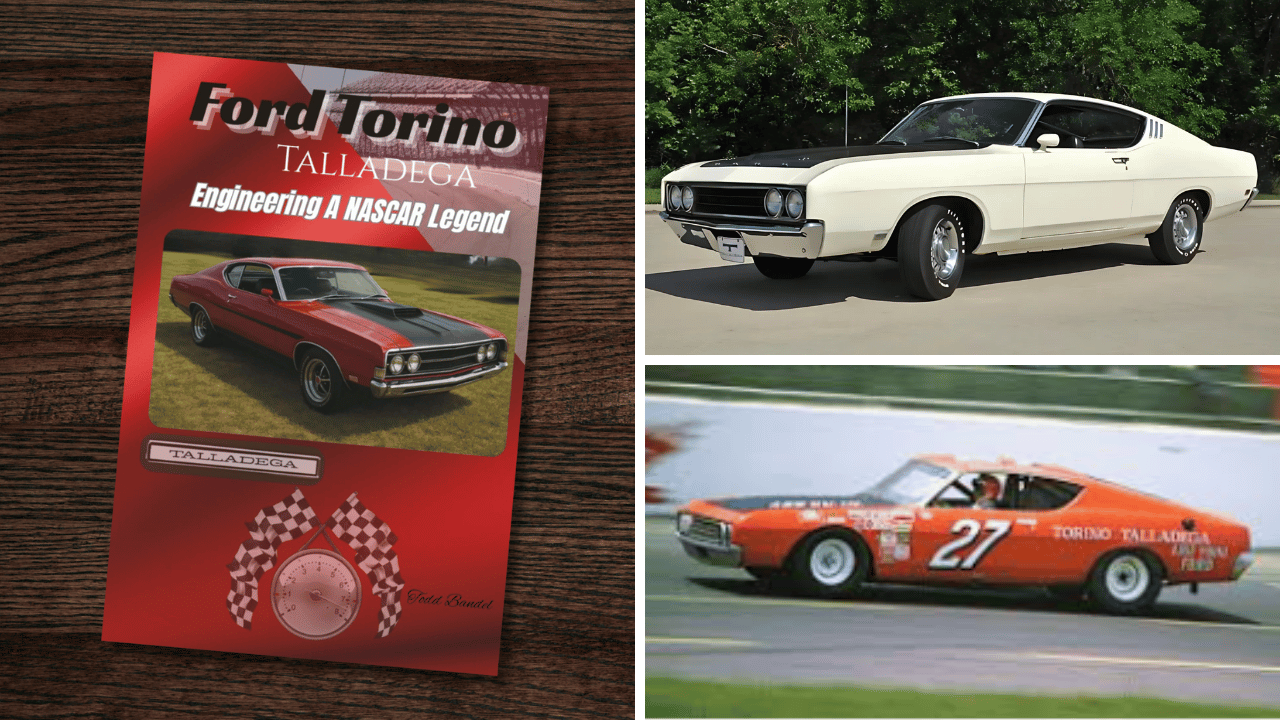
 Todd Bandel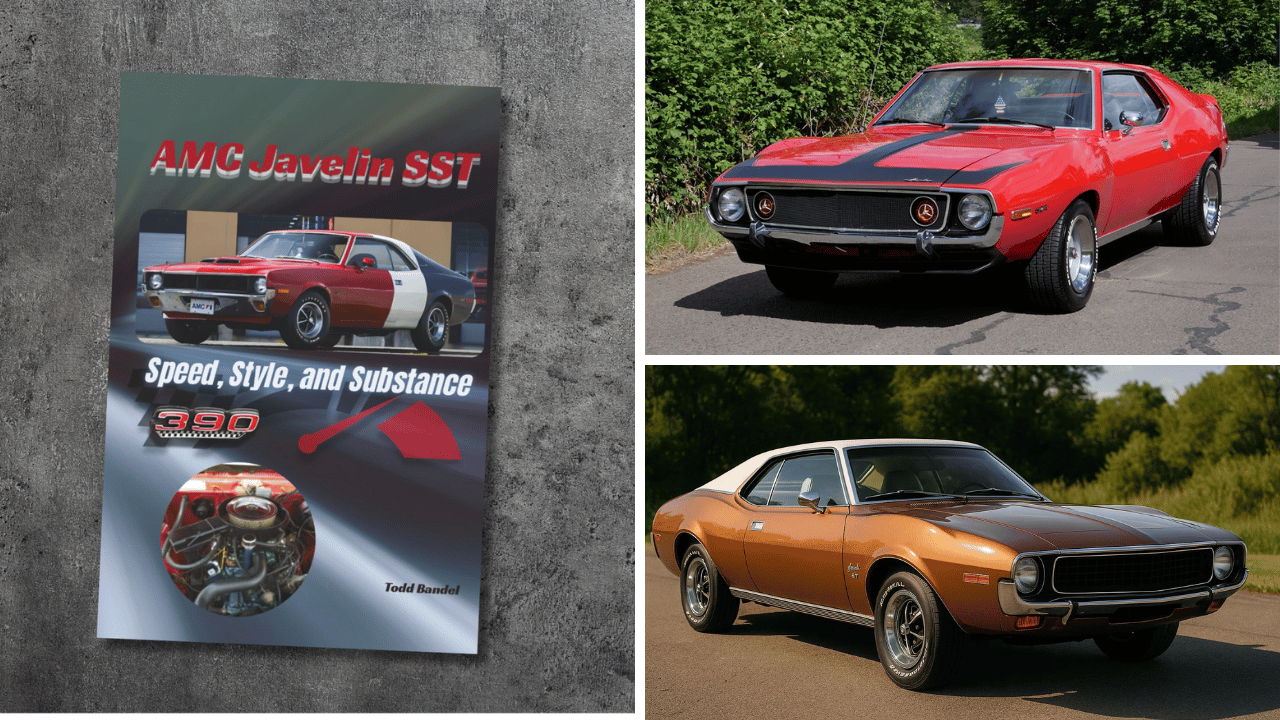
 Todd Bandel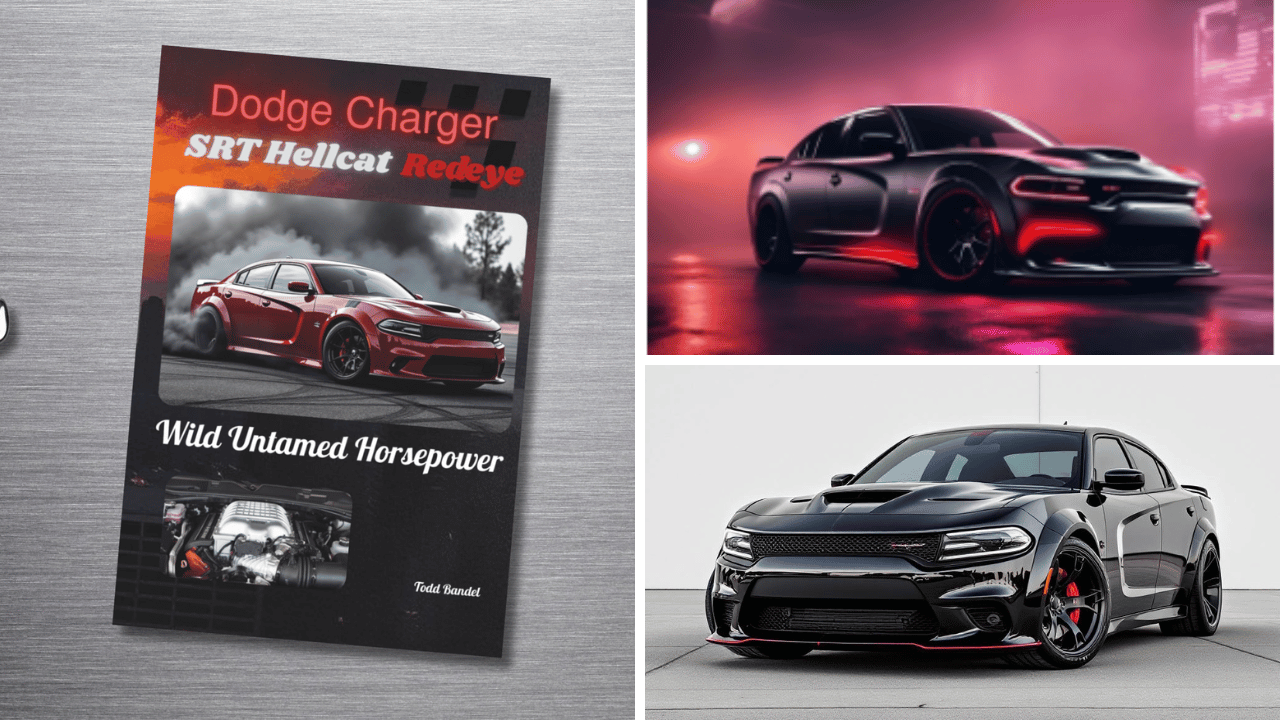
 Todd Bandel
 Todd Bandel
 Todd Bandel