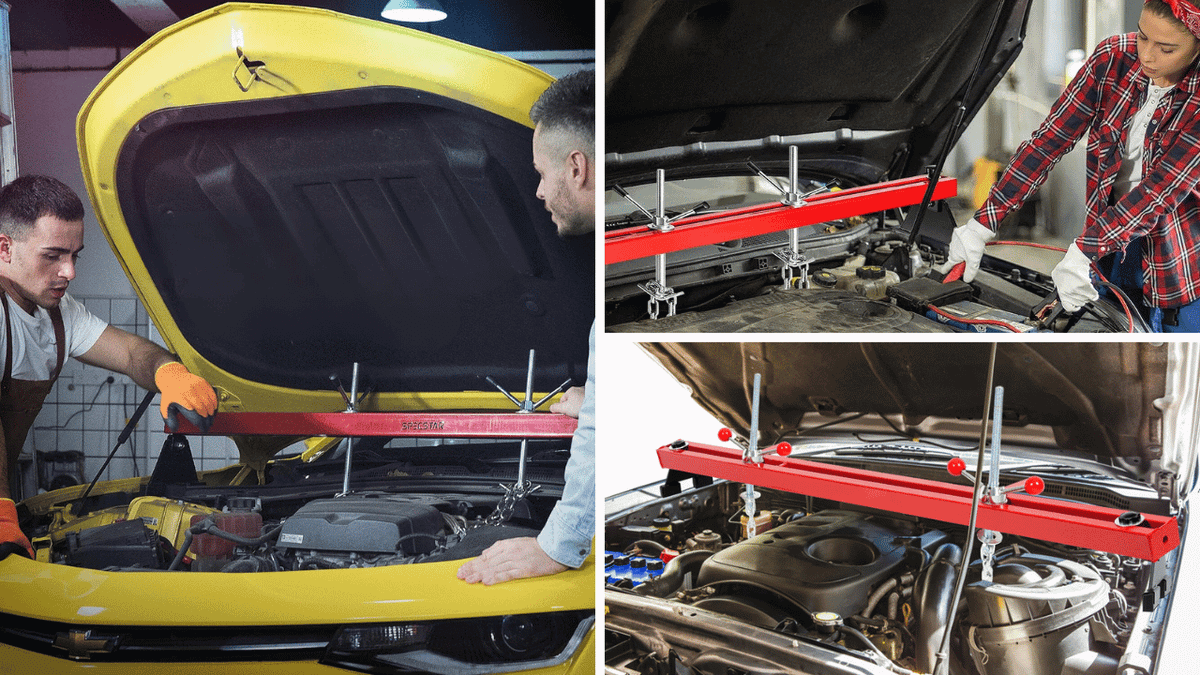
Engine Sling: Safe, Simple Engine Lifting for Swaps & Repairs
Heavy-duty engine sling for safe, level lifting and precise engine removal or installation in any garage or professional shop.

Whether you need to pull a tired small-block out of a project car or drop a crate motor into a restomod build, the way you connect that engine to your hoist matters more than most people realize.
An engine sling is the purpose-built link between your motor and your crane, and using the right one can mean the difference between a smooth, controlled lift and a heart-stopping moment where 600 pounds of cast iron starts to tilt sideways. This guide covers what engine slings are, the main types you'll find, and how to choose and use one safely.
What Is an Engine Lift Sling and Why You Need One
An engine sling is a heavy-duty nylon or chain lifting strap paired with a steel spreader bar or frame, designed to attach an engine to an engine lift or shop crane at multiple points.
Instead of relying on a single hook or a random length of chain looped around whatever looks sturdy, a properly configured sling supports an engine at multiple points and distributes weight evenly across them. The sling attaches to approved lifting points: header studs, exhaust bolt holes, intake manifold bosses, to distribute the load in a controlled way, keeping the engine balanced as it rises out of (or lowers into) the bay.
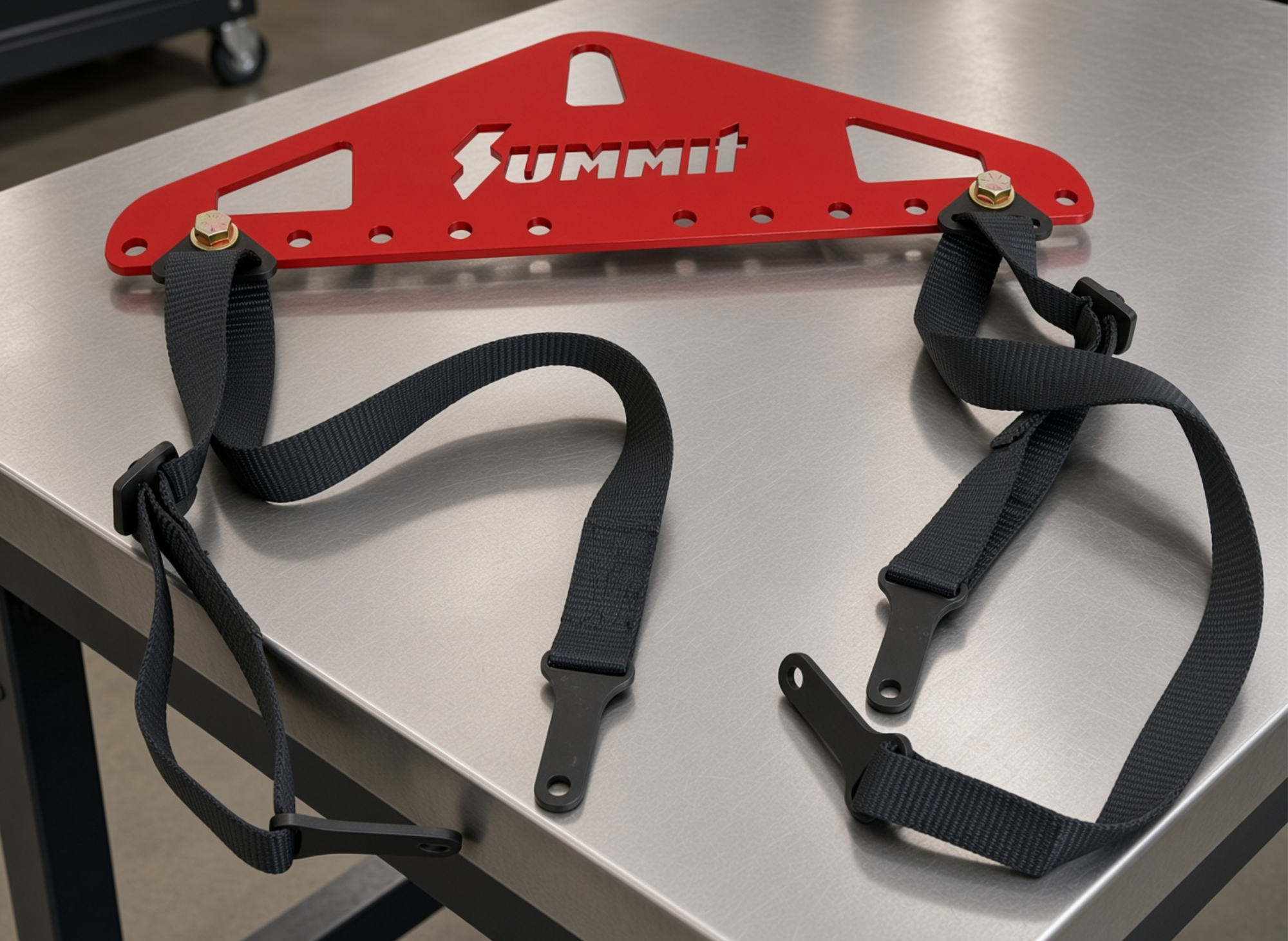
Summit Racing™ Engine Slings SUM-905235
Engine Lift Sling, .250 In. Steel Plate, Adjustable Location, 24 in. Nylon Straps, 1,200 lb. Capacity, Each
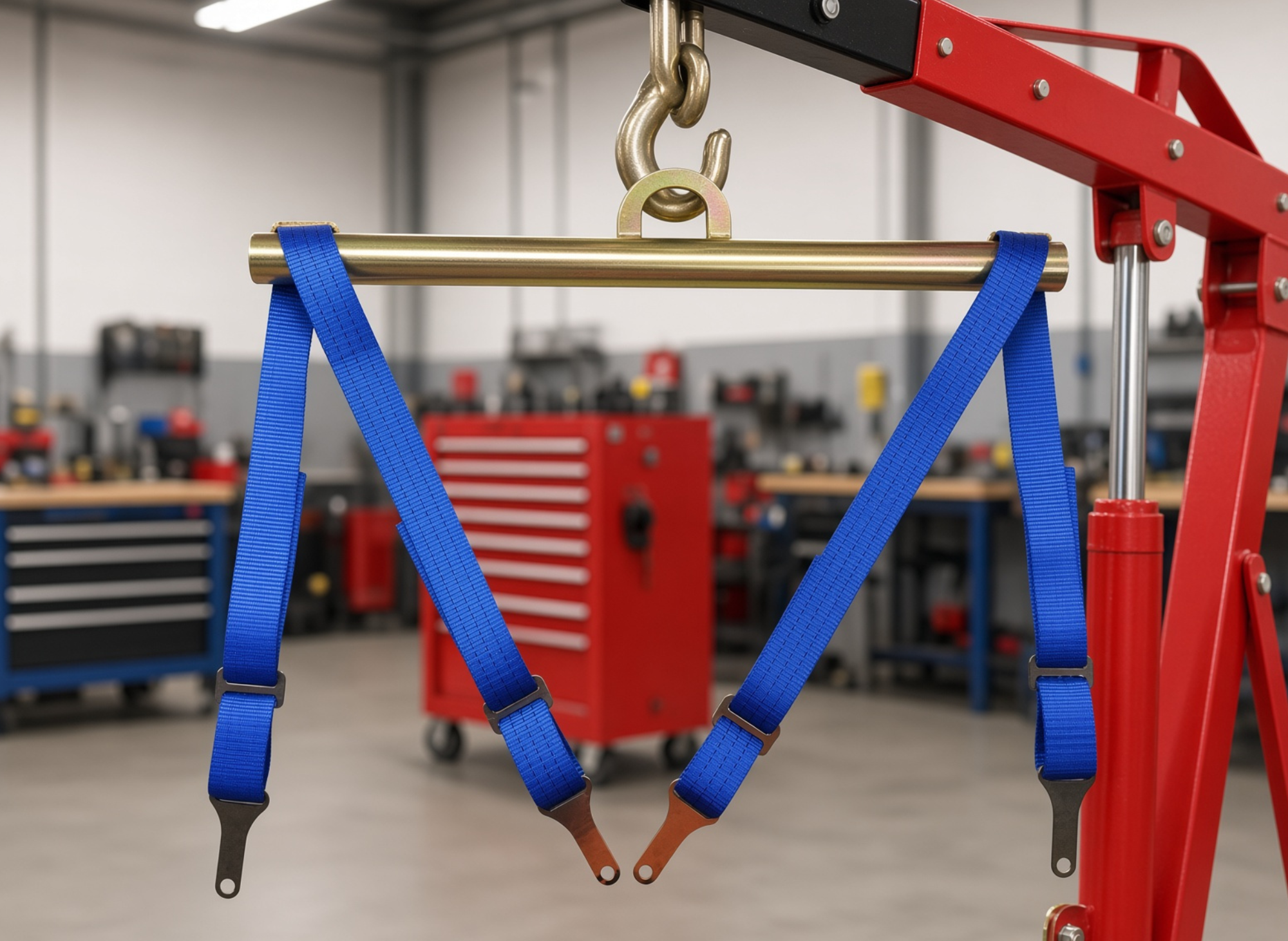
Summit Racing™ Engine Slings SUM-905230
Engine Lift Sling, Nylon Strap, 24 in. Straps, 1,200 lb. Capacity, Each
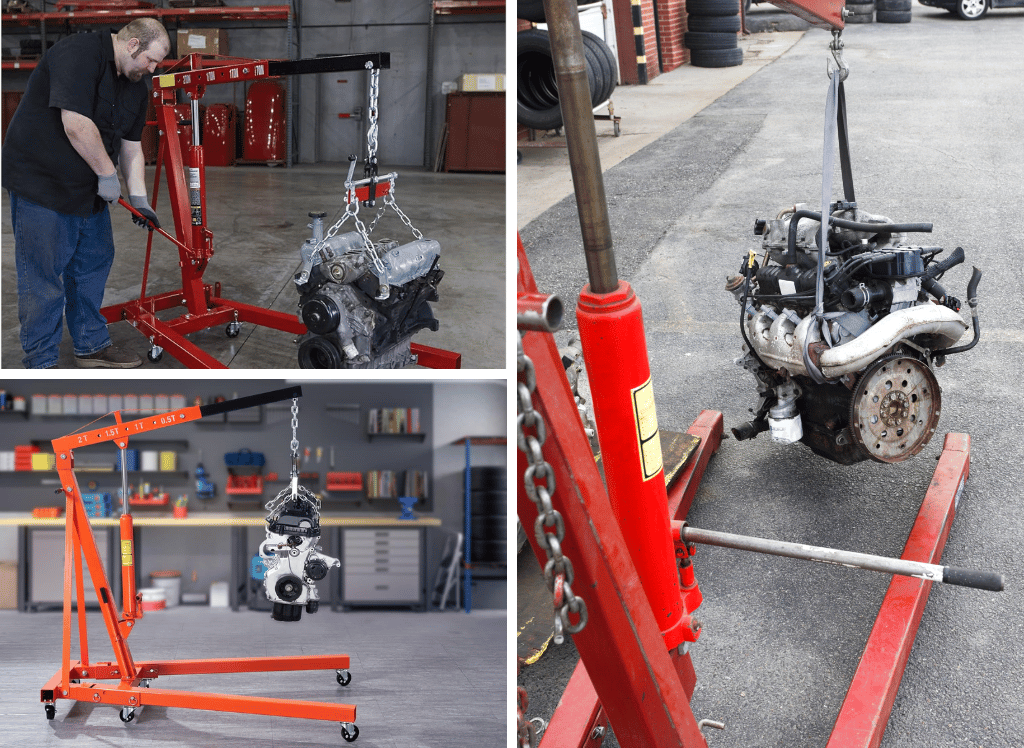
Automotive engine slings are commonly used with engine hoists or shop cranes, and you'll find them in every scenario where an engine needs to move: swaps on project cars, pulling a blown motor for a rebuild, installing a crate engine, transferring a powertrain onto an engine stand or cradle, or simply wheeling a motor across the shop on a cart.
Using proper lifting points can prevent bending or damage to engine components like valve covers, intake flanges, and accessory bracket parts that were never meant to bear the full weight of a hanging engine. Engine slings simplify engine removal tasks and make reinstallation just as predictable.
Compared to a tow strap or a length of hardware-store chain, a dedicated lift sling offers repeatable mounting points, a known working load limit, and far better balance. A chain wrapped around an exhaust manifold might hold, or it might slip under load, catch on a radiator hose, and send the engine swinging. A proper sling eliminates that guesswork.
Here's a quick summary of why a dedicated engine sling earns its place in your shop:
- Even weight distribution across multiple attachment points reduces tilt and swing.
- Higher and clearly rated working load limits (commonly 1,000–1,200 lbs) versus unknown-capacity improvised rigging.
- Less risk of cosmetic and structural damage to engine accessories, headers, and covers.
- Faster, more repeatable engine changes are critical for race teams pulling motors between rounds.
- Direct compatibility with standard engine hoists, load levelers, and engine stands.
- Ease of setup: most slings bolt on in minutes using existing engine hardware.
You'll find a few main styles when you search product pages: 4-point engine slings with rigid steel bars and four strap legs, header-stud slings that bolt directly to existing studs on each cylinder head, and strap-based slings with wide spreader bars and adjustable webbing for engines with tall manifolds or forced-induction setups. Products from Summit Racing and Pit Pal represent these categories well, and we'll break each one down next.
Types of Lift Sling Engine Slings and How They Attach to the Engine
Different engine and accessory configurations: carburetors versus tunnel-ram intakes, naturally aspirated versus blown-demand, and different sling designs. Choosing the right type makes it faster and safer to remove or install the motor. Slings can accommodate different engine shapes and lifting configurations, so there's no single "best" design. The right call depends on your engine, what's bolted to it, and how much room you have above it.
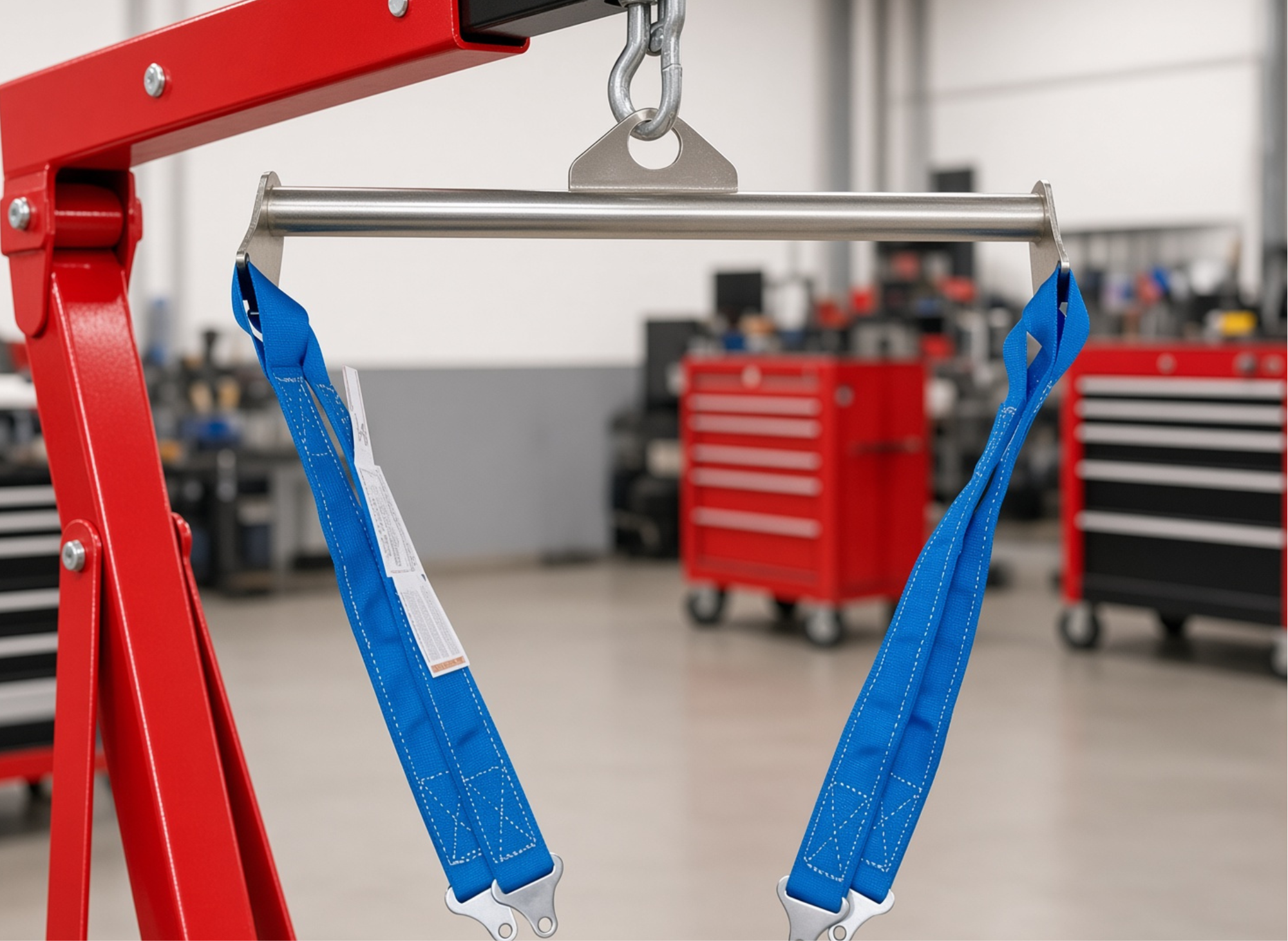
Pit Pal Engine Lift Slings 201
Engine Lifting Sling, Four 22 in. Long Straps, Steel/Nylon, Each
Here are the main types you'll find and how they attach:
- 4-point engine sling. A rigid steel plate or bar with four connection points (straps or legs) that pick the engine up from its corners. This style delivers great balance because the load is shared across four locations. Summit Racing's SUM-905235, for example, uses a .250-inch thick steel plate with adjustable attachment locations and 24-inch nylon straps, rated at 1,200 lbs. A typical 4-point engine sling weighs around 10 lbs, making it easy to handle and store. The SUM-905230 follows a similar layout with the same capacity and is another solid option in this category.
- Header-stud engine sling.Bars or plates that bolt directly to header studs on each side of the block. Straps run from these bars up to the hoist hook. This design keeps the sling low and tight against the engine, which is ideal for tight engine bays and race cars where clearance above the motor is limited. Strap lengths of engine slings in this style are commonly 22 in. and 30 in. 22-inch straps work well for carbureted setups, while 30-inch straps give the extra reach needed to clear blowers, superchargers, or tall intake manifolds. Engine slings can be bolted to header studs using grade-8 fasteners with proper thread engagement and torque.
- Strap-based sling with wide spreader bar. A TIG-welded steel bar, often 26 inches wide or more, with heavy-duty polyester or nylon webbing straps. The Pit Pal 201 is a good example: it features a plated, corrosion-resistant steel bar with four 22-inch polyester straps and a 1,000 lb working load limit. The cadmium plating provides a long-lasting finish that holds up in humid or coastal shop environments. The wider bar clears engines with tall manifolds, tunnel rams, or supercharger housings without interference.
- Universal adjustable sling. A modular steel frame with interchangeable 2-point or 4-point configurations and adjustable nylon straps. The Ustinian universal kit on Amazon, for instance, features black powder-coated steel construction, adjustable straps, and a 1,200 lb capacity. These are versatile enough to work across multiple engine types, though the additional adjusters introduce more potential points of failure compared to fixed spreader designs. They're worth a look if you work on a variety of engines and want one sling to cover most jobs.
- Connection methods. Regardless of style, slings must be attached only to suitable lifting points to ensure safety. That means bolting to header studs, exhaust manifold bolt holes, accessory bosses, or dedicated lift plates machined into modern blocks. Never attach to valve covers, thin sheet-metal brackets, or components not designed to bear load. Use proper-grade hardware-grade-8 bolts as the minimum, and torque everything to spec.
- Strap length and configuration. Shorter straps (around 22 in.) keep the engine closer to the bar for a tighter, more stable lift on standard carbureted engines. Longer straps (30 in.) provide clearance for tall setups but can introduce more flex, so verify balance carefully before committing to the full lift. Synthetic slings can be gentler on surfaces than chains or hooks, which matters when you're working around painted or polished components.
- Compatibility with shop tools. A well-chosen sling works seamlessly with your engine puller, load leveler, and engine cradle. Make sure the spreader bar clears the block, heads, and accessories so the crane hook and leveler don't bind. If you're using a long load leveler chain, verify that the combined rigging doesn't exceed the hoist's capacity.
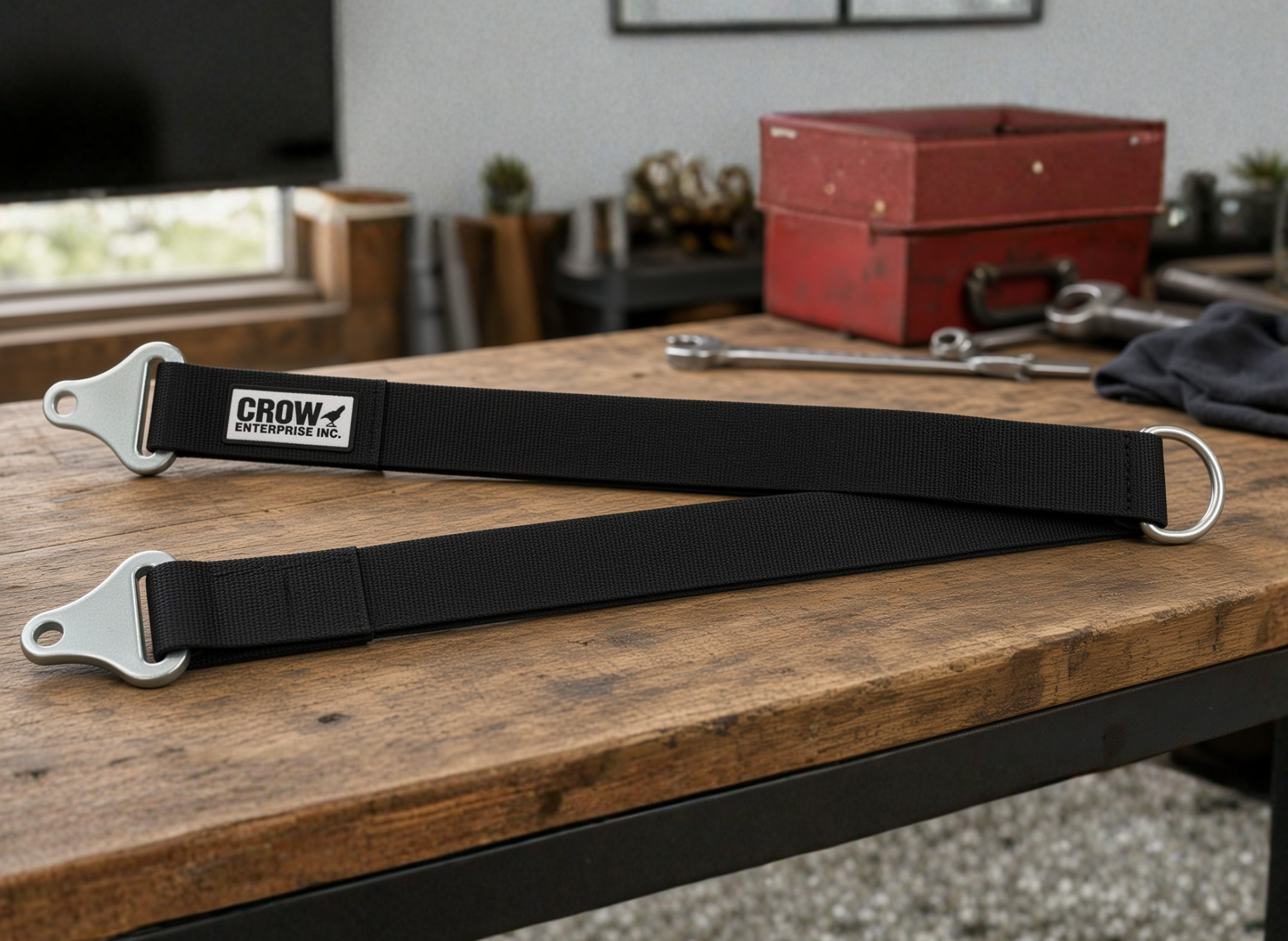
Crow Safety Gear Sprint Car Engine Slings 11645
Engine Lift Sling, Spring Car, 500 lb. Capacity, Strap, 24 in. Length, Nylon, Black, Each
How to Choose and Use an Engine Lift Sling Safely
Engine weight, attachment points, and the physical constraints of your workspace should drive every decision about which lift sling to buy and how to use it. Skipping this step-or assuming any strap will do-is how engines end up on the floor, or worse, on someone's foot. A few minutes of planning up front will decrease the quantity of problems dramatically once the engine is in the air.
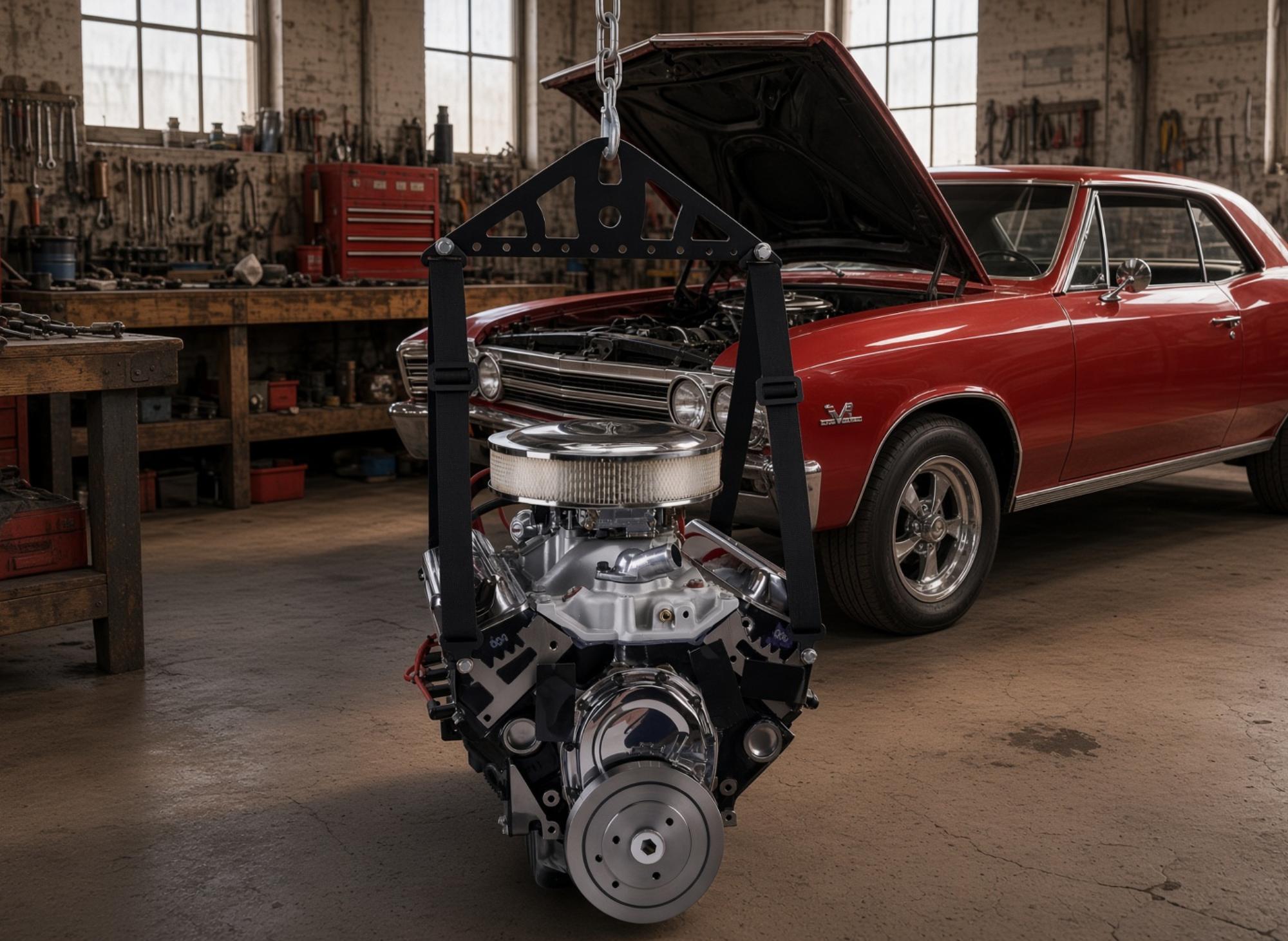
Ustinian Engine Lift Sling Kit
Universal 2 Point or 4 Point | Adjustable Nylon Straps 1200 lb Capacity Easy Installation, Rust Prevention Carbon Steel
Sizing and specs to check
Start by figuring out what your engine actually weighs. A typical small-block V8 runs 400–600 lbs. Big-blocks, diesel V8S, and engines with transmissions still attached can land between 700 and 1,200+ lbs. Select a sling whose working load limit comfortably exceeds the combined weight of everything you're lifting.
If you're lifting a 550 lb small-block, a 1,200 lb-rated sling like the Summit Racing SUM-905235 gives you plenty of margin. Make sure your hoist, chain, and all hardware share an equal or greater rating. The system is only as strong as its weakest link.
When you search product pages, review these key specs before you order:
- Strap length: 22 in. for standard carbureted motors, 26–30 in. for engines with blowers or tall intakes. Match strap length to your engine's height profile.
- Steel construction: Look for bar thickness (e.g., .250-inch plate), TIG-welded joints, and corrosion-resistant finishes like powder coat or cadmium plating.
- Webbing material: Heavy-duty nylon or polyester straps. Wider webbing distributes stress better and resists edge cuts.
- Hardware: Grade-8 bolts, corrosion-resistant shackles, and secure anchor points where straps meet the bar. Cheap hardware undermines even the best sling.
Step-by-step safe use
Engine slings require inspection before every use to check for damage. Before you hook anything to your hoist, run through this sequence:
- Inspect the sling thoroughly; check straps for fraying, cuts, or heat damage; examine the steel bar for cracks, bends, or finish chips that could lead to rust; verify that all hardware is straight and that threads are clean.
- Position the spreader bar above the engine and align the attachment points with your chosen lift locations (header studs, exhaust bolt holes, or accessory bosses).
- Bolt the straps to the engine at each point. Snug all fasteners and double-check torque values. Don't skip any attachment point; an unloaded leg throws off balance.
- Hook the sling's center ring or shackle to the engine hoist. Slowly take up slack, watching for any twist or tilt.
- Lift 2–3 inches and pause. Check that all straps are under equal tension and the engine sits level. Adjust strap length or use a leveler if one end drops.
- Proceed with the full lift. Maintain smooth, controlled height changes. Never jerk the hoist or swing the load.
The center of gravity of an engine can be high or offset due to additional components like intake manifolds, alternators, or A/C compressors mounted to one side. An engine-leveling device can help maintain a controlled orientation when lifting, letting you fine-tune front-to-back and side-to-side balance without loosening the sling. This is especially useful when maneuvering the engine past the radiator support, frame rails, or wiring harnesses during removal from cars with tight engine bays.
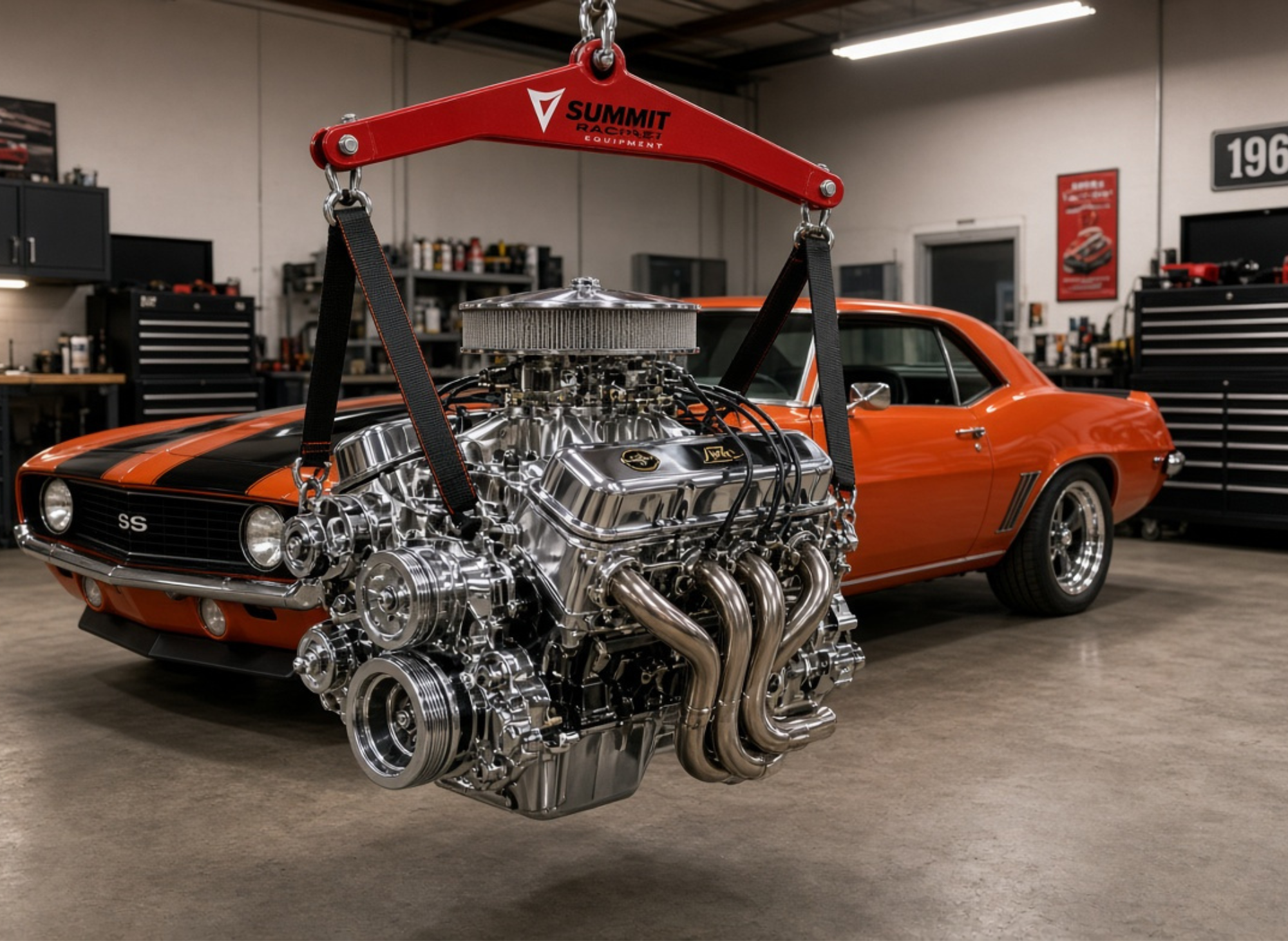
After the engine is out
Once the motor clears the bay, transfer it to an engine stand or cradle as quickly as practical. Leaving an engine hanging on the hoist longer than necessary is a risk you don't need to take.
An engine cradle lets you secure the powertrain, roll it around the shop, or load it on a cart for storage or shipping. Take account of any accessories still attached, power steering pumps, brackets, wiring, and support, or remove them so nothing hangs unsupported.
Common mistakes to avoid
- Using random hardware-store chain or bolts without a known working load limit. If there's no rating stamped on it, don't use it for lifting.
- Wrapping straps around sharp edges like frame rail weld seams or header flanges. Sharp edges can cut webbing fibers, drastically reducing capacity.
- Standing under a suspended engine or placing any body part beneath the load. Ever.
- Exceeding the sling's rated capacity. Take into account dynamic loads: sudden stops, bumps, or swings increase forces beyond static weight. Strap legs at steep angles from vertical also increases tension in each leg.
- Forgetting to verify the quantity of attachment points is correct for your sling design. A 4-point sling with only three legs attached is an unbalanced sling.
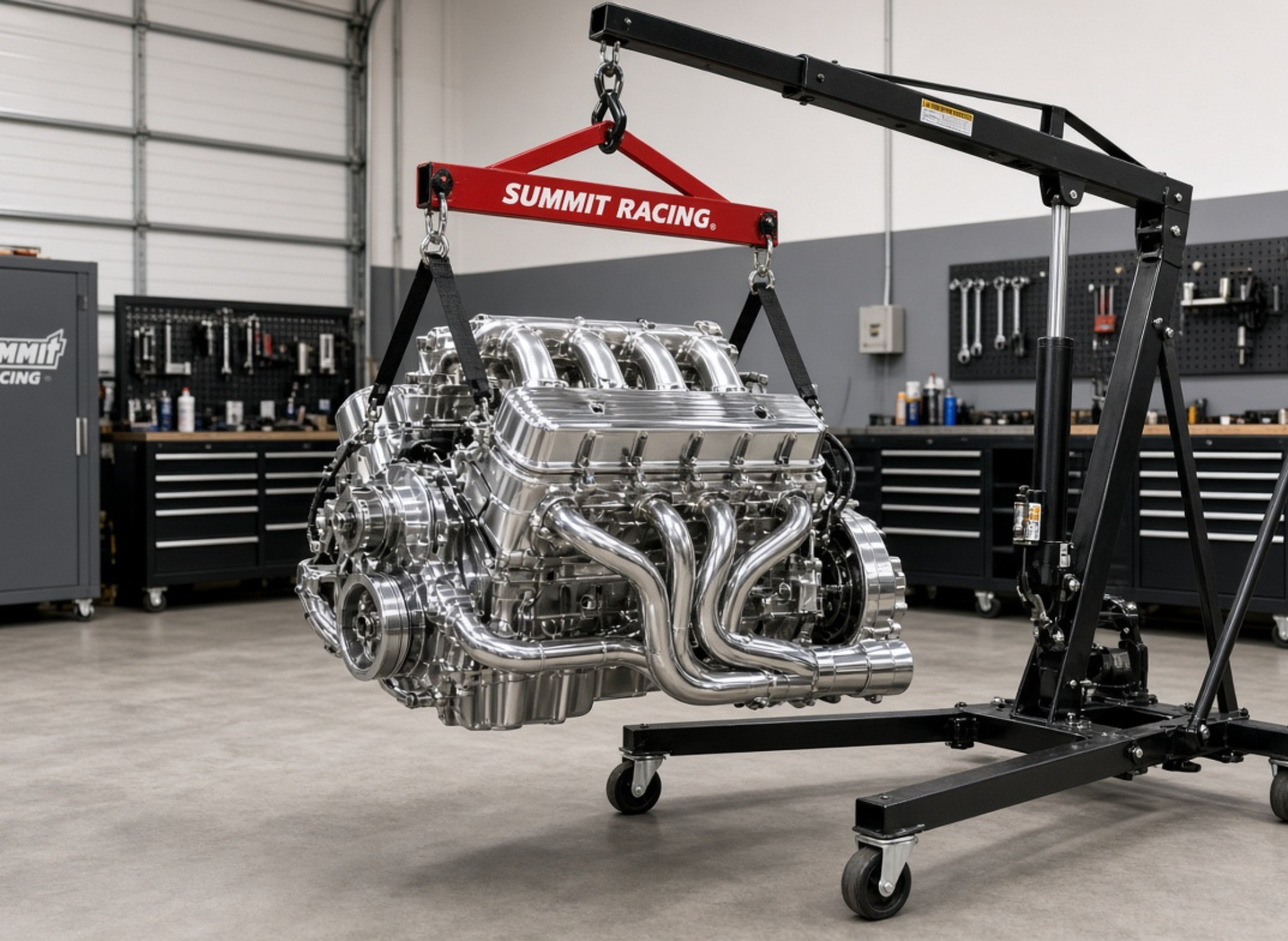
Maintenance between uses
After each use, review the sling for wear: check webbing for cuts or abrasion, steel components for cracks or deformation, and powder coat or plating for chips that expose bare metal to rust.
Clean the sling before storage. Hang it in a dry area off the shop floor to prevent moisture buildup and kinking. If any component shows damage beyond what the manufacturer considers acceptable, pull it from service. A replacement sling is always cheaper than an engine on the ground.
With a correctly chosen and maintained engine lift sling, pulling and installing engines becomes a breeze—faster, safer, and far more predictable than improvised rigging. Whether you're working in a home garage or a professional race shop, the right sling matched to your motor and hoist turns what used to be a nerve-wracking job into a straightforward, repeatable process. Take stock of your engine's weight and your setup, find the sling that fits, and you'll wonder why you ever tried it any other way.
Thank you for reading!
Your friend,
Todd
EngineSling 🔧 #EngineHoist 💪 #AutoRepair 🛠️ #CarMechanic 🚗 #GarageTools ⚙️ #EnginePuller 🏗️ #DIYMechanic 🔩 #ShopEquipment 🏭 #PerformanceShop 🏎️ #AutomotiveTools 🧰
This site contains affiliate links, and we may earn a commission at no extra cost to you. All recommended products are thoroughly vetted.
 Todd Bandel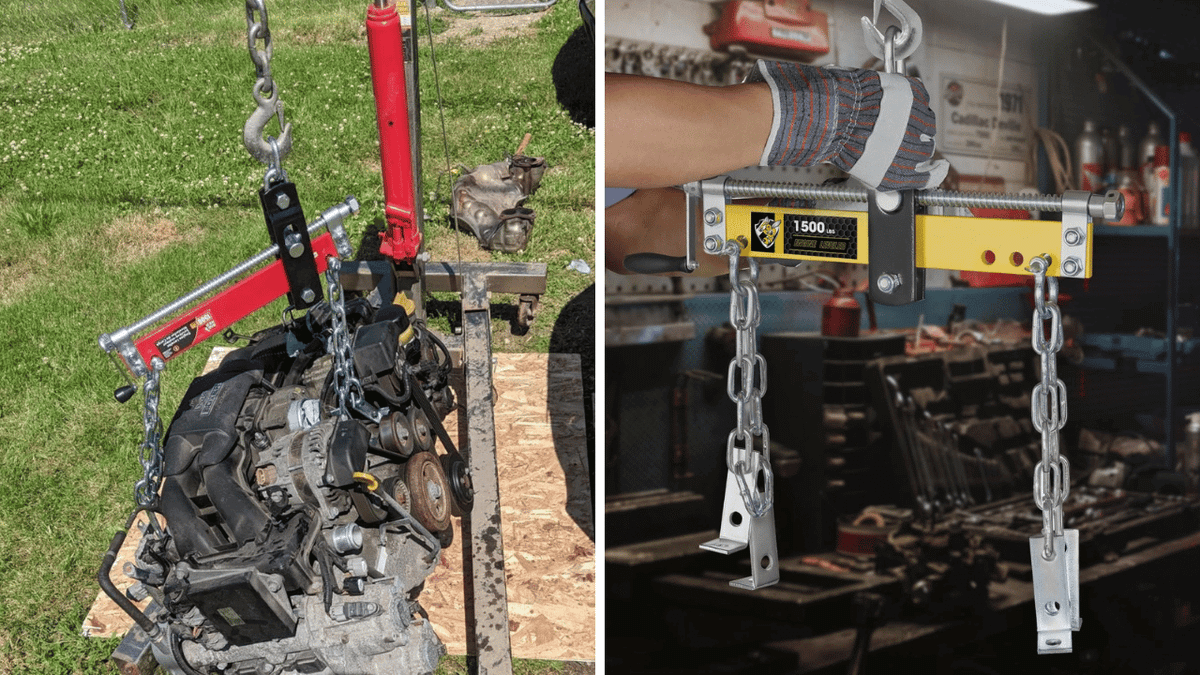
 Todd Bandel
 Todd Bandel
 Todd Bandel
 Todd Bandel
 Todd Bandel