Work Sharp Ken Onion Elite Mk2 Knife Sharpener: Complete Guide
Work Sharp Ken Onion Elite Mk2 sharpens knives and tools with flexible belts, 10–35° angles, 7 speeds, and a blade grinder.

Introduction to the Work Sharp Ken Onion
The Work Sharp Ken Onion Elite Mk2 is a motorized belt sharpener designed by custom knifemaker Ken Onion in collaboration with Work Sharp, a U.S. company with over 50 years in the sharpening tools business.
Ken Onion is best known for creating the SpeedSafe assisted-opening mechanism for Kershaw Knives; his partnership with Work Sharp produced the original Ken Onion Edition sharpener and, as of early 2024, this upgraded Mk2. The unit became available on Amazon around Apr 2024 and has since accumulated a 4.6 out of 5-star average across nearly 500 global ratings.
The Mk2 is a premium step up from the original edition. It adds a load-sensing motor with seven variable speed presets, a wider adjustable angle range of 10° to 35° via the Blade Grinding Attachment, and improved build quality with a cast metal overlay to reduce vibration.
Its flexible abrasive belts conform to blade geometry, creating a convex edge profile that preserves steel behind the cutting edge. The result: fast sharpening for everything from paring knives to axes. Home cooks, hunters, EDC enthusiasts, and anyone who wants professional-level edges without mastering whetstones will find the most value here.
At a glance:
- Motorized flexible abrasive belt system (sharpens and hones in one pass)
- Adjustable angle: 15°–30° with cassette guide; 10°–35° with Blade Grinding Attachment
- Seven variable speed presets with LED indicator
- Included belt grits: P120, X65, X22, X4, 6000, and 12000 (ultra-fine)
- Dimensions: approx. 7" L × 11.25" W × 6.5" H
- Weight: about 2.1 lb (unit only)
- MSRP: ~$ 299.95 (Elite package with BGA)
- 3-year warranty
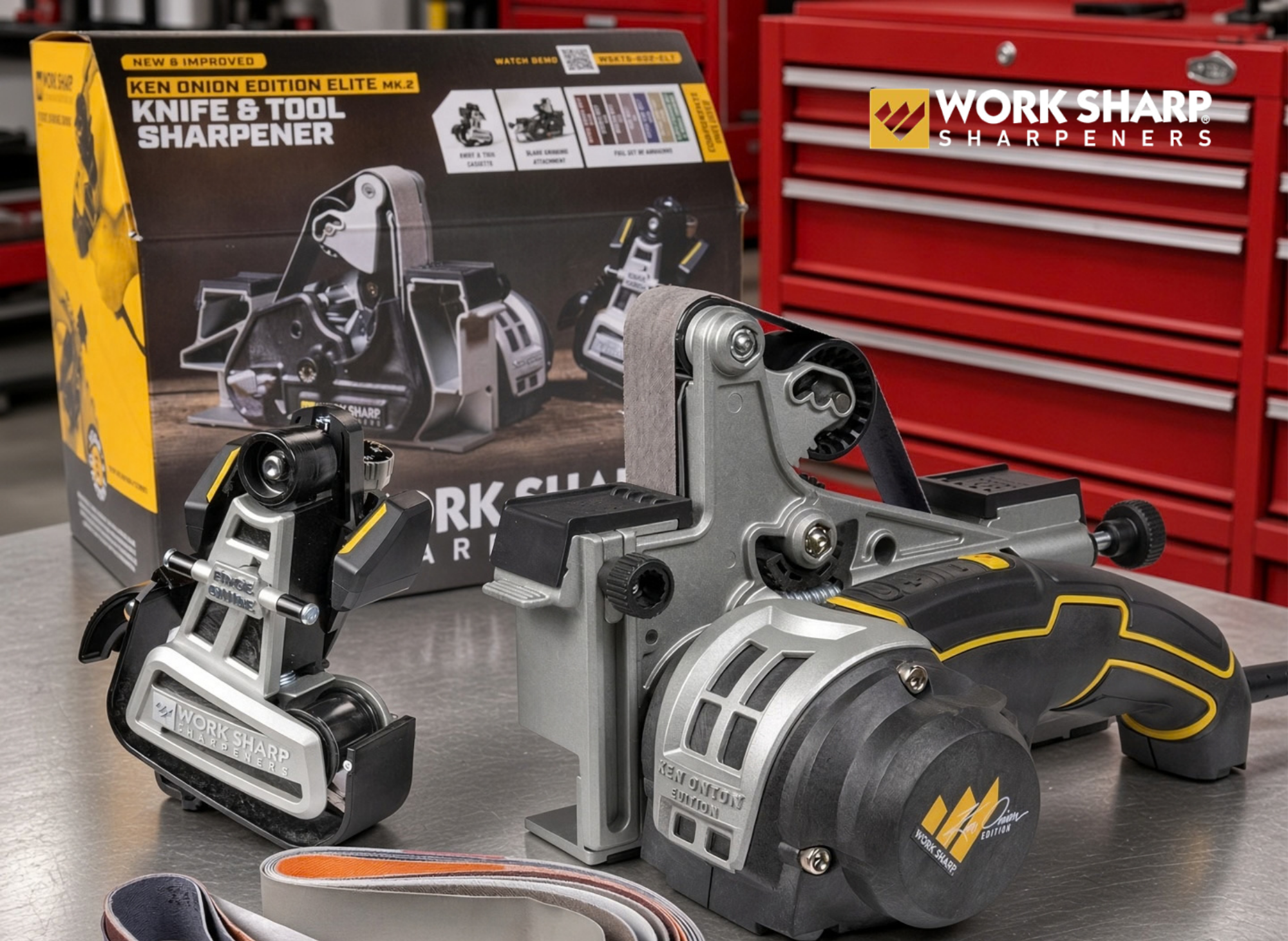
Work Sharp Ken Onion Elite Mk2 Electric Knife Sharpener, Adjustable Angle
Powered Professional Belt System, Sharpens Scissors, Serrated and Tools, Blade Grinder, Variable Speed
Key Features, Specs, and Performance
Spec sheets tell part of the story. This section covers how the Work Sharp Ken Onion Elite Mk2 performs when you actually put steel to belt.
The motorized flexible abrasive belt system
Unlike pull-through sharpeners that use fixed carbide or ceramic slots, the Mk2 runs flexible abrasive belts in two sizes: 3/4" × 12" for the sharpening cassette and 1" × 18" for the Blade Grinding Attachment. Because the belts are flexible, they conform slightly to the blade surface during contact. This creates a convex bevel rather than a flat one. A convex edge places more steel mass behind the cutting edge, which distributes force over a broader area and resists rolling under heavy use.
Each belt kit includes multiple grits for different stages of work. P120 and X65 handle edge repair and reprofiling. X22 covers routine sharpening. X4, 6000, and 12000 grits take you from fine honing to mirror polish. The progression matters: coarse belts remove material and establish geometry, while fine belts refine the edge and reduce micro-scratches that cause drag during cutting. You always work from coarser to finer, never the reverse.
Adjustable angle guide
The Mk2's angle system operates in two modes. The sharpening cassette uses leather-lined angle guides with a scope-click adjustment knob, covering 15° to 30° per side in 0.5° increments. The Blade Grinding Attachment expands that range to 10° to 35° and adds a convex pulley system with three settings (low convex, high convex, and standard V).
Here is a quick reference for angle selection:
- 10°–15° per side: thin slicers, Japanese-style kitchen knives, fillet knives (use light pressure and low speed)
- 17°–20° per side: general-purpose chef's knives, santoku, paring knives
- 20°–25° per side: pocket knives, EDC folding knives, multi-tools
- 25°–30° per side: hunting knives, survival knives, heavier outdoor blades
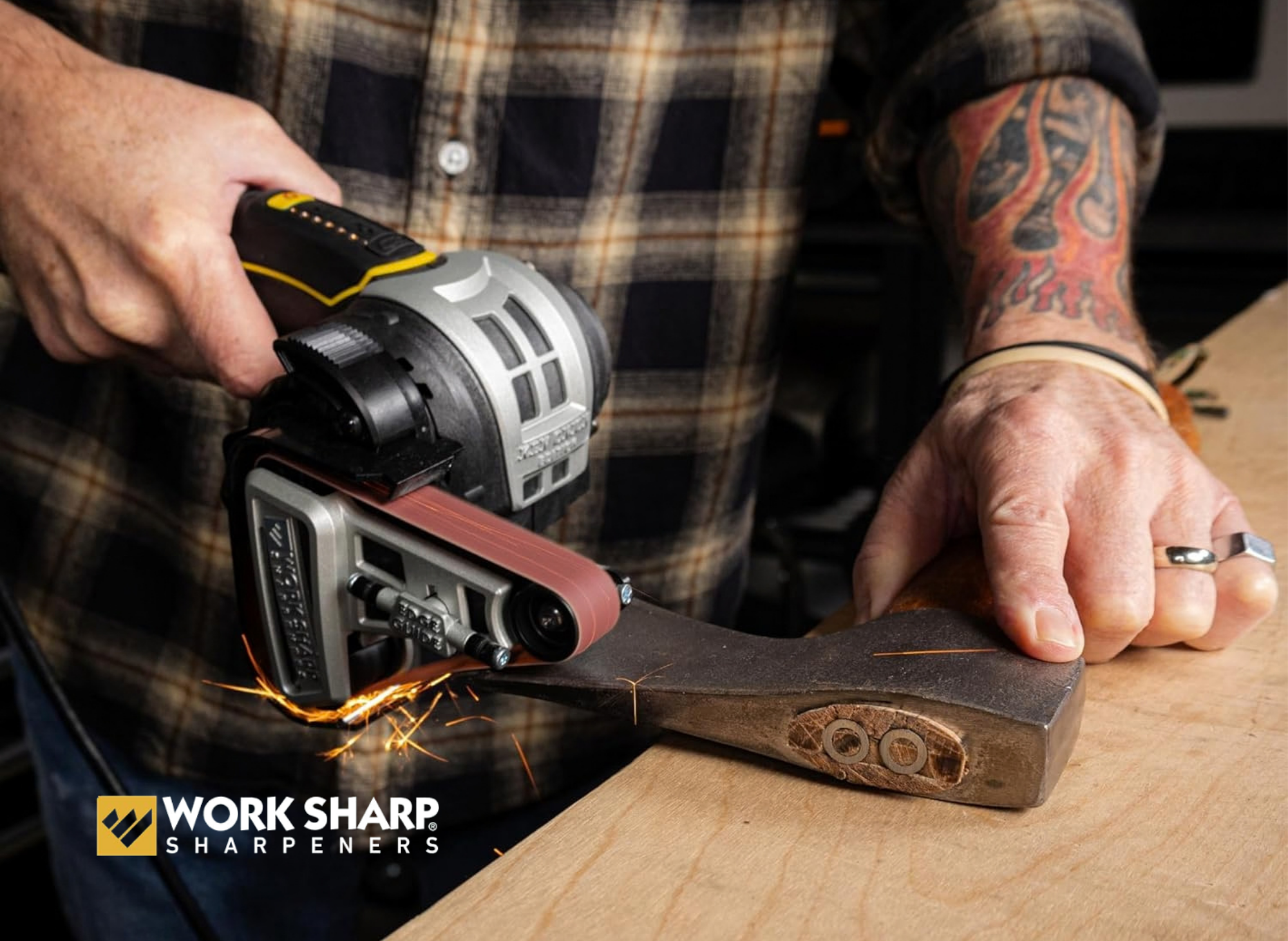
- 30°–35° per side: axes, hatchets, machetes, mower blades (BGA required)
The 0.5° click detents in cassette mode let you dial in precise angles without guesswork. For users coming from pull-through sharpeners with fixed 20° slots, this adjustability is the single largest upgrade in edge control.
Variable motor speed and power
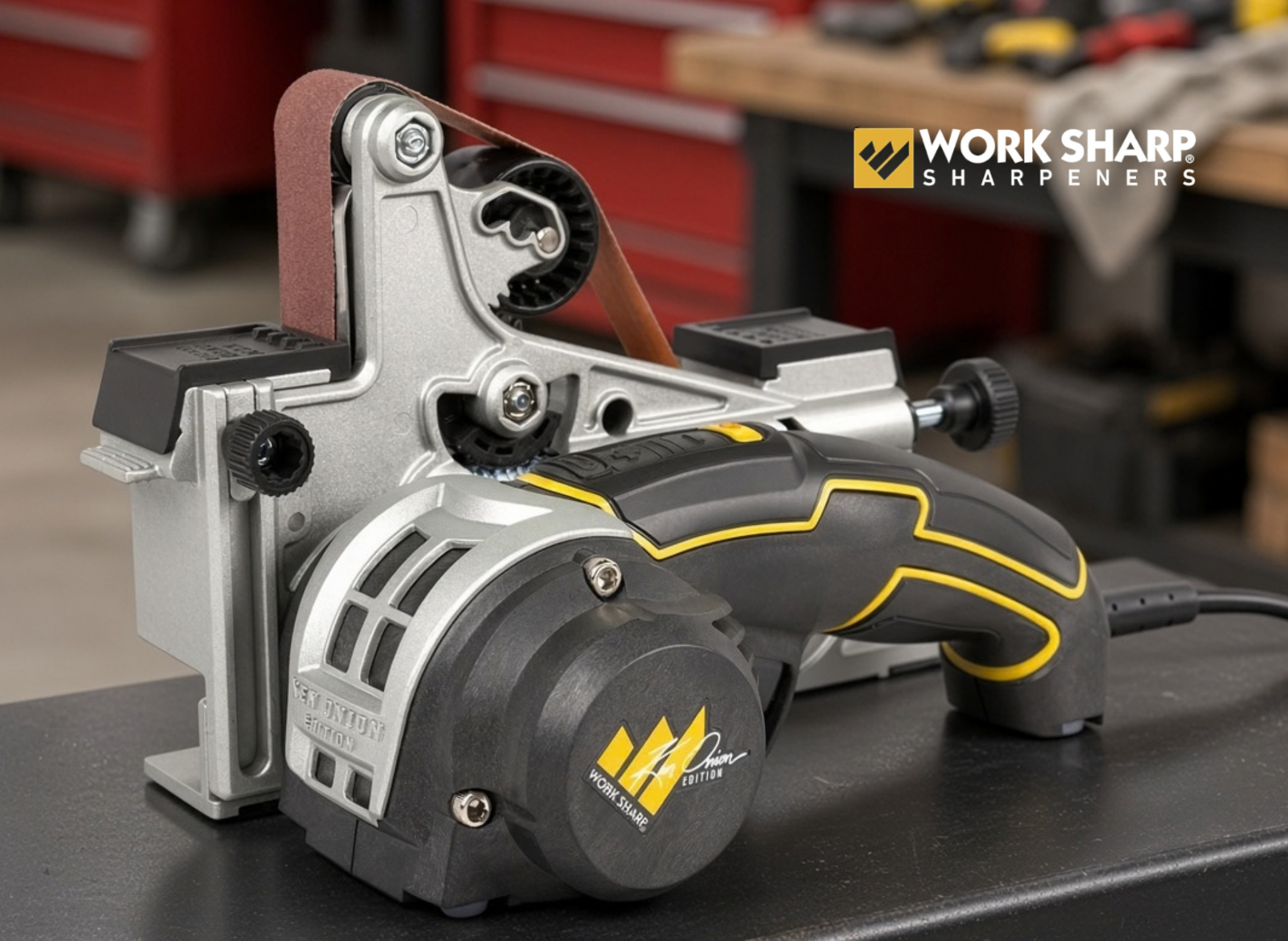
The load-sensing motor maintains belt speed under pressure, so grinding consistency stays even when you lean into a thick spine or hard steel. Seven speed presets are displayed via an LED scale on the unit body. Low speeds (presets 1–3) work best for honing passes, serrated blades, and thin kitchen steel. High speeds (presets 5–7) suit reprofiling, chip repair, and heavy stock removal on outdoor tools.
A practical note: the motor can run continuously for 25 minutes or more without overheating. That said, thin Japanese knives hardened above 60 HRC are at higher risk of heat damage at sustained high speeds. For those blades, keep the speed at preset 2 or 3, use light pressure, and let the belt cool between passes.
Supported blade and tool types
The Mk2 handles a wide range of edges:
- Straight-edge kitchen knives (chef's, santoku, paring, carving)
- Folding and pocket knives
- Hunting, survival, and outdoor fixed-blade knives
- Serrated blades (using the belt edge with light pressure; focus on the flat back side of the serrations)
- Scissors (using the included 65° scissor guide)
- Garden tools, axes, and mower blades (via the Blade Grinding Attachment)
Single-bevel Japanese knives and extremely thin fillet knives require extra care. The cassette guide can interfere with very narrow blade profiles, and aggressive grits remove material faster than you might expect on thin steel.
Performance and user experience
In hands-on testing, a dull kitchen knife sharpened at 15° per side reached "Level 9" sharpness (on a standardized practical sharpness scale) in 4 minutes and 34 seconds over roughly 40 strokes. Measured cutting force dropped from over 1,040 grams before sharpening to approximately 257 grams after, which translates to a blade that slices through paper and tomato skin without resistance.
For routine touch-ups on a blade that has lost its bite but isn't chipped, expect 1 to 2 minutes of work. Dull or chipped edges take 3 to 5 minutes with coarse belts followed by a polish pass. One user running a small butchery processing around 20,000 birds per year reported that even untrained staff could produce usable edges after a brief orientation session, saving hours of weekly sharpening time compared to manual methods.
How to Use the Work Sharp Ken Onion Safely and Effectively
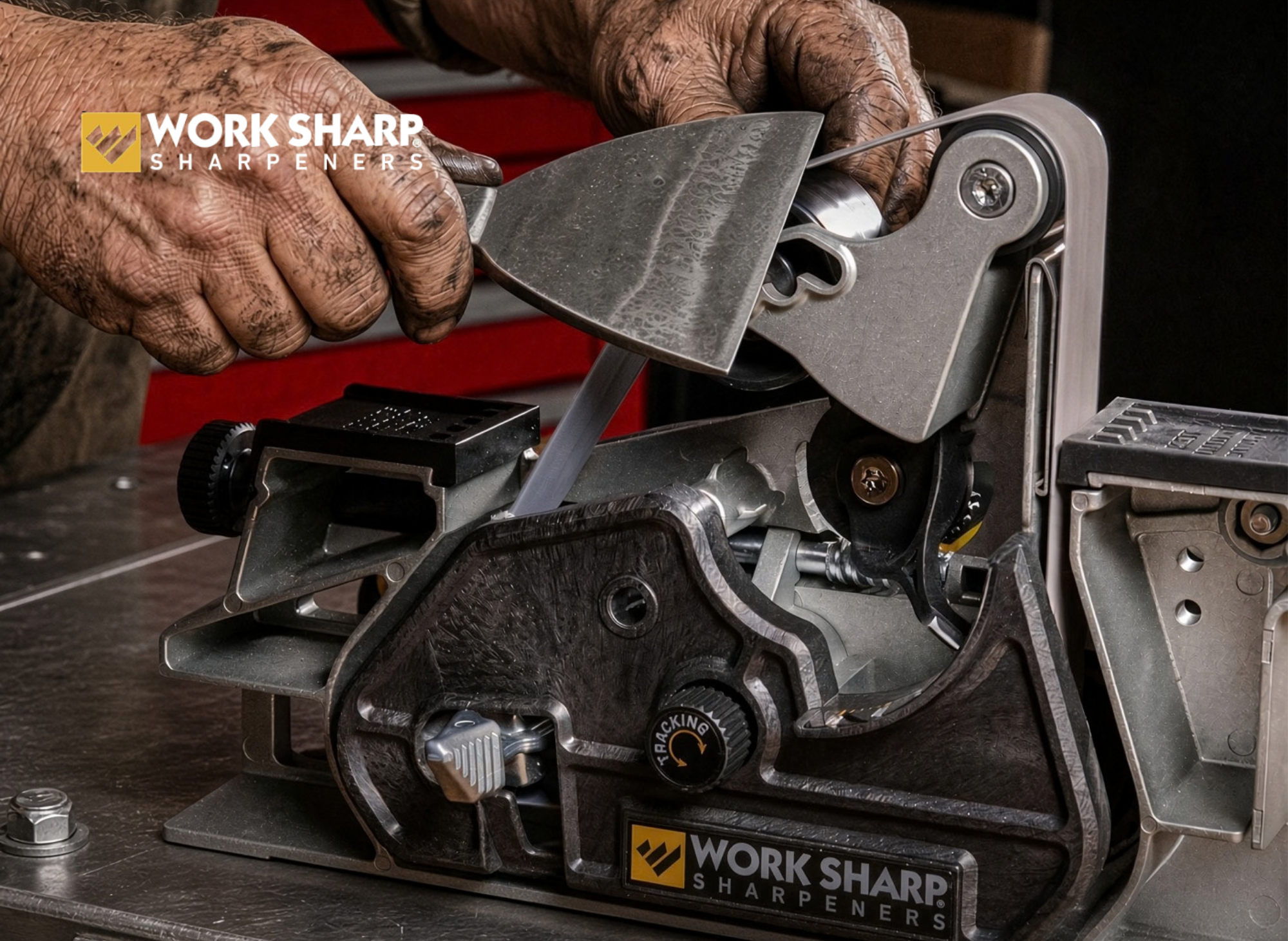
The Mk2 is easier to learn than freehand whetstone sharpening. It is still a powered grinder that removes steel, and technique determines the difference between a razor edge and a rounded tip. The steps below cover the full sharpening process, special blade handling, safety, and maintenance.
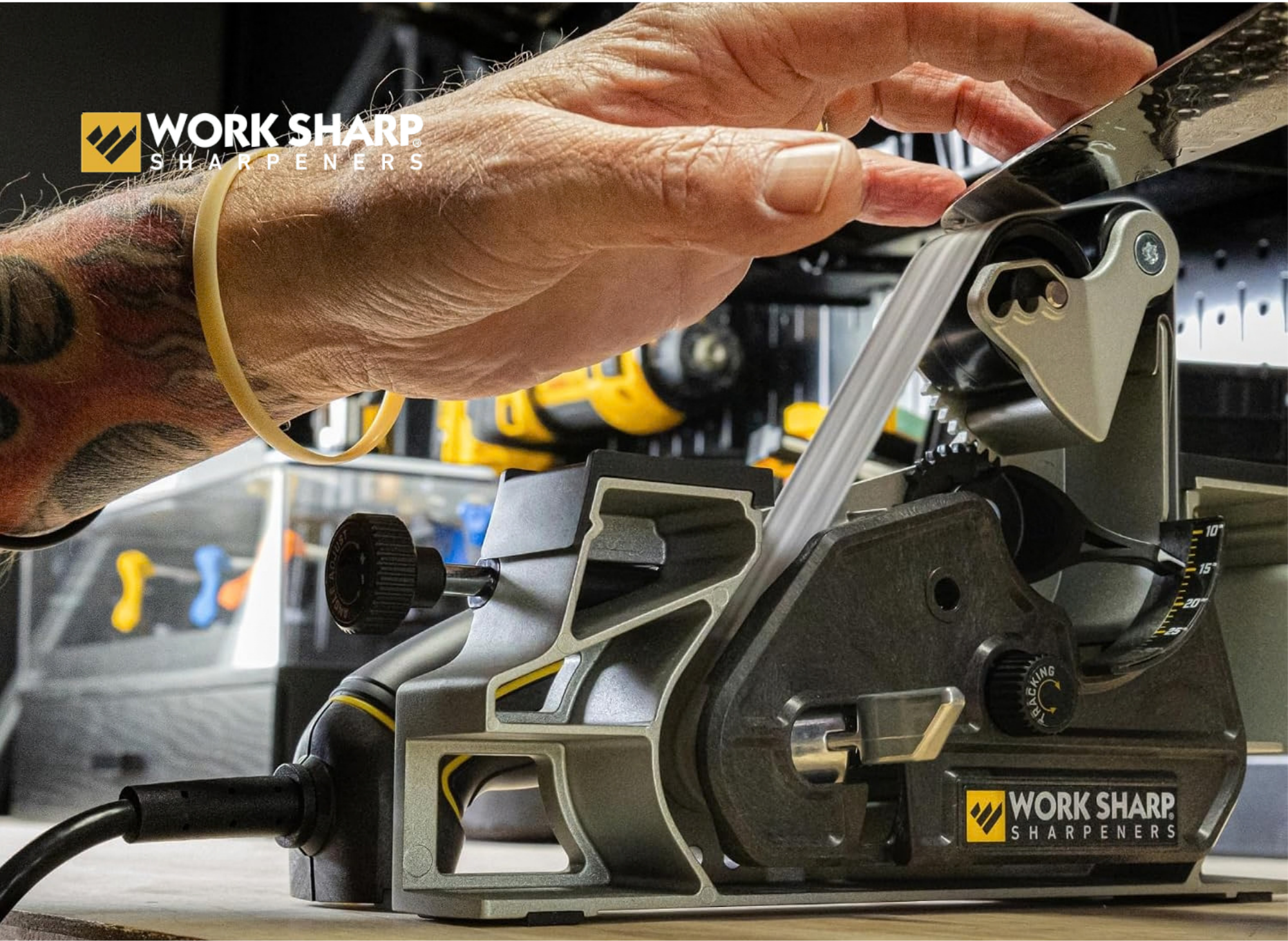
Step-by-step sharpening process
1. Choose the right belt grit. If your blade is chipped or has visible nicks, start with P120 or X65 (coarse). For a blade that's simply lost its edge, start at X22 (medium). If you just want to refresh an already-sharp knife, go straight to X4 or the 6000 grit belt.
2. Set the angle. Dial the cassette guide or BGA to match your knife type using the angle recommendations above. For a standard Western chef's knife, 17° to 20° per side is a safe default.
3. Select the speed. Plug in the unit and choose a speed preset before you start. Begin at preset 3 for kitchen knives. Move to preset 5 or higher only for heavy stock removal on outdoor blades.
4. Make your passes. Draw the blade through the guide from heel to tip in one smooth motion. For a dull but undamaged blade, 2 to 4 passes per side on the medium belt is usually enough to re-establish a working edge. For chip repair, you may need 10 or more passes on a coarse belt before stepping down to finer grits.
5. Progress through grits. After shaping on the coarse or medium belt, swap to the X4, then 6000, then 12000 belt for honing and polishing. Each finer belt removes the scratch pattern left by the previous one.
Tips for consistent results
- Let the belt do the work. Pressing hard generates heat, accelerates belt wear, and can round off the blade tip. Light, even pressure produces better edges.
- Maintain a consistent stroke speed through the entire pass, heel to tip. Slowing down at the tip concentrates abrasion and can thin or round that section.
- Alternate sides after each pass to keep the edge centered. Two passes on the right, then two on the left, then repeat.
- Check your edge after every grit change. Run the blade lightly across a fingernail or a sheet of printer paper. If it catches and slices cleanly, move to the next finer belt. If it slides, you need more passes.
Sharpening special blades and tools
For serrated knives, use the flat side (back) of the blade against the belt at a low speed setting. Apply minimal pressure and let the belt contact the individual serration valleys on the beveled side only if needed. The goal is to restore the flat back, which pushes the burr into the serrations and re-establishes bite.
Scissors go into the included 65° scissor guide, one blade at a time. Follow the factory bevel angle and use a medium or fine grit belt. Garden tools and axes use the Blade Grinding Attachment at 25° to 35° with the convex pulley engaged. These edges benefit from a convex profile because they absorb impact forces without chipping.
Safety and care
Eye protection is not optional. The belts throw fine metal particles during sharpening, and these particles are invisible until they land in your eye. Work in a well-ventilated area or, at minimum, away from food preparation surfaces.
Keep your fingers clear of the moving belt and the guide slot. The belt moves fast enough to abrade skin in a fraction of a second. Always unplug the unit before swapping belts, cleaning dust from the body, or adjusting the guide mechanism. If you've been sharpening for more than 20 minutes straight, let the motor and belts cool for 5 to 10 minutes before resuming.
The Mk2 adds a belt guard over the original design, which reduces debris scatter and lowers the chance of accidental belt contact. It also includes a cast metal overlay that dampens vibration, making the unit more stable on a countertop during use.
Maintenance and belt replacement
Belt lifespan depends on how often you sharpen and which grits you use. Coarse belts (P120, X65) degrade fastest because they handle the heaviest material removal. A home user sharpening a kitchen set of 5 to 8 knives every few weeks can expect to replace coarse belts every 3 to 4 months. Fine belts last longer because they remove less material per pass.
Between sessions, wipe abrasive dust from the unit body and keep the air vents clear. Store belts in a dry location; moisture can degrade the abrasive bond and promote rust on any exposed metal parts. If you have limited counter space, store the sharpener in a cabinet rather than leaving it out where dust and kitchen grease accumulate.
Third-party replacement belts have become widely available since the Mk2's 2024 launch. Some users prefer aftermarket cloth-backed belts for longer life and finer polish, which can offset the ongoing cost of belt replacement.
Closing verdict
The Work Sharp Ken Onion Edition is a motorized belt sharpening system designed for both knives and tools. It uses flexible abrasive belts instead of rigid stones or wheels, and it is marketed as a comprehensive sharpening solution. It is designed to be a middle ground between electric sharpeners and whetstones, giving users the speed of a powered machine without giving up control over the bevel.
The Ken Onion Edition features a rapid sharpening process. Variable speed control allows for adjustments from low to high speeds, so a user can slow the belt for fine work or speed it up when material has to come off fast. It features an adjustable sharpening angle from 15° to 30°.
Using a fixed angle guide helps maintain a consistent bevel, and the machine is suitable for users who want consistent sharpening angles. The system has customizable grit options for different sharpening stages. The sharpening process involves progressing through different grits of belts. A coarse belt is used for reshaping a dull or damaged edge, then finer belts refine that edge.
A burr forms on the opposite side of the blade as it is sharpened. Once that burr is worked off, the system produces a convex edge which is strong and durable. The sharpened convex edge distributes stress away from the edge, which is why the bevel holds up well on knives that see hard use. It can sharpen various types of blades, including outdoor and kitchen knives.
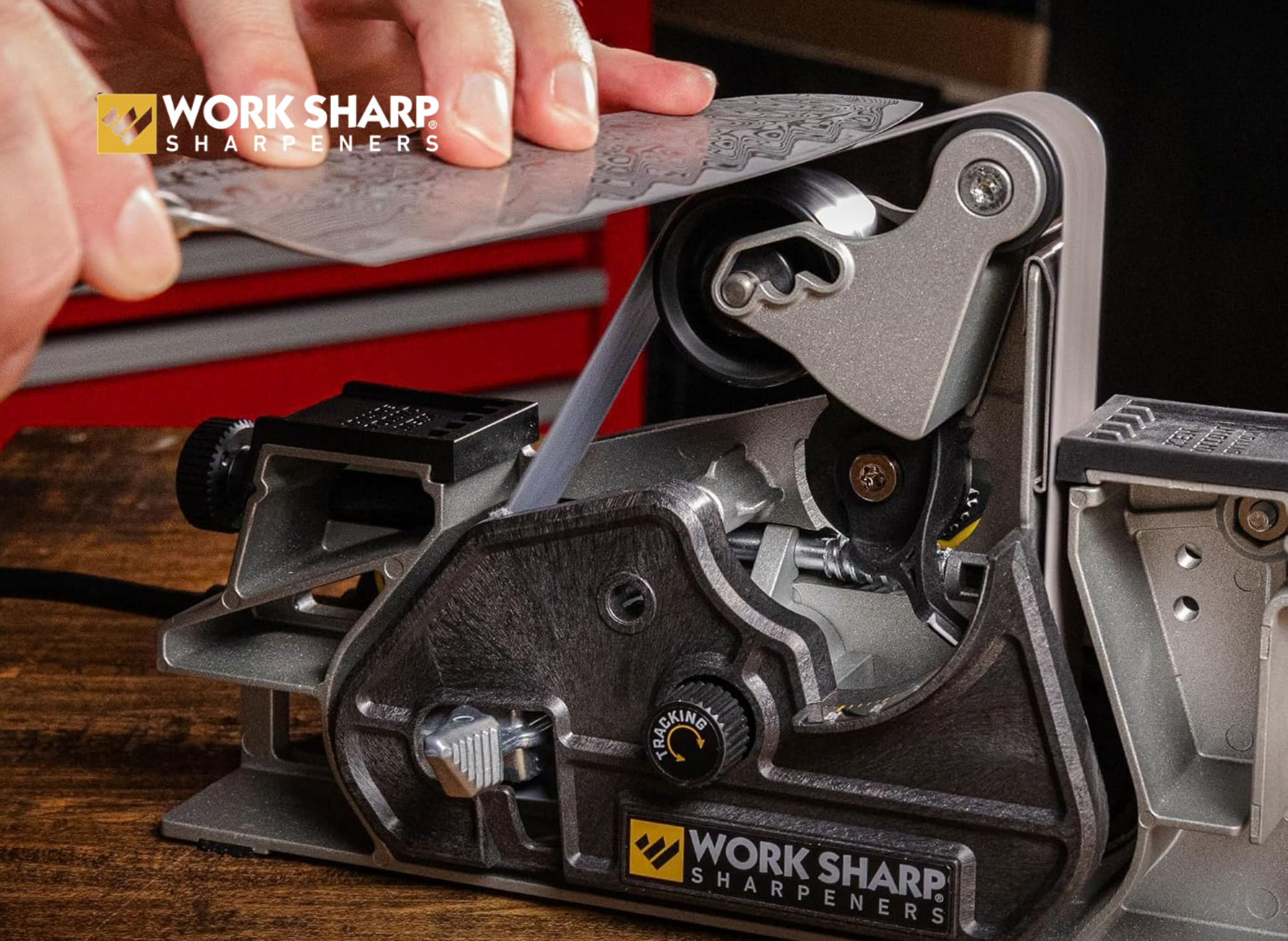
Some users may find a learning curve associated with the device, mostly in learning belt tension, angle setting, and how long to stay on each grit. After that, the sharpener is praised for its simplicity and effectiveness. It can achieve results comparable to water stones in 20 seconds. Users report sharpening 10 blades in 15–20 minutes. One user rated the sharpener 10 out of 10 stars. The main practical complaint is storage: users find it difficult to store due to its size.
The Work Sharp Ken Onion Elite Mk2 delivers professional-grade edges in minutes. It handles the full range of household and outdoor blades, offers granular angle control that pull-through sharpeners cannot match, and produces convex profiles that improve edge durability. The included grit range covers everything from chip repair to mirror polish.
The trade-offs are real. Belt replacement is an ongoing cost. The unit removes steel faster than many beginners expect, so starting with light pressure on a medium belt is safer than jumping straight to P120. Certain blade geometries, particularly thin single-bevel Japanese knives, require careful speed and angle management to avoid over-grinding. And despite compact dimensions, the Mk2 plus attachments take up more counter space than a simple pull-through or a honing rod.
This sharpener makes the most financial and practical sense for someone who maintains multiple knives and tools. If you own a kitchen set, a few pocket knives, and the occasional garden tool, the Mk2 consolidates all that maintenance work into a single unit with a 3-year warranty. For someone with a single budget knife, a ceramic honing rod or a basic whetstone will do the job at a fraction of the cost.
Thank you for reading!
Your friend,
Todd
WorkSharp 🔪 #KenOnionElite ⚙️ #KnifeSharpener ✨ #Mk2Sharpener 🔥 #BladeGrinding 🛠️ #KitchenKnives 🍳 #EDCKnives 🏕️ #ToolSharpening 🪓 #FlexibleBelts 🔄 #SharpEdge ⚡
This site contains affiliate links, and we may earn a commission at no extra cost to you. All recommended products are thoroughly vetted.
Amazon Prime offers a wide range of products to meet diverse customer needs, with the added benefit of fast, reliable delivery. From household essentials and groceries to electronics, clothing, and entertainment, Prime members get access to exclusive deals and discounts across a wide range of categories.
Additionally, Prime membership includes access to services like Prime Video for streaming movies and TV shows, Amazon Music for ad-free music, and Prime Reading for eBooks and magazines. This comprehensive suite of benefits makes Amazon Prime a convenient and value-packed option for millions of customers worldwide.
- Prime for you, adult
- Free 30-day trial of Prime
- All of Prime, half the price.
- Prime Video
- wedding registry
- Kindle Unlimited
- Amazon Music
- Amazon Fresh Groceries
 Todd Bandel
 Todd Bandel
 Todd Bandel
 Todd Bandel
 Todd Bandel
 Todd Bandel
 Todd Bandel
 Todd Bandel
 Todd Bandel